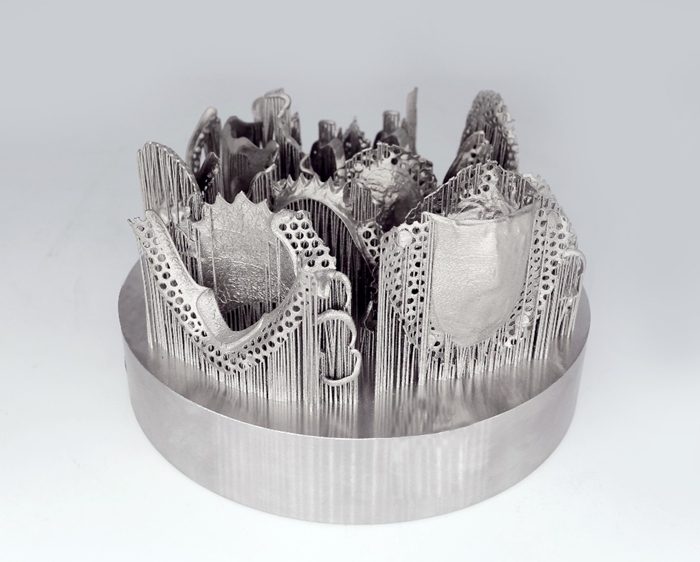
3D printed materials testing
Advanced Validation for Additive Manufacturing Materials & Components
Additive manufacturing has transformed modern engineering by enabling the production of highly complex geometries, lightweight structures, and customized components that were previously impossible or impractical to manufacture using conventional methods. From aerospace brackets and medical implants to automotive tooling and industrial prototypes, 3D printed materials are now integral to mission-critical applications across industries. However, the layer-by-layer fabrication process introduces unique microstructural characteristics, anisotropy, and potential defects that require rigorous validation to ensure performance, safety, and regulatory compliance.
At Genuine Testing, we provide comprehensive 3D printed materials testing and additive manufacturing validation services designed to verify mechanical integrity, structural consistency, and long-term reliability. As an advanced materials testing laboratory and Contract Research Organization (CRO), we support OEMs, aerospace suppliers, medical device manufacturers, and industrial innovators with accurate, defensible, and application-specific performance data. Our programs evaluate metal, polymer, and composite printed materials under realistic service conditions to ensure that additive manufacturing delivers not only design freedom but also dependable performance.
Mechanical Performance & Structural Integrity of Printed Components
Mechanical validation is a cornerstone of 3D printed materials testing. Additively manufactured parts must withstand tensile loads, compressive forces, cyclic stresses, and impact conditions comparable to or exceeding those of conventionally manufactured components. However, the inherent layer-based construction of additive manufacturing can introduce anisotropic behavior, residual stresses, and internal discontinuities that affect strength and fatigue life.
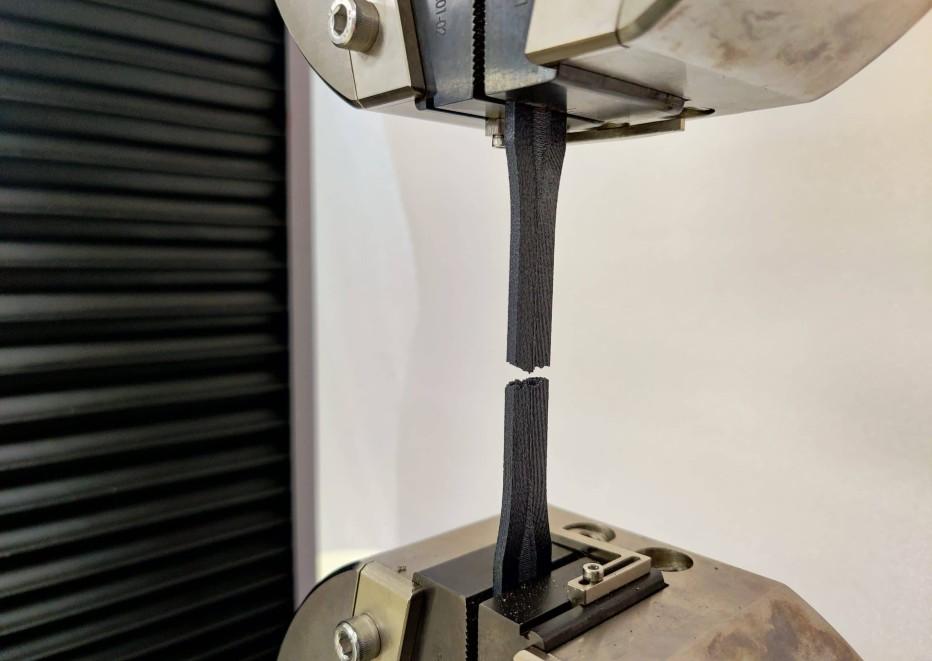
Our laboratory conducts tensile, compression, flexural, shear, and fatigue testing to characterize the mechanical response of printed materials across multiple build orientations. By comparing vertical, horizontal, and angled specimens, we quantify anisotropy and determine how layer adhesion influences overall structural performance. Fatigue testing is particularly critical for aerospace, automotive, and medical applications where components are subjected to millions of load cycles throughout their service life.
Metal Additive Manufacturing Material Testing
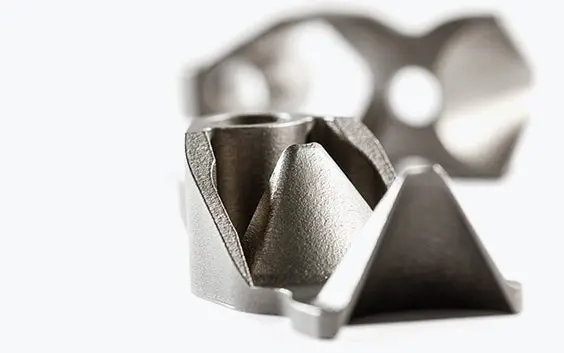
Metal additive manufacturing processes such as powder bed fusion and directed energy deposition are widely used to produce high-strength components in titanium, aluminum, stainless steel, nickel alloys, and cobalt-chromium systems. These materials are frequently deployed in aerospace engines, structural brackets, medical implants, and high-performance automotive applications. Ensuring consistent density, microstructural uniformity, and mechanical integrity is essential for safe deployment.
Our testing programs evaluate density, porosity distribution, grain structure, and phase composition using advanced microscopy and non-destructive evaluation techniques. Computed tomography scanning identifies internal voids or lack-of-fusion defects that may not be visible externally. Heat treatment validation assesses how post-processing influences strength, ductility, and fatigue resistance. Residual stress analysis determines whether internal stresses could lead to distortion or premature failure.
By correlating microstructural findings with mechanical performance data, we provide actionable insights into the relationships between printing parameters, material properties, and final component behavior. This data-driven approach supports process optimization, qualification of new materials, and compliance with aerospace and medical certification requirements.
Polymer & Composite Additive Manufacturing Validation
Polymer-based additive manufacturing technologies such as fused deposition modeling, selective laser sintering, and stereolithography are widely used for functional prototypes, end-use parts, tooling, and lightweight assemblies. Engineering-grade polymers and fiber-reinforced composites enable high strength-to-weight ratios and excellent design flexibility. However, layer adhesion, thermal history, and material feedstock quality significantly influence mechanical and thermal performance.
Our laboratory evaluates tensile strength, elongation, impact resistance, and creep behavior of 3D printed polymers and composite materials. Layer bonding strength is carefully assessed to determine resistance to delamination under load. For fiber-reinforced materials, we analyze fiber distribution, orientation, and interfacial bonding to ensure uniform reinforcement and predictable performance.
Environmental conditioning tests simulate exposure to temperature extremes, humidity, UV radiation, and chemical contact to evaluate long-term durability. Many polymer-based printed parts are deployed in outdoor, automotive, or industrial environments where sustained exposure can alter mechanical properties. By integrating environmental testing with mechanical analysis, we ensure that printed components maintain structural stability throughout their intended service life.
Dimensional Accuracy, Surface Quality & Post-Processing Evaluation
Dimensional accuracy and surface finish are critical considerations in additive manufacturing, particularly for components requiring tight tolerances or mating interfaces. Build orientation, thermal distortion, shrinkage, and support removal can affect final geometry. Post-processing steps such as machining, polishing, heat treatment, or hot isostatic pressing further influence dimensional stability and surface characteristics.
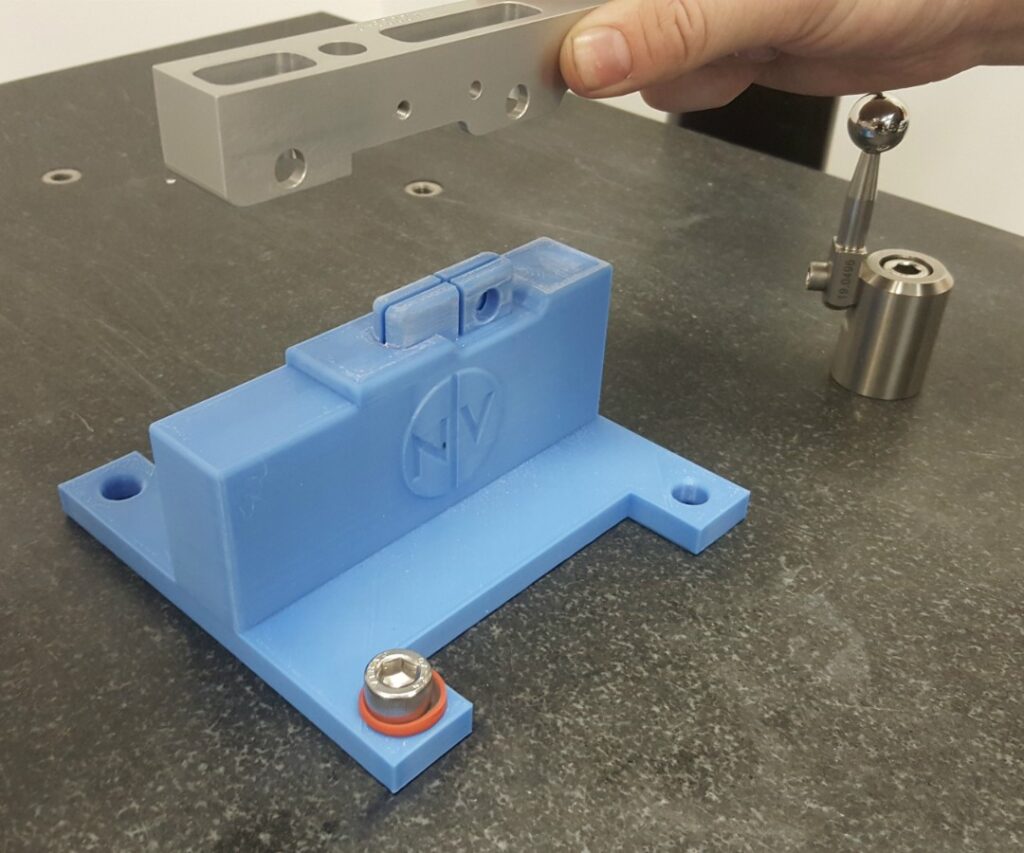
Our metrology and surface characterization services evaluate dimensional conformity using precision measurement systems and coordinate measuring equipment. Surface roughness analysis assesses texture, waviness, and potential stress concentration sites. For components requiring secondary machining or finishing, we validate the impact of post-processing on mechanical properties and structural integrity. Understanding how additive manufacturing parameters and finishing processes interact ensures predictable, repeatable results. This level of scrutiny is particularly important for aerospace components, medical implants, and high-precision industrial parts where tolerance deviations can compromise functionality or safety.
Environmental Durability & Long-Term Reliability
3D printed materials must demonstrate reliable performance under real-world environmental conditions. Aerospace components experience temperature fluctuations and vibration at altitude. Automotive parts encounter road vibration, humidity, and chemical exposure. Industrial components may operate in corrosive or high-temperature environments.
Our environmental testing programs simulate thermal cycling, humidity exposure, salt spray corrosion, UV radiation, and vibration to evaluate durability. For metal printed parts, corrosion resistance testing identifies susceptibility to pitting or surface degradation. For polymers, UV and thermal aging studies assess color stability, embrittlement, and mechanical property retention.
By combining environmental conditioning with subsequent mechanical testing, we determine how exposure influences structural performance. This integrated validation approach ensures that additive manufactured components maintain integrity across diverse operating conditions.
Regulatory Compliance & Qualification Support
Additive manufacturing is increasingly used in regulated industries such as aerospace, medical devices, and defense, where stringent qualification standards apply. Material traceability, process validation, and performance documentation are essential for certification and market approval. Comprehensive testing provides the technical evidence required to demonstrate compliance with industry standards and customer specifications.
As a materials testing CRO, Genuine Testing delivers independent, third-party validation that supports qualification of additive manufacturing processes and materials. Our structured documentation and detailed reporting streamline audit readiness and facilitate smoother regulatory review. Early-stage validation also reduces the risk of costly redesigns or certification delays.
Enabling Innovation Through Data-Driven Validation
The flexibility of additive manufacturing encourages rapid innovation, but innovation must be grounded in reliable performance data. Whether developing lightweight aerospace brackets, patient-specific implants, custom tooling, or next-generation composite structures, manufacturers require a deep understanding of how 3D printed materials behave under real-world conditions.
At Genuine Testing, we collaborate closely with engineering and R&D teams to design tailored testing programs aligned with specific application requirements. Our multidisciplinary expertise in mechanical evaluation, microstructural characterization, environmental durability, and failure analysis ensures that every component is thoroughly assessed. Clear, comprehensive reporting translates complex findings into practical recommendations for process optimization and design refinement. As additive manufacturing continues to evolve, robust material validation will remain essential to unlocking its full potential. Through advanced testing services and scientific rigor, Genuine Testing helps organizations transform innovative designs into safe, reliable, and high-performance products ready for deployment across the most demanding industries.