
Battery & Energy Storage Materials
Advanced Battery Testing Laboratory Services for Energy Storage Material Performance
Battery and energy storage technologies are driving the future of electrification across electric vehicles, renewable energy systems, aerospace platforms, industrial infrastructure, and advanced consumer electronics. As the demand for higher energy density, rapid charging capability, extended cycle life, and improved operational safety continues to grow, the importance of accurate battery materials validation becomes increasingly critical. From lithium-ion battery systems to emerging solid-state and hybrid energy storage technologies, every material component must undergo rigorous evaluation to ensure electrochemical stability, structural reliability, and long-term durability.
At Genuine Testing, our advanced battery testing laboratory provides comprehensive Battery Materials Analysis services designed to support product innovation, performance optimization, and regulatory readiness. As a specialized materials testing laboratory and Contract Research Organization (CRO), we work closely with battery manufacturers, automotive companies, energy storage developers, and research institutions to deliver reliable, application-specific testing data. Our validation programs assess electrodes, electrolytes, separators, current collectors, casings, and complete battery assemblies under realistic operational conditions to ensure superior performance and safety compliance.Mechanical Integrity & Structural Stability of Battery Components
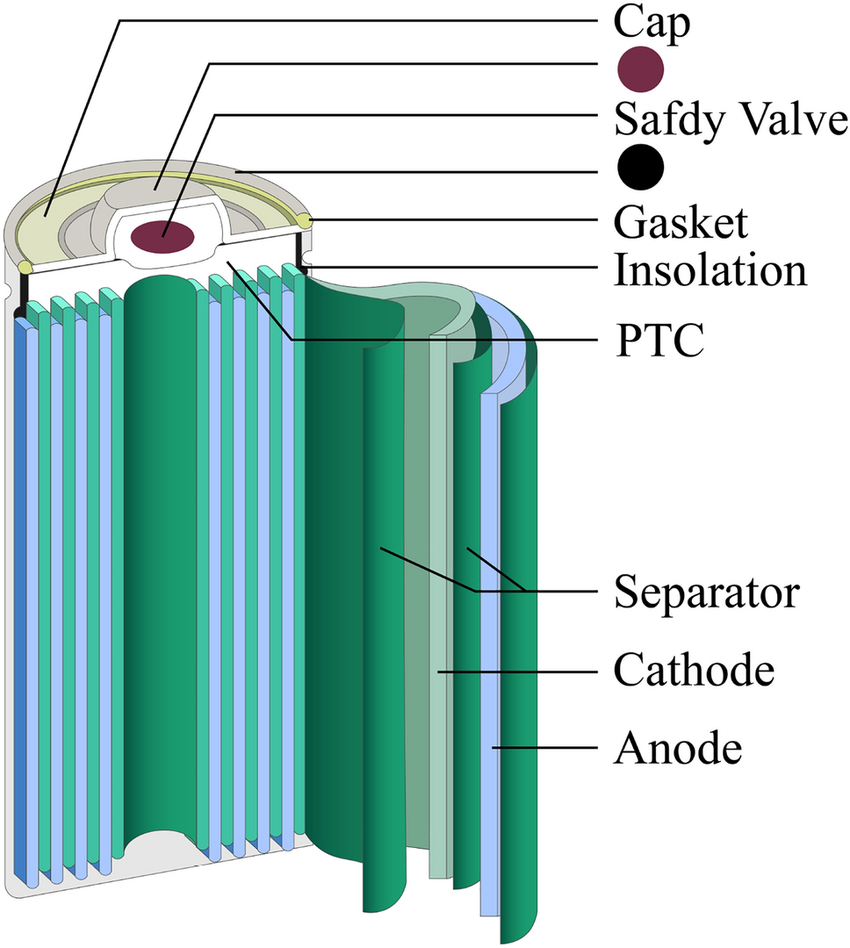
Battery systems experience continuous mechanical stress during manufacturing, transportation, installation, and real-world operation. In electric vehicles and large-scale energy storage systems, battery cells and modules must withstand vibration, impact, compression, and repeated mechanical loading without compromising internal structure or electrochemical functionality. Structural integrity is especially important for cylindrical, prismatic, and pouch cell configurations where deformation may lead to separator damage or internal short circuits.
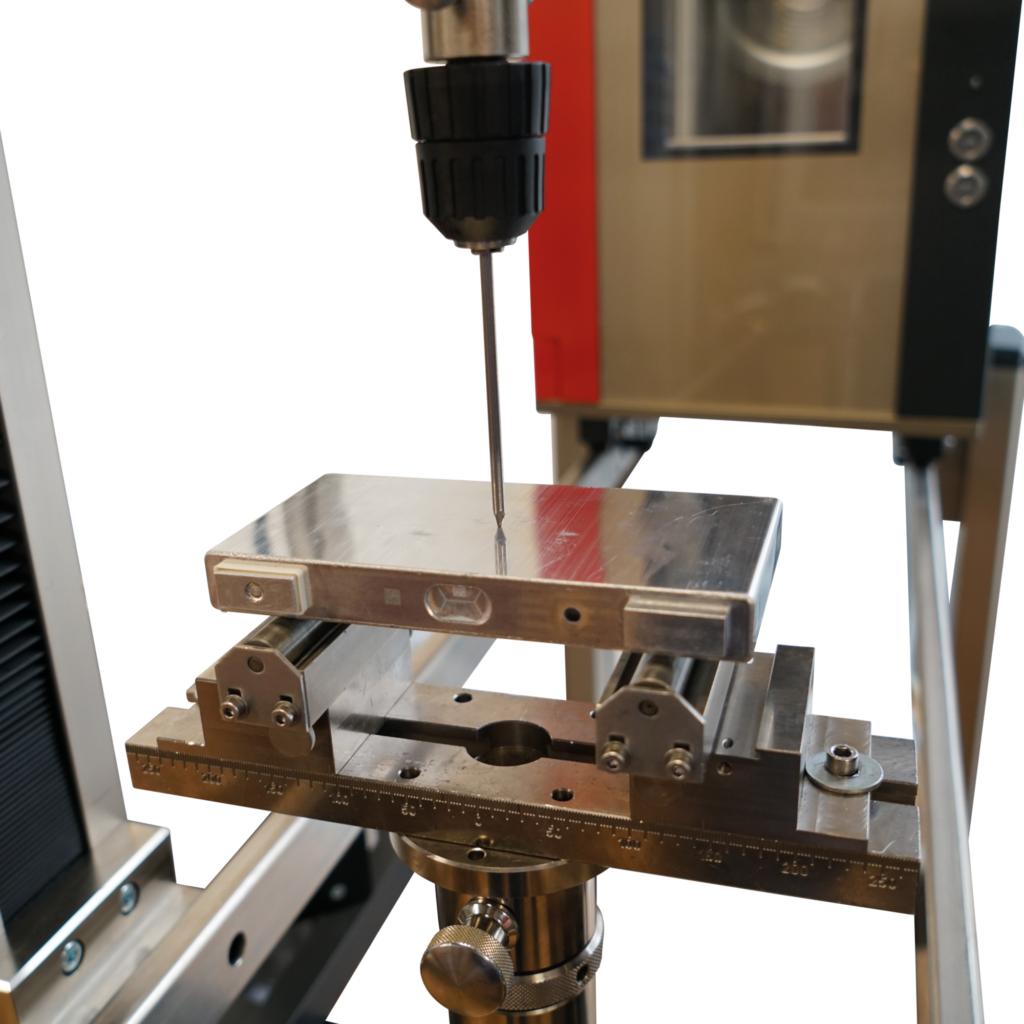
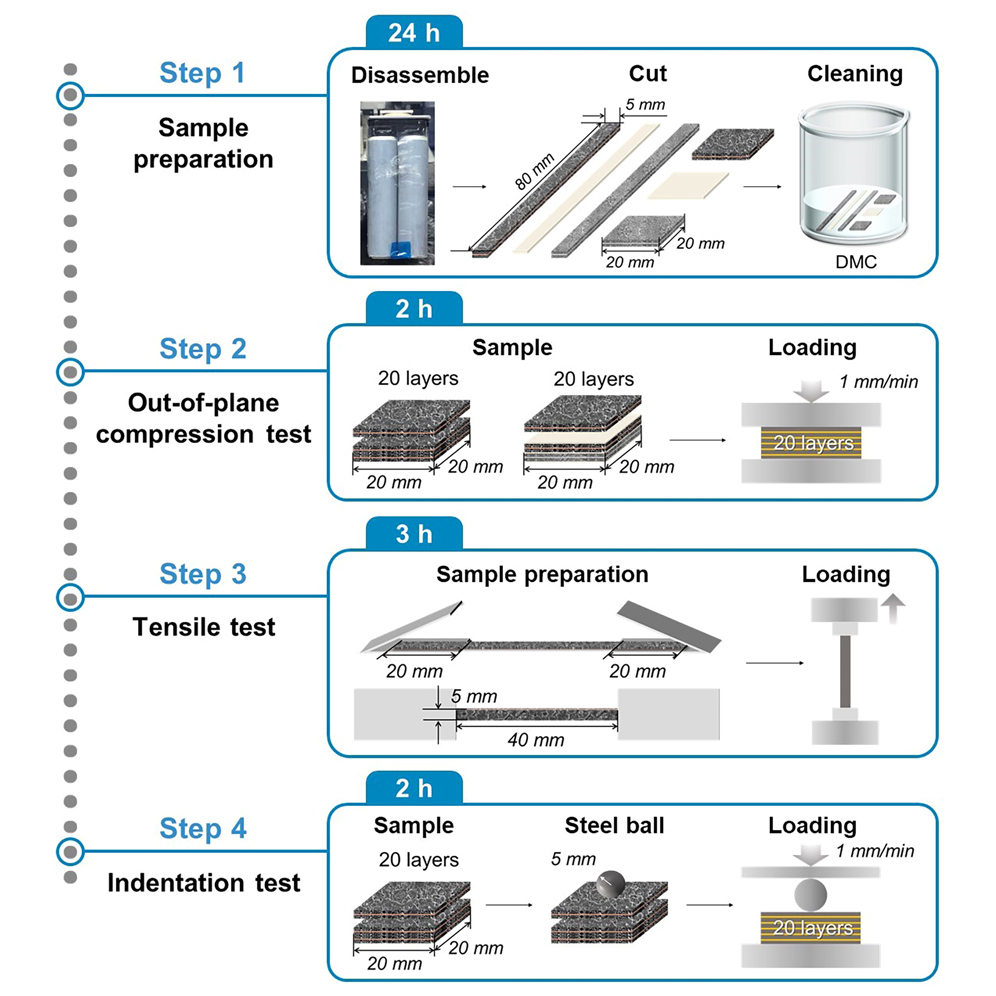
Our battery testing laboratory performs extensive mechanical evaluation of battery components and structural materials to assess tensile strength, compression resistance, puncture resistance, flexural properties, and fracture behavior. Electrode coatings must maintain adhesion to current collectors while preserving flexibility during repeated cycling. Separators must resist tearing and penetration while maintaining ionic conductivity. Battery enclosures and casings must provide protection without negatively affecting thermal dissipation or increasing unnecessary weight.
Compression and crush testing replicate collision scenarios and stacking loads encountered in grid-scale energy storage systems. Penetration and puncture testing evaluate resistance to external damage that could trigger thermal failure or internal electrical shorts. Through detailed analysis of deformation patterns and failure mechanisms, our laboratory identifies structural weaknesses and supports design optimization for safer and more reliable battery systems.
Electrochemical Performance & Lifecycle Validation
Electrochemical performance remains one of the most critical aspects of Battery Materials Analysis. Capacity retention, power density, charging efficiency, and cycle life are directly influenced by the quality and behavior of active materials, electrolytes, conductive additives, and interfacial layers. As battery technologies advance toward high-nickel cathodes, silicon-based anodes, and solid-state electrolyte systems, precise electrochemical characterization becomes essential for long-term reliability.
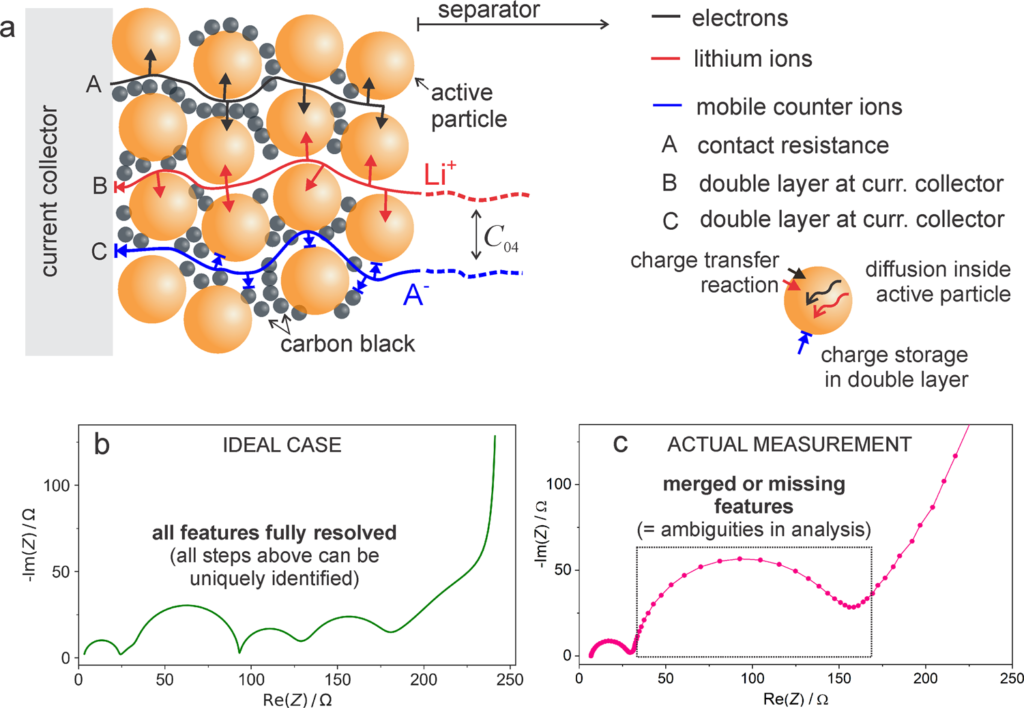
Our laboratory conducts charge-discharge cycling, rate capability testing, electrochemical impedance spectroscopy, and accelerated aging studies to evaluate internal resistance growth, degradation behavior, and long-term energy retention. Extended lifecycle testing simulates real-world operational conditions to predict service life and identify early-stage performance decline.
Precise elemental composition and trace impurity quantification of cathode active materials, electrolyte salts, and anode coatings are performed through our Trace Elemental Analysis services using ICP-MS, capable of detecting metallic contaminants at parts-per-billion levels that affect cell capacity and cycle life.
By integrating electrochemical testing with advanced Battery Materials Analysis, we provide valuable insight into lithium plating, dendrite formation, electrode cracking, electrolyte degradation, and interfacial instability. Solid-state battery systems require specialized validation due to their complex mechanical-electrochemical interactions, pressure sensitivity, and ionic transport behavior. Our testing programs address these challenges through detailed conductivity analysis, interfacial resistance evaluation, and stability testing under operational stress conditions.
Calendar aging studies assess long-term material behavior during storage, while fast-charge cycling tests evaluate durability under rapid charging conditions. This integrated testing approach helps manufacturers optimize formulations, improve reliability, and enhance long-term battery performance.
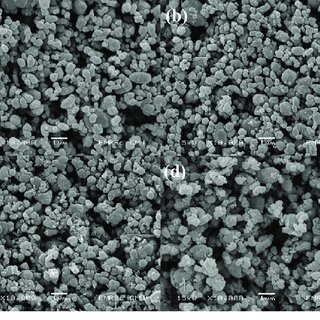
High-resolution microstructural characterization of battery electrodes — including particle morphology, grain boundary analysis, and coating uniformity evaluation — is performed through our Advanced Microscopy services using SEM, TEM, and STEM-EDS to support both quality control and post-mortem failure analysis.
Thermal Stability, DSC Testing / TGA Testing & Safety Validation
Thermal stability and safety are among the most critical requirements in battery and energy storage system development. Elevated temperatures, overcharging, internal short circuits, or mechanical abuse can initiate thermal runaway events that may result in fire, gas release, or catastrophic system failure. As energy densities continue to increase, advanced thermal characterization becomes essential for ensuring safe battery operation.
Our battery testing laboratory provides advanced DSC testing / TGA testing services to evaluate thermal decomposition behavior, heat generation, oxidation stability, and material degradation characteristics under controlled thermal conditions. Differential Scanning Calorimetry (DSC testing) is used to identify exothermic and endothermic reactions, thermal transition temperatures, and decomposition thresholds of electrode materials, separators, binders, and electrolytes. Thermogravimetric Analysis (TGA testing) evaluates material weight loss, thermal degradation kinetics, compositional stability, and volatile component release at elevated temperatures.
These advanced thermal analysis methods provide critical insight into material safety margins and thermal stability performance. By combining DSC testing / TGA testing with accelerating rate calorimetry, thermal ramp testing, overcharge simulation, and short-circuit analysis, our laboratory helps manufacturers understand reaction kinetics, heat generation pathways, and thermal runaway propagation risks.
Separator shutdown behavior, electrolyte flammability, cathode oxygen release, and thermal decomposition characteristics are carefully analyzed to support safer battery architectures and improved thermal management strategies. Early identification of thermal vulnerabilities reduces development risk, enhances product reliability, and supports compliance with global battery safety standards.
Environmental Durability & Operational Reliability
Battery materials must maintain consistent performance under diverse environmental conditions, including temperature extremes, humidity exposure, vibration, altitude variation, and mechanical fatigue. Electric vehicles operate across harsh climates ranging from sub-zero temperatures to extreme heat, while grid storage systems are frequently exposed to outdoor environmental stressors.
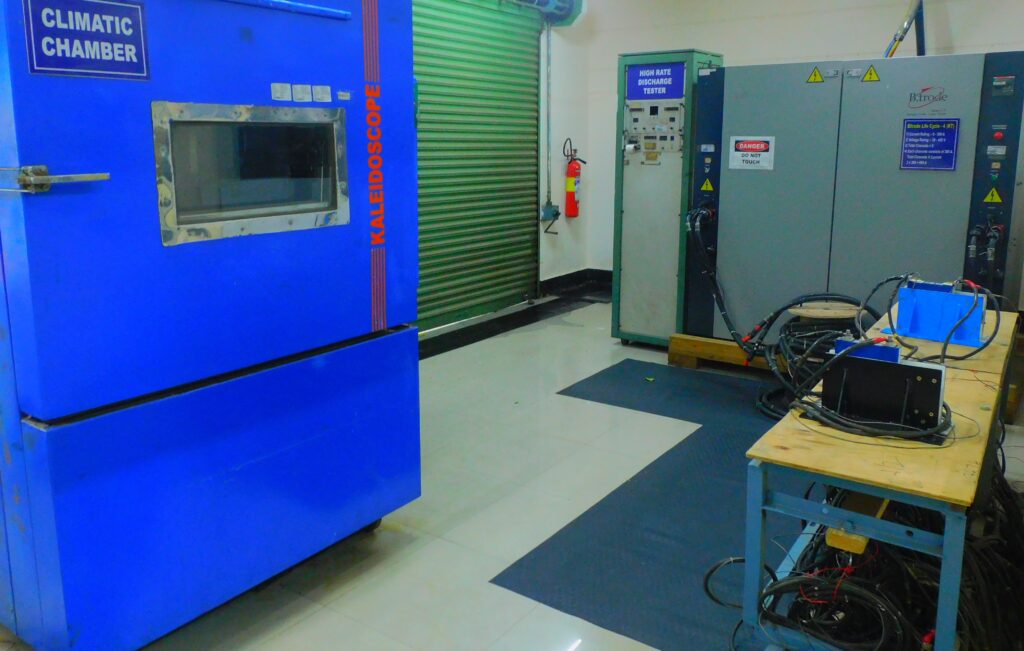
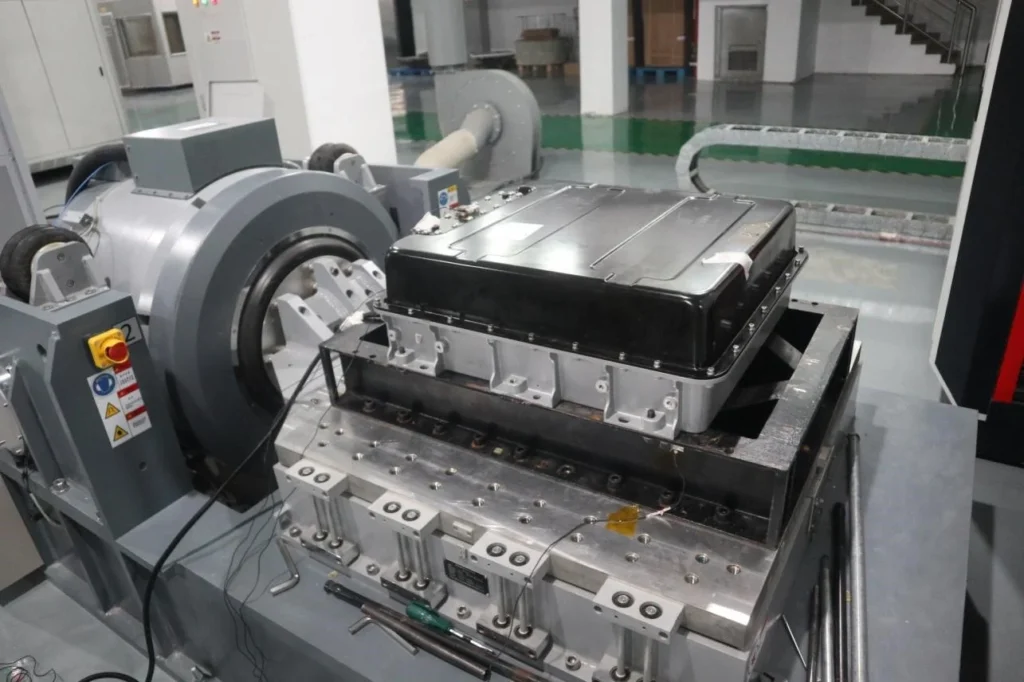
Our environmental testing programs simulate these operating conditions to evaluate durability, corrosion resistance, thermal expansion behavior, and long-term material stability. Thermal cycling studies assess stress-induced degradation of electrode interfaces and bonding structures. Humidity exposure testing evaluates electrolyte stability, moisture sensitivity, and corrosion susceptibility. Vibration and shock testing replicate transportation and operational stresses that may affect battery integrity and performance.
By integrating environmental simulations with Battery Materials Analysis and electrochemical performance evaluation, we provide a comprehensive understanding of how battery materials behave under combined stress conditions. This holistic validation approach ensures reliable energy storage system performance across real-world operating environments.
Advanced Materials Characterization & Failure Analysis
Detailed Battery Materials Analysis is essential for understanding the microstructural, chemical, and surface characteristics that influence electrochemical performance and mechanical reliability. Material morphology, porosity, coating uniformity, particle distribution, and interfacial bonding all play significant roles in determining long-term battery behavior.
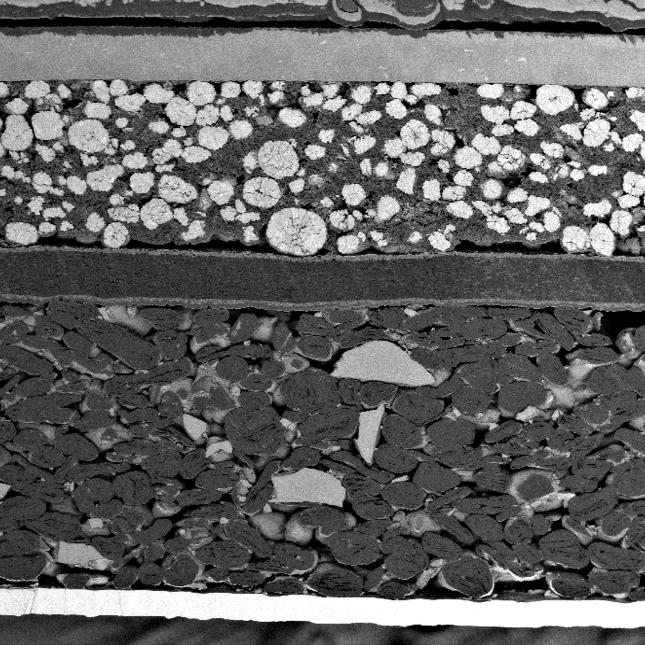
Our laboratory utilizes advanced microscopy, spectroscopy, surface characterization, and analytical testing techniques to examine battery materials at microscopic and elemental levels. Cross-sectional imaging identifies delamination, cracking, dendrite growth, and structural degradation. Surface analysis evaluates coating consistency, adhesion quality, and interfacial stability. Elemental characterization detects contamination, compositional variations, and degradation products that may contribute to premature failure.
Failure analysis investigations support root cause determination for unexpected performance issues, thermal instability, or mechanical failure events. By correlating electrochemical, thermal, and structural testing data with advanced Battery Materials Analysis, our experts identify material weaknesses and provide actionable recommendations for product improvement and manufacturing optimization.
Regulatory Compliance & Industry Standards
Battery systems and energy storage technologies must comply with stringent international regulations and performance standards across automotive, aerospace, industrial, and consumer electronics markets. Comprehensive validation through battery testing laboratory services plays a vital role in demonstrating safety, reliability, and regulatory readiness.
Our testing programs align with recognized industry standards and best practices to ensure accurate documentation of thermal stability, electrochemical performance, mechanical durability, and safety margins. Independent third-party validation strengthens stakeholder confidence and supports smoother certification and approval processes.
Through integrated Battery Materials Analysis and DSC testing / TGA testing, manufacturers can proactively identify material vulnerabilities, reduce the risk of product recalls, minimize warranty claims, and improve overall system reliability before commercialization.
Supporting Innovation in Energy Storage
The battery and energy storage industry continues to evolve rapidly with advancements in high-capacity cathodes, silicon-rich anodes, lithium-sulfur systems, solid-state electrolytes, and advanced composite materials. Emerging manufacturing methods, including additive manufacturing and next-generation coating technologies, are reshaping battery performance and design capabilities.
As innovation accelerates, robust Battery Materials Analysis and advanced thermal characterization become increasingly important for ensuring product safety and performance. Our battery testing laboratory collaborates closely with research teams, manufacturers, and product developers to design customized testing programs tailored to unique applications and technical objectives.
Whether supporting early-stage material development, pilot-scale validation, or post-market performance assessment, our laboratory delivers accurate, actionable insights that support informed engineering decisions and accelerated commercialization.
Partner with Genuine Testing
Battery materials operate within highly dynamic environments involving continuous charge-discharge cycling, thermal fluctuations, mechanical stress, and complex electrochemical interactions. Even minor inconsistencies in material composition or structure can lead to capacity loss, internal resistance growth, thermal instability, or system failure.
Through integrated mechanical testing, electrochemical characterization, Battery Materials Analysis, and advanced DSC testing / TGA testing, our battery testing laboratory provides a complete understanding of material behavior throughout the battery lifecycle. This comprehensive approach enables manufacturers to optimize product design, improve operational reliability, reduce development risk, and accelerate the commercialization of advanced energy storage technologies.
As electrification continues to expand across transportation, renewable energy, aerospace, and industrial sectors, reliable battery materials will remain essential for building a sustainable energy future. Through advanced thermal analysis, structural validation, electrochemical testing, and failure analysis services, Genuine Testing remains committed to supporting safe, innovative, and high-performance battery technologies for global industries.