
3D printed materials testing
Advanced Validation for Additive Manufacturing Materials & Components
Additive manufacturing has revolutionized modern engineering by enabling the production of highly complex geometries, lightweight structures, and customized components that are often impossible to achieve through traditional manufacturing methods. From aerospace brackets and medical implants to automotive tooling and industrial prototypes, 3D printed materials are now widely used in mission-critical applications across multiple industries. However, the layer-by-layer fabrication process introduces unique microstructural characteristics, anisotropy, and potential defects that require advanced validation to ensure performance, safety, and regulatory compliance.
At Genuine Testing, an Advanced materials testing CRO, we provide comprehensive additive manufacturing validation services designed to verify mechanical integrity, structural consistency, and long-term reliability. Through advanced Materials Characterization and Composition Materials ID methodologies, we support OEMs, aerospace suppliers, medical device manufacturers, and industrial innovators with accurate, defensible, and application-specific performance data. Our testing programs evaluate metal, polymer, and composite printed materials under realistic service conditions to ensure additive manufacturing delivers both design flexibility and dependable performance.
Mechanical Performance & Structural Integrity of Printed Components
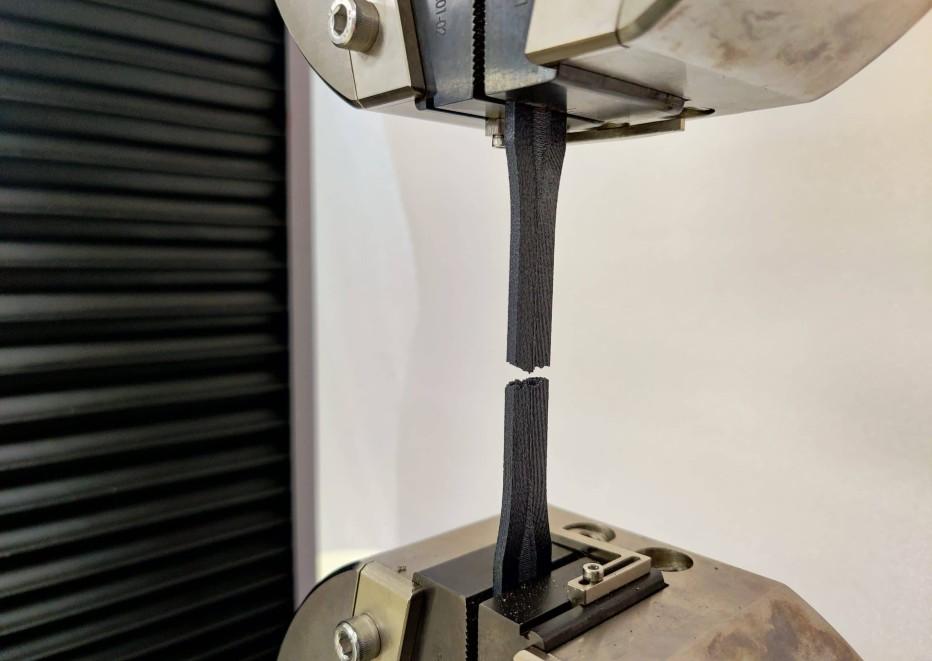
Mechanical validation is a critical component of 3D printed materials testing. Additively manufactured parts must withstand tensile loads, compressive forces, cyclic stresses, and impact conditions comparable to or exceeding conventionally manufactured components. However, the inherent layer-based construction of additive manufacturing can introduce anisotropic behavior, residual stresses, and internal discontinuities that influence strength and fatigue life.
Our laboratory performs tensile, compression, flexural, shear, and fatigue testing to characterize the mechanical response of printed materials across various build orientations. By evaluating vertical, horizontal, and angled specimens, we quantify anisotropy and assess how layer adhesion impacts overall structural performance. Fatigue testing is particularly important for aerospace, automotive, and medical applications where components endure millions of load cycles during service life.
Through advanced Materials Characterization techniques, we correlate mechanical performance with microstructural behavior to provide a comprehensive understanding of material integrity and long-term durability.
Metal Additive Manufacturing Material Testing
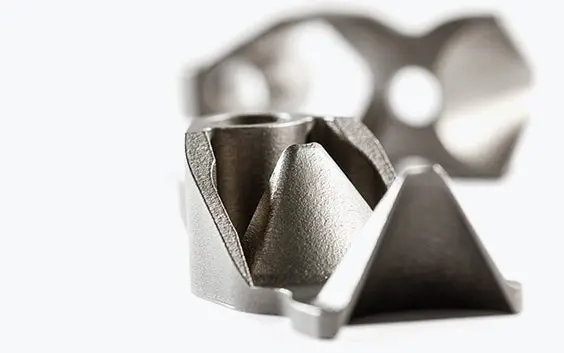
Metal additive manufacturing technologies such as powder bed fusion and directed energy deposition are increasingly used to produce high-strength components in titanium, aluminum, stainless steel, nickel alloys, and cobalt-chromium systems. These materials are widely utilized in aerospace engines, structural brackets, medical implants, and high-performance automotive applications where consistent density, microstructural uniformity, and mechanical reliability are essential.
Our testing programs include density analysis, porosity evaluation, grain structure examination, and phase composition assessment using advanced microscopy and non-destructive evaluation methods. Computed tomography scanning identifies internal voids and lack-of-fusion defects that may not be externally visible. Heat treatment validation evaluates how post-processing influences strength, ductility, and fatigue resistance, while residual stress analysis determines whether internal stresses may contribute to distortion or premature failure.
As an Advanced materials testing CRO, we integrate Composition Materials ID and Materials Characterization data with mechanical performance results to establish clear relationships between printing parameters, material properties, and final component behavior. This data-driven methodology supports process optimization, material qualification, and compliance with aerospace and medical certification standards.
Polymer & Composite Additive Manufacturing Validation
Polymer-based additive manufacturing technologies such as fused deposition modeling, selective laser sintering, and stereolithography are commonly used for functional prototypes, end-use parts, tooling, and lightweight assemblies. Engineering-grade polymers and fiber-reinforced composites provide high strength-to-weight ratios and exceptional design flexibility. However, layer adhesion, thermal history, and feedstock quality significantly affect mechanical and thermal performance.
Our laboratory evaluates tensile strength, elongation, impact resistance, and creep behavior of 3D printed polymers and composite materials. Layer bonding strength is carefully analyzed to determine resistance to delamination under mechanical loading. For fiber-reinforced systems, we conduct detailed Materials Characterization to assess fiber distribution, orientation, and interfacial bonding, ensuring consistent reinforcement and predictable performance.
Environmental conditioning studies simulate exposure to temperature extremes, humidity, UV radiation, and chemical environments to evaluate long-term durability. Many polymer-based printed parts operate in outdoor, automotive, and industrial environments where environmental exposure can alter mechanical properties over time. By combining environmental testing with Composition Materials ID analysis, we ensure printed components maintain structural stability throughout their intended service life.
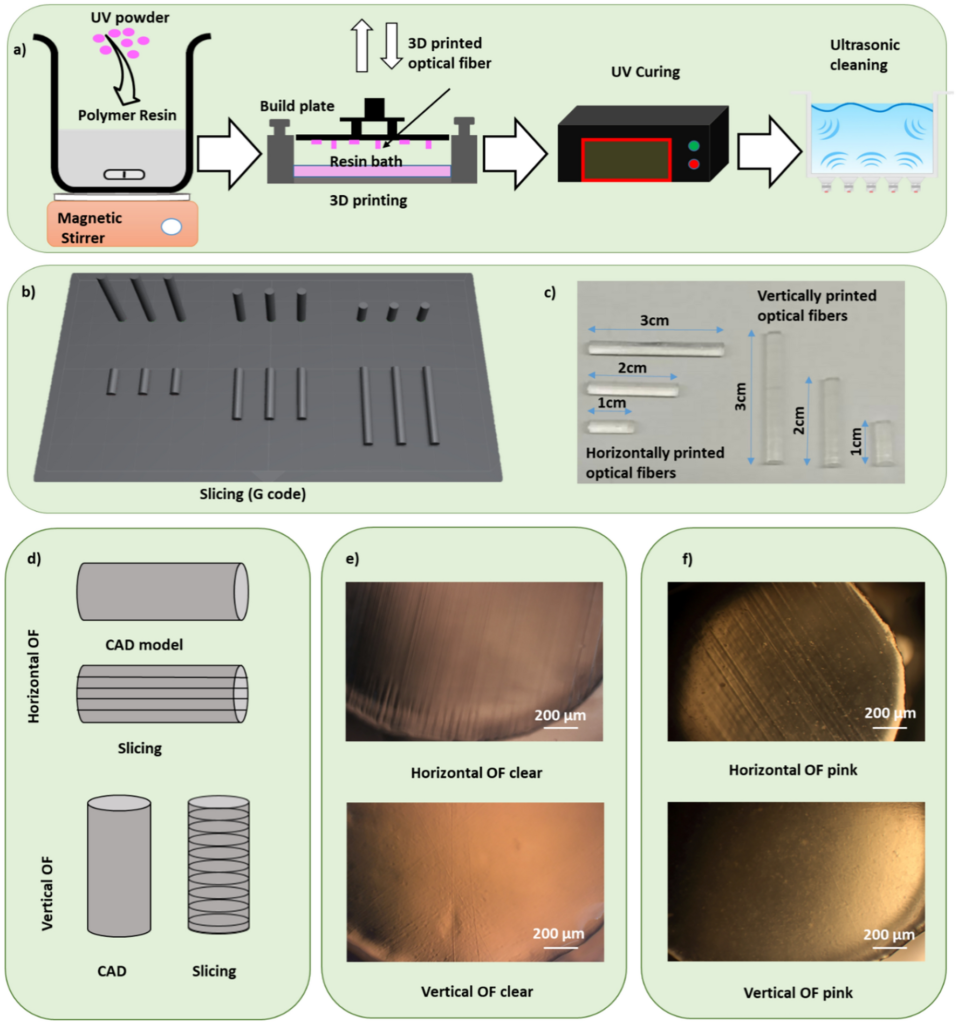
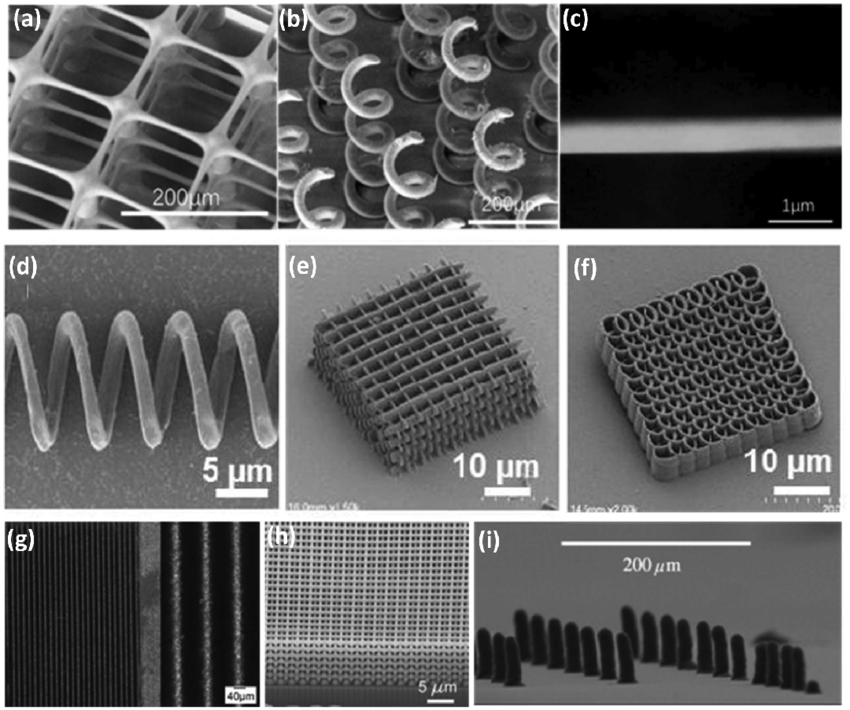
Internal defect detection, pore size distribution, and layer-to-layer fusion quality in 3D printed components are examined through our Advanced Microscopy services, including SEM cross-sectional imaging and optical microscopy on polished metallographic sections.
Dimensional Accuracy, Surface Quality & Post-Processing Evaluation
Dimensional accuracy and surface finish are critical considerations in additive manufacturing, especially for components requiring tight tolerances or precision mating interfaces. Build orientation, thermal distortion, shrinkage, and support removal can influence final geometry. Post-processing operations such as machining, polishing, heat treatment, or hot isostatic pressing may further affect dimensional stability and surface integrity.
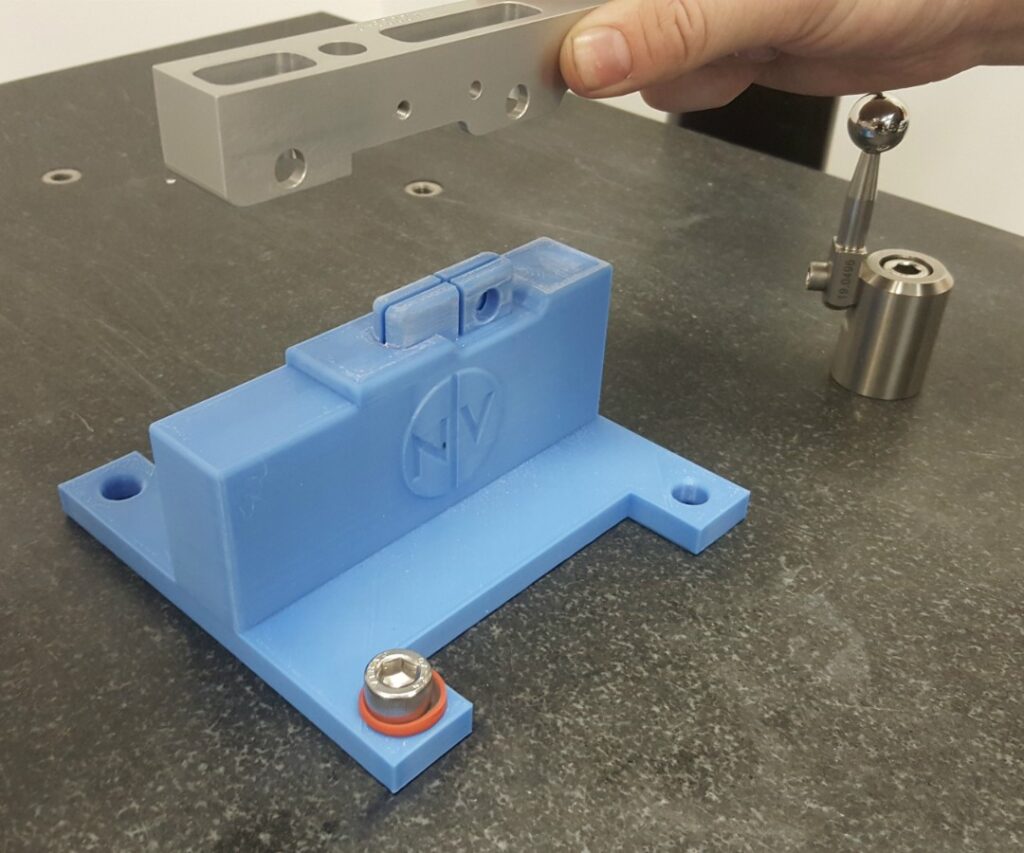
Our metrology and surface characterization services evaluate dimensional conformity using precision measurement systems and coordinate measuring equipment. Surface roughness analysis examines texture, waviness, and potential stress concentration regions. For components requiring secondary finishing operations, we validate the effects of post-processing on mechanical properties and structural performance.
Through integrated Materials Characterization and Composition Materials ID services, we help manufacturers understand how additive manufacturing parameters and finishing processes interact to achieve predictable and repeatable results. This level of validation is especially important for aerospace components, medical implants, and high-precision industrial parts where tolerance deviations can compromise functionality or safety.
Environmental Durability & Long-Term Reliability
3D printed materials must demonstrate reliable performance under real-world environmental conditions. Aerospace components experience thermal fluctuations and vibration during flight operations, while automotive parts encounter humidity, chemicals, and continuous mechanical loading. Industrial systems may operate in corrosive or high-temperature environments that challenge long-term material stability.
Our environmental testing programs simulate thermal cycling, humidity exposure, salt spray corrosion, UV radiation, and vibration to evaluate durability under service conditions. For metal printed components, corrosion resistance testing identifies susceptibility to pitting or surface degradation. For polymers, UV and thermal aging studies assess color stability, embrittlement, and retention of mechanical properties.
By integrating environmental conditioning with subsequent mechanical evaluation and Materials Characterization, we determine how exposure conditions influence structural integrity and long-term performance. This comprehensive validation approach ensures additive manufactured components maintain reliability across diverse operational environments.
Regulatory Compliance & Qualification Support
Additive manufacturing is increasingly utilized in highly regulated industries such as aerospace, medical devices, and defense, where strict qualification requirements apply. Material traceability, process validation, and performance documentation are essential for certification and market approval. Comprehensive testing provides the technical evidence necessary to demonstrate compliance with industry standards and customer specifications.
As an Advanced materials testing CRO, Genuine Testing delivers independent third-party validation that supports qualification of additive manufacturing processes and materials. Our detailed reporting, Materials Characterization studies, and Composition Materials ID analysis streamline audit readiness and facilitate efficient regulatory review. Early-stage validation also helps minimize costly redesigns and certification delays.
Mechanical performance validation of additively manufactured components — including build-direction anisotropy, layer adhesion strength, and fatigue resistance — is conducted through our Mechanical Property Testing service following ASTM standards adapted for additive manufacturing test geometries.
Enabling Innovation Through Data-Driven Validation
The flexibility of additive manufacturing encourages rapid innovation, but innovation must be supported by reliable performance data. Whether developing lightweight aerospace structures, patient-specific implants, advanced tooling, or next-generation composite systems, manufacturers require a comprehensive understanding of how 3D printed materials perform under real-world conditions.
At Genuine Testing, we collaborate closely with engineering and R&D teams to develop customized testing programs aligned with application-specific requirements. Our multidisciplinary expertise in mechanical evaluation, Materials Characterization, environmental durability, failure analysis, and Composition Materials ID ensures every component is thoroughly assessed. Comprehensive reporting transforms complex scientific findings into actionable recommendations for process optimization and design refinement.
As additive manufacturing technologies continue to evolve, robust validation remains essential for unlocking their full potential. Through advanced testing services, scientific rigor, and data-driven analysis, Genuine Testing helps organizations transform innovative concepts into safe, reliable, and high-performance products ready for deployment across demanding industries.
Partner with Genuine Testing
Unlike conventionally manufactured components, 3D printed parts often exhibit directional properties resulting from build orientation, thermal gradients, and layer bonding characteristics. Variations in powder quality, print parameters, scan strategies, and post-processing treatments can significantly influence density, porosity, and mechanical performance.
Through integrated mechanical testing, advanced Materials Characterization, and comprehensive Composition Materials ID analysis, we provide a complete understanding of material behavior throughout the additive manufacturing lifecycle. This holistic approach reduces development risk, supports certification efforts, and accelerates commercialization timelines.
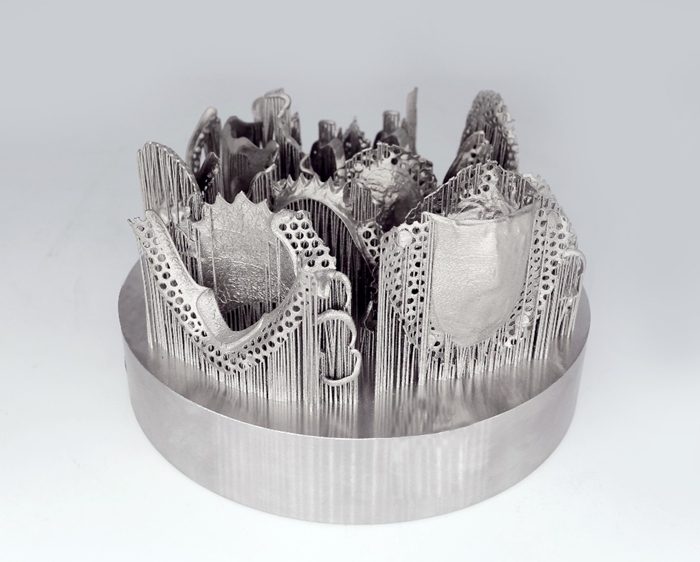
Lattice structures and topology-optimized geometries commonly used to reduce weight while maintaining strength require specialized compression and stability testing. These complex architectures may behave differently from solid components, making targeted validation essential. Fracture analysis further supports reliability assessment by examining crack initiation and propagation behavior, enabling engineers to optimize build parameters and post-processing techniques. Through comprehensive mechanical evaluation and scientific analysis, we ensure that 3D printed components meet rigorous performance and safety standards across critical industries.


North Carolina-based inducible gene-regulation-platform, SwitchBlade TM , that activates crop defense traits only under disease or stress pressure when and where needed.
Upsteam’s mission is to create the next-generation of plant immune system regulation for biotic and abiotic stressors to create a more resilient food supply that is less reliant on synthetic chemistry and climate stressors.
https://www.upstreambiotech.com/

Colorado-based BOPA provides farmers with smart robotics for precision, mechanical weeding through the use of autonomous nano tractors (ANT) for small and midsize farmers.
BOPA is committed to strengthen farmer resiliency through automating labor-intensive crop operations. With a focus on farmer-centric design, the modular ANT platform reduces labor dependency and reduces input use while generating high-resolution, in-field data to support better agronomic decision making.
https://barnowlag.com/