
Automotive Materials Testing
Modern vehicles integrate thousands of components across metals, polymers, composites, coatings, adhesives, and electronics — all of which must perform reliably across demanding mechanical, thermal, and chemical environments. When materials underperform, the consequences range from warranty costs and production delays to safety recalls and litigation. Genuine Testing provides independent, third-party materials testing and analysis services for the automotive and transportation sector. Our laboratory supports OEMs, tier 1 and tier 2 suppliers, quality engineers, and legal teams with failure analysis, NDT, corrosion testing, wear and abrasion testing, chemical compatibility analysis, advanced microscopy, and surface characterization — delivering precise, defensible data at every stage of the product lifecycle.
Automotive materials and components frequently require coordinated testing because failures can involve several interacting mechanisms. A component may experience fatigue, corrosion, wear, chemical exposure, thermal cycling, or manufacturing variation during its service life. Genuine Testing can combine NDT inspection with destructive and analytical techniques when appropriate, allowing engineers to preserve evidence during initial inspection and then investigate suspect regions in greater detail. This approach supports supplier qualification, warranty investigations, production troubleshooting, and root-cause analysis across metals, polymers, coatings, composites, adhesives, and electronic assemblies. For projects that require deeper material evidence, Non-Destructive Testing (NDT) can be incorporated into the analytical plan. Corrosion Testing can provide complementary evidence when the project requires additional characterization or performance context.
The Materials Challenge in Automotive Engineering
Automotive components face a uniquely complex combination of stressors: cyclic mechanical loading, thermal cycling, corrosive environments (road salts, humidity, fuel, coolants), chemical exposure, and wear from continuous contact. Material selection and processing must be verified rigorously — and when something fails in service, root cause determination must be fast, accurate, and credible.
An independent testing laboratory eliminates the conflict of interest that comes from in-house or supplier-affiliated analysis, providing findings that hold up to OEM review, regulatory scrutiny, and legal proceedings.
Our Automotive Testing Services
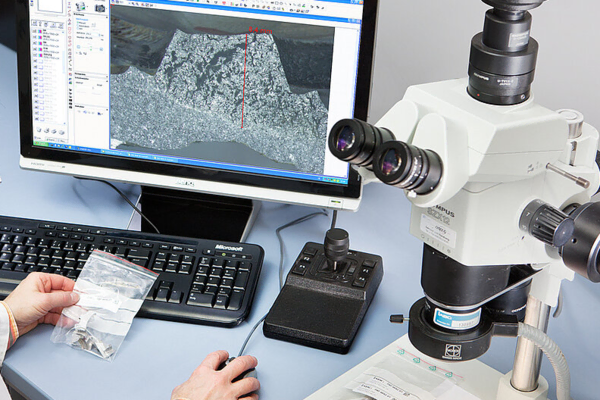
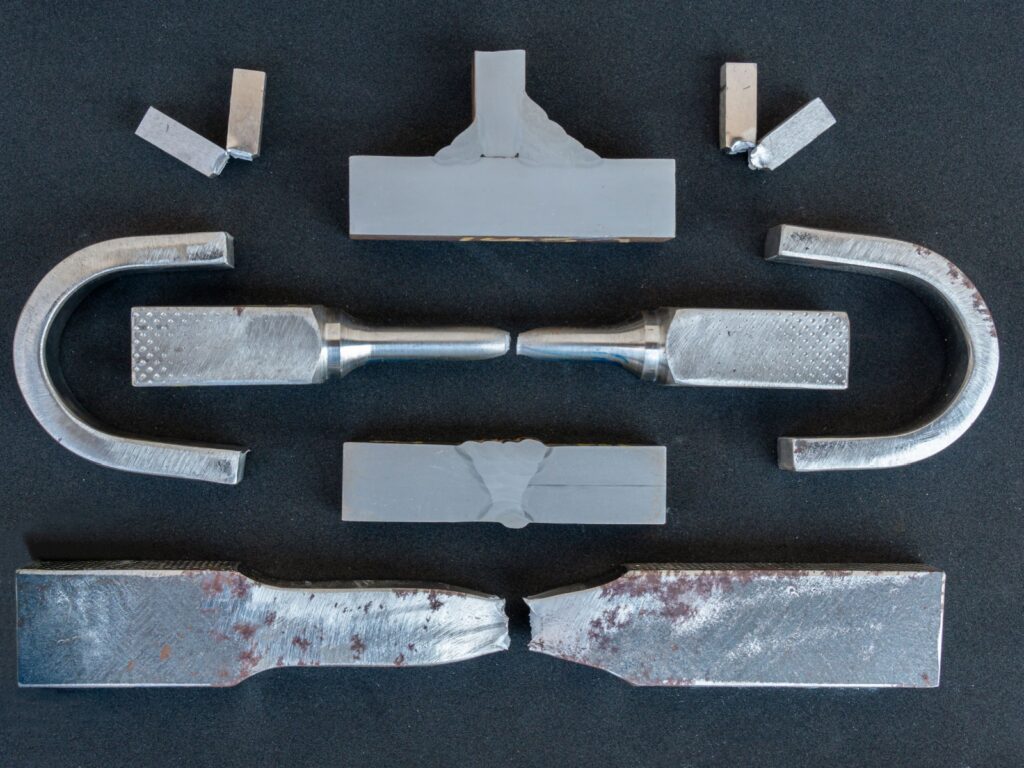
Failure Analysis & Root Cause Investigation Automotive failure analysis covers the full spectrum of component types and failure mechanisms — from drivetrain and suspension fatigue fractures to body panel corrosion, plastic bracket cracking, coating delamination, and weld failures. We identify crack initiation sites, characterize failure modes (fatigue, overload, SCC, wear, corrosion-assisted cracking), and determine whether failure originated from material defects, processing errors, design issues, or service conditions. Reports are structured for engineering corrective action, warranty documentation, and litigation support.
Common components: connecting rods, crankshafts, gear teeth, suspension arms, wheel hubs, brake components, fasteners, weld assemblies, injection-molded brackets, fuel system components
Corrosion Testing & Analysis Corrosion is one of the most significant long-term durability challenges in automotive design. We characterize corrosion mechanisms — pitting, crevice, galvanic, intergranular, filiform, and stress corrosion cracking — and evaluate the protective performance of coatings, plating, conversion treatments, and inhibitor systems. Salt spray, humidity, and electrochemical testing simulate service environments, while SEM and EDS analysis characterize corrosion products and attack morphology at the microstructural level.
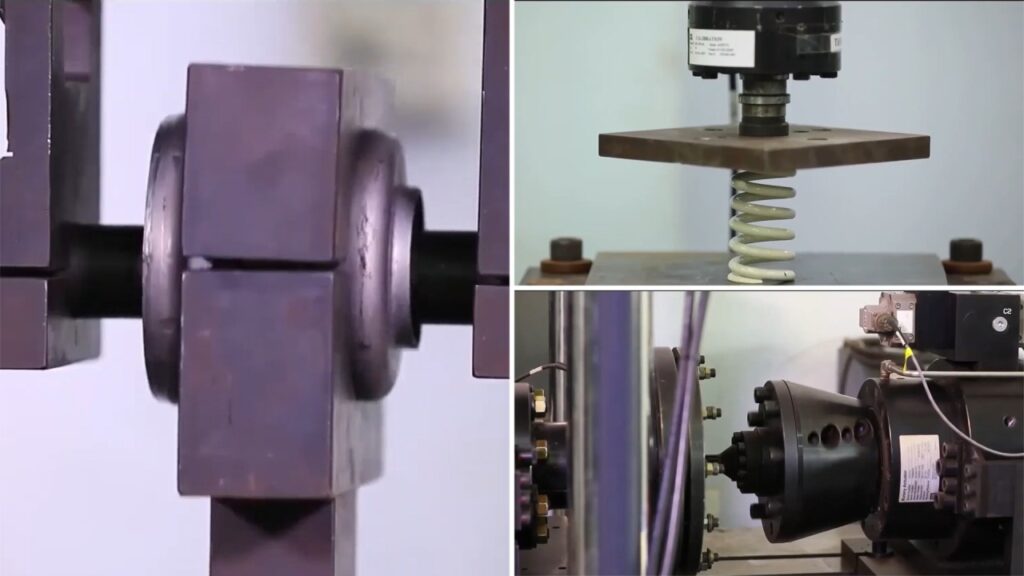
Wear & Abrasion Testing Bearing surfaces, cam and valve train components, brake pads and rotors, transmission gears, and seat mechanisms are among the many automotive components subject to continuous tribological loading. We evaluate wear resistance, friction coefficients, and abrasion damage using standardized (ASTM G65, G99, etc.) and application-specific methodologies — supporting both material selection decisions and in-service wear failure investigations.
Chemical Compatibility Testing Automotive materials interact with a wide range of chemicals throughout their service life: engine oils, coolants, transmission fluids, brake fluids, fuel, cleaning agents, road salt solutions, and adhesives. We evaluate material behavior under chemical exposure — measuring dimensional change, weight change, mechanical property retention, and surface degradation — to confirm compatibility and support material qualification and warranty investigations.
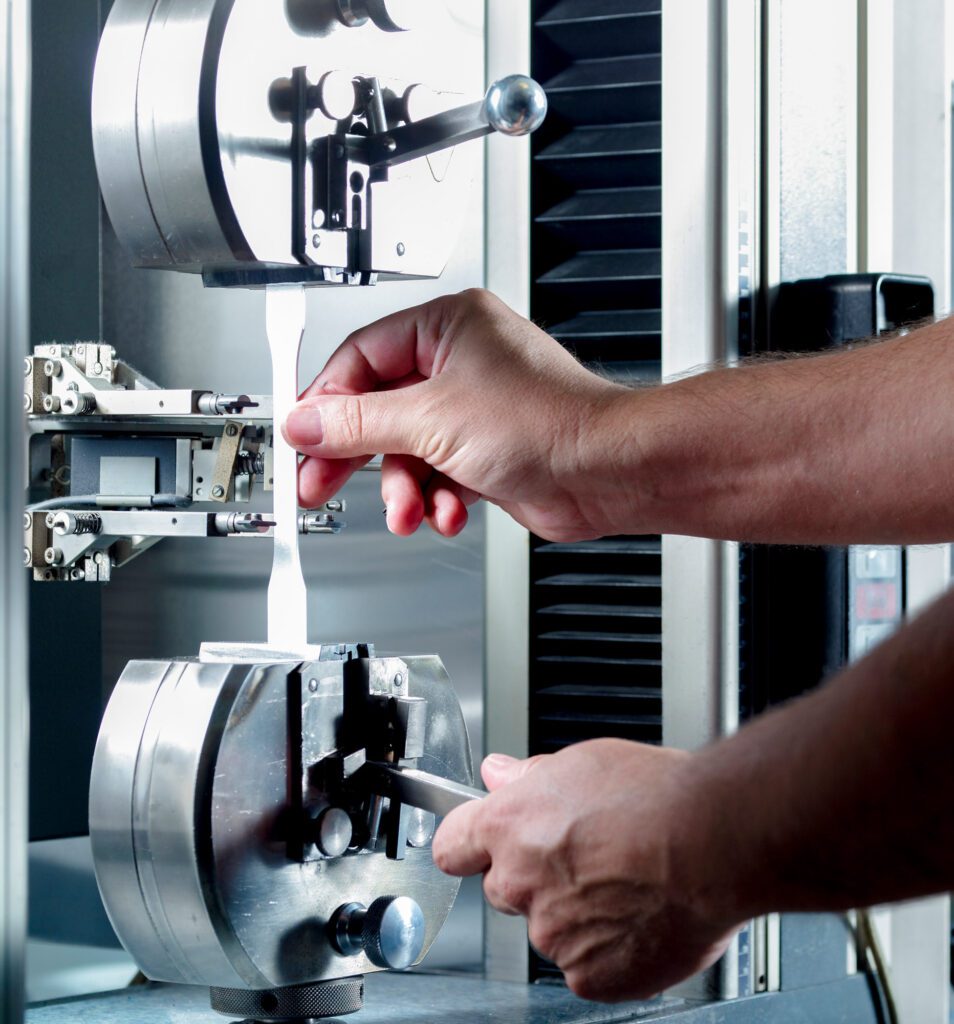
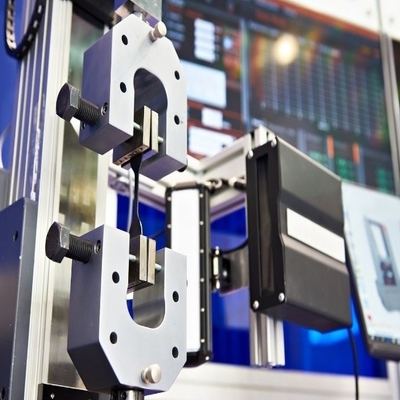
Metallurgical Analysis Microstructural verification of steel, aluminum, and cast iron components confirms that heat treatment response, grain structure, phase distribution, and inclusion content meet engineering specifications. We perform metallographic preparation, hardness mapping, and microstructural characterization for incoming material verification, heat treatment audits, weld HAZ assessment, and failure investigation. Chemical composition analysis confirms material identity and detects substitution or contamination.
Surface Analysis (XPS & EDS) Surface chemistry governs adhesive bond performance, paint adhesion, plating quality, and corrosion protection in automotive assemblies. XPS characterizes surface chemical states, contamination, oxide composition, and treatment uniformity at the outermost material layers — providing insight critical for adhesion failures, paint delamination investigations, and coating qualification.
Polymer & Plastics Testing Automotive interiors, underhood components, fuel system parts, and structural brackets are increasingly manufactured from polymers and composites. We characterize plastic failure modes including environmental stress cracking, UV degradation, chemical attack, creep, and impact fracture — and evaluate filler distribution, fiber orientation, and void content in reinforced polymer systems using microscopy and elemental analysis.
Automotive Materials & Components We Test
- High-strength steels (AHSS, UHSS, boron steels)
- Cast iron and ductile iron components
- Aluminum alloys (cast and wrought)
- Powertrain components: crankshafts, camshafts, connecting rods, gears
- Suspension and steering components
- Brake system components
- Fasteners, bolts, and threaded assemblies
- Weld assemblies and stamped body panels
- Coatings: e-coat, powder coat, zinc plating, PVD, thermal spray
- Injection-molded and blow-molded plastic components
- Rubber seals, gaskets, and O-rings
- Adhesive bonds and structural joints
- Electronic and sensor assemblies
Automotive Failure Modes We Investigate
- Fatigue fracture in drivetrain and suspension components
- Hydrogen embrittlement in high-strength fasteners
- Stress corrosion cracking in aluminum and steel
- Fretting and contact fatigue at interfaces
- Coating delamination and underbody corrosion
- Weld cracking and heat-affected zone failures
- Polymer environmental stress cracking and creep
- Wear and seizure in bearing and gear surfaces
- Adhesive bond failure and surface contamination
- Galvanic corrosion at multi-material joints
Serving the Full Automotive Supply Chain
OEMs & Vehicle Manufacturers Material verification, incoming inspection support, warranty failure investigation, and supplier corrective action documentation.
Tier 1 & Tier 2 Suppliers Component qualification testing, process validation, quality system documentation, and third-party verification of materials and coatings before delivery to OEM customers.
Aftermarket & Replacement Parts Independent verification of replacement component material quality and performance equivalence to OEM specification.
Why Choose Genuine Testing for Automotive?
Independence: Unbiased, third-party findings credible in OEM audits, warranty disputes, and litigation.
Full-Lifecycle Support: From incoming material verification and process qualification through in-service failure investigation and corrective action.
Cross-Material Expertise: Metals, polymers, coatings, composites, adhesives — tested and analyzed under one laboratory relationship.
Fast Turnaround: We understand the production and warranty timelines that drive urgency in automotive testing. Prioritized scheduling is available.
Direct Expert Communication: You work directly with the scientists performing your analysis — not a call center or project coordinator.
Application and Decision Support
The value of laboratory testing is not limited to generating individual measurements. Well-designed testing programs help engineering, quality, research, and regulatory teams understand the relationship between material condition and product performance. Results can be used to compare suppliers, verify incoming materials, establish baseline properties, investigate unexpected variation, support design verification, and document corrective actions. Where appropriate, testing can also be structured around a specific failure hypothesis so that each analytical step answers a defined technical question.
Integrated Laboratory Approach
A coordinated laboratory program can reduce unnecessary testing and improve confidence in conclusions. Sample preparation, analytical method selection, conditioning, measurement, imaging, and interpretation should be considered together, particularly when samples are limited or when the suspected defect may be localized. Genuine Testing can tailor the sequence of methods to the material, component geometry, service environment, applicable specification, and decision the client needs to make. The resulting report can bring observations and measurements together into a clear technical narrative rather than presenting disconnected test results.