
Coatings and Surface Treatments
Performance Validation for Protective & Functional Surfaces
Surface coatings and engineered treatments are essential for improving material durability, corrosion protection, mechanical strength, and long-term functional performance across industries including aerospace, automotive, marine, construction, electronics, energy, and medical devices. From advanced paints and thermal barrier coatings to anodizing, electroplating, and thin-film technologies, modern surface engineering directly impacts reliability and operational lifespan.
Because coatings operate at the critical interface between the material and its surrounding environment, they must withstand abrasion, chemical exposure, UV radiation, moisture, thermal cycling, and mechanical stress. Even small inconsistencies in surface preparation, coating thickness, curing conditions, or substrate compatibility can significantly affect performance and durability.
At Genuine Testing, we provide comprehensive Surface Analysis, Surface wear analysis, and Coatings testing services to evaluate adhesion performance, corrosion resistance, coating durability, environmental stability, and regulatory compliance. As an independent materials testing laboratory and Contract Research Organization (CRO), we generate accurate, defensible data that supports product development, quality assurance, failure prevention, and certification programs.
Our laboratory performs testing aligned with recognized international standards for adhesion, corrosion resistance, environmental exposure, wear durability, and coating integrity. We provide detailed technical documentation to support supplier qualification, compliance audits, and product validation requirements.
Our Coatings & Surface Testing Capabilities
We support a broad range of coatings and engineered surface systems across multiple industries through specialized Surface Analysis, Surface wear analysis, and Coatings testing services.
Our capabilities include:
- Coating Thickness & Uniformity Measurement
- Surface Roughness & Topography Evaluation
- Adhesion & Bond Strength Testing
- Surface Wear Analysis & Abrasion Testing
- Corrosion Resistance Evaluation
- Coating Failure Analysis
- Environmental Exposure & Weathering Assessment
- Surface Characterization & Microstructural Analysis
Materials & Coatings We Test
Our laboratory analyzes a wide variety of coating systems and surface treatments, including:
- Paints and protective coatings
- Electroplated and electroless coatings
- Anodized and conversion coatings
- Thermal spray coatings
- Thin films and functional coatings
- Surface-hardened and treated layers
- Wear-resistant industrial coatings
- Corrosion protection systems
Applications & Industries Served
Our Surface Analysis, Surface wear analysis, and Coatings testing services support organizations in:
- Aerospace & Defense
- Automotive & Transportation
- Energy & Power Generation
- Industrial Manufacturing
- Medical Devices
- Infrastructure & Construction
- Marine & Offshore Systems
- Electronics & Advanced Technologies
Adhesion Strength & Mechanical Integrity
Adhesion performance is critical to coating reliability and long-term service life. Inadequate bonding between the coating and substrate can result in peeling, cracking, blistering, or delamination under operational or environmental stress.
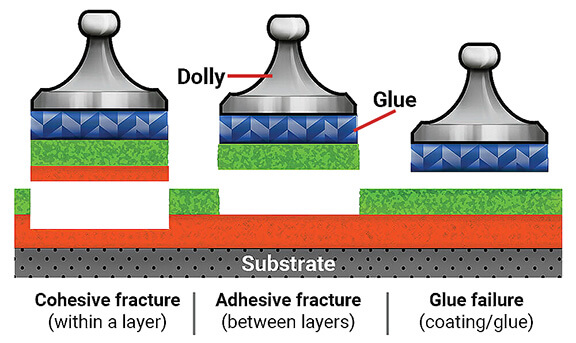
Our laboratory performs pull-off adhesion testing, cross-hatch adhesion evaluation, bend testing, and scratch resistance analysis to determine coating-substrate bond strength. These procedures quantify the force required for coating separation and identify whether failure occurs within the coating layer or at the substrate interface.
Mechanical integrity assessments also include flexibility testing, impact resistance evaluation, and Surface wear analysis to ensure coatings maintain performance during handling, deformation, and operational loading. These evaluations help optimize surface preparation methods and coating application processes.Coating adhesion, tribological performance, and surface-to-substrate interaction are also evaluated through our Tribology & Friction Testing services, which measure coefficient of friction and wear rate of coated surfaces under simulated operational contact conditions.
Corrosion Resistance & Environmental Exposure
For metallic components, corrosion protection is often the primary function of coatings and surface treatments. Exposure to salt, moisture, pollutants, humidity, and fluctuating temperatures can accelerate material degradation.
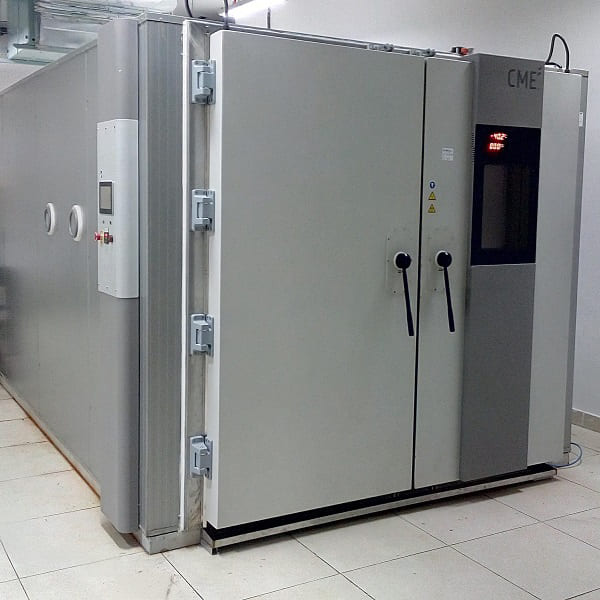
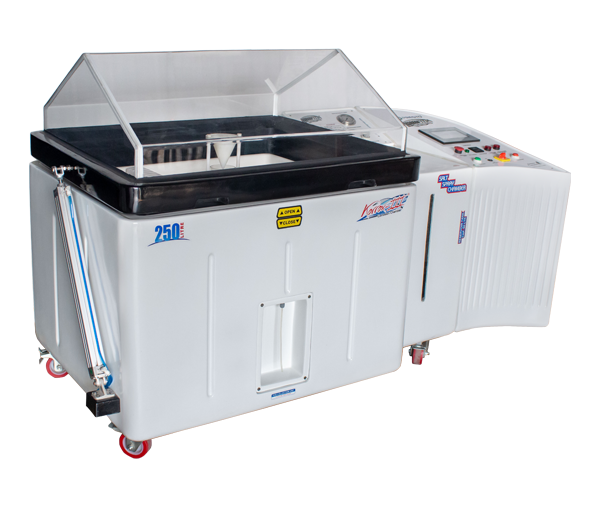
Our Coatings testing services include salt spray exposure, cyclic corrosion testing, humidity chamber conditioning, and marine environment simulation to assess protective performance under accelerated aging conditions.
For plating systems, anodized layers, and conversion coatings, we evaluate resistance to pitting, oxidation, rust formation, and substrate degradation. These Surface Analysis procedures help predict long-term coating durability and support material selection decisions.
Coating Thickness, Uniformity & Microstructural Analysis
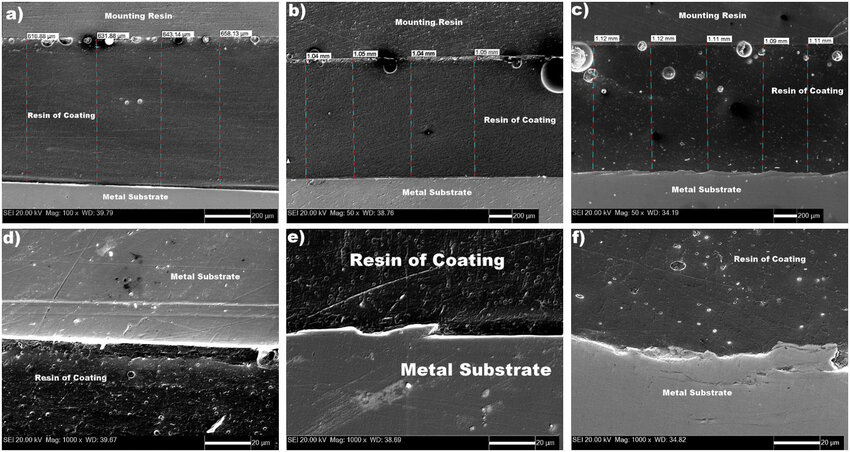
Coating thickness and layer uniformity directly influence durability, adhesion quality, and corrosion protection. Insufficient coating thickness may reduce protective capability, while excessive buildup can lead to brittleness, cracking, or reduced flexibility.
Our Surface Analysis services include non-destructive coating thickness measurement, cross-sectional microscopy, and detailed microstructural characterization. Scanning electron microscopy is used to identify porosity, microcracks, interface quality, and coating consistency.
For multilayer coating systems, we assess individual layer thickness and interfacial bonding integrity to verify compliance with engineering specifications and manufacturing standards.
Wear, Abrasion & Surface Durability
Coatings used in industrial, transportation, and consumer environments must resist abrasion, friction, and mechanical wear. Surface degradation can compromise protective and aesthetic properties.
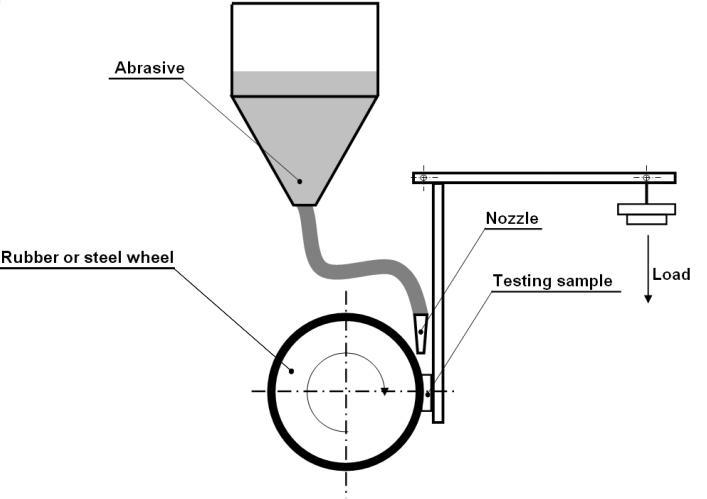
We perform abrasion resistance testing, Taber wear analysis, surface hardness measurement, and scratch durability evaluation. These tests simulate repeated contact, sliding, or impact exposure to assess long-term durability.
For specialized applications such as tooling, electronics, or medical devices, we evaluate surface hardness and resistance to micro-scratching to ensure functional reliability.
Chemical Resistance & Weathering Performance
Many coatings are exposed to aggressive chemicals, fuels, solvents, cleaning agents, UV radiation, and environmental pollutants. Chemical attack and photodegradation can weaken adhesion, alter appearance, and reduce barrier performance.
Our Coatings testing services evaluate resistance to acids, alkalis, fuels, and solvents while also performing UV weathering and accelerated environmental exposure testing. These assessments simulate long-term outdoor and industrial operating conditions to measure gloss retention, color stability, chalking resistance, and crack formation.
By combining environmental exposure with post-conditioning Surface Analysis and mechanical testing, we provide a complete understanding of long-term coating durability.Elemental depth profiling and surface chemical composition of coatings and surface treatments are characterized through our Surface Analysis services, including XPS (X-ray photoelectron spectroscopy) and AES (Auger electron spectroscopy) for nanometre-scale compositional mapping.
Surface Treatments & Conversion Coatings Evaluation
Surface treatments such as anodizing, passivation, phosphating, electroplating, and thermal spraying are widely used to enhance corrosion resistance, hardness, electrical conductivity, and aesthetic appearance.
Our laboratory performs detailed Surface Analysis to evaluate roughness, porosity, hardness, coating density, adhesion quality, and corrosion resistance of treated substrates. For anodized and plated systems, we verify coating integrity and bonding performance to ensure structural reliability and manufacturing consistency.
These evaluations support quality assurance initiatives and help reduce the risk of premature field failures.
Regulatory Compliance & Industry Standards
Coatings and engineered surface systems used in aerospace, marine, infrastructure, automotive, and industrial applications must satisfy strict industry standards and regulatory requirements.
Our Coatings testing programs are aligned with recognized international standards for corrosion protection, environmental durability, adhesion performance, and safety validation. We provide comprehensive reporting packages to support certification programs, supplier audits, compliance verification, and product qualification initiatives.
Early-stage Surface Analysis and validation testing help reduce compliance risks and accelerate time-to-market for new coating technologies.
Failure Analysis & Root Cause Investigation
Coating failures may result from inadequate curing, poor surface preparation, improper application methods, environmental exposure, or mechanical loading. Problems such as peeling, blistering, cracking, corrosion under film, and wear damage require systematic investigation to prevent recurrence.
Our failure analysis services integrate microscopic Surface Analysis, adhesion re-testing, environmental simulation, and chemical characterization to identify the root causes of coating degradation. We determine whether failure originated within the coating, at the substrate interface, or due to external environmental factors.
Detailed technical reporting supports corrective actions, process optimization, and long-term performance improvement.
Advancing Surface Engineering Innovation
Emerging technologies including nano-coatings, self-healing surfaces, antimicrobial treatments, thermal barrier systems, and advanced thin films continue to expand the possibilities of modern surface engineering. As performance expectations increase, rigorous Surface Analysis, Surface wear analysis, and Coatings testing become essential for ensuring reliability, compliance, and long-term durability.
At Genuine Testing, we collaborate with manufacturers, engineers, and research teams to develop customized testing programs tailored to specific operational environments and performance requirements. Our multidisciplinary expertise supports complete evaluation from surface preparation and coating application through long-term durability assessment and failure prevention.
Through precise, independent Surface Analysis, Surface wear analysis, and Coatings testing services, Genuine Testing helps organizations improve product reliability, extend service life, and deliver high-performance engineered surface solutions with confidence.