
EV Battery & E-Motor Teardown Analysis
EV Battery & E-Motor Teardown Materials Analysis
Electric vehicles concentrate cost and performance in two places: the battery system and the traction motor. Benchmarking them means understanding materials at a level that photographs and weights cannot show, such as cathode chemistry, enclosure alloys, thermal interface materials and magnet composition. Genuine Testing provides independent laboratory analysis of battery cells, pack components and e-motor parts that you supply from an EV teardown programme.
What Is EV Teardown Materials Analysis?
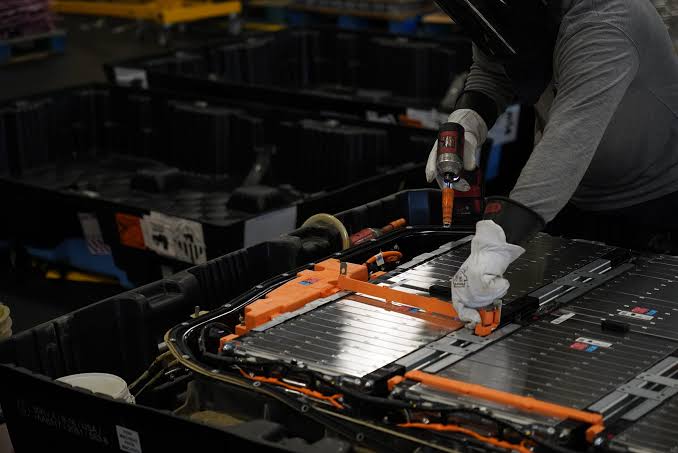
It is the laboratory side of electric vehicle benchmarking. Engineers disassemble the pack or motor and document layout and architecture. The laboratory then identifies what each material is, how it was processed and how it might age. Those results feed material targets, supplier discussions and safety reviews.
Battery Cell and Pack Analysis
Electrode and Cell Materials
We examine electrode particle morphology, coating uniformity, binder distribution and separator structure by SEM, and quantify elemental composition by ICP and XRF. This work builds on our battery materials analysis and battery and energy storage materials capabilities, and on trace elemental analysis for impurities that affect cell performance.
Pack Enclosures and Structural Parts
Battery enclosures use aluminium extrusions and castings, steels and composite lids. We identify alloys, check for porosity, evaluate coatings and measure mechanical properties through metals and alloys testing and composite materials evaluation.
Thermal Management Materials
Gap fillers, thermal pads and potting compounds control heat. We identify their chemistry and filler content with FTIR, DSC and TGA, using polymer chemistry expertise.
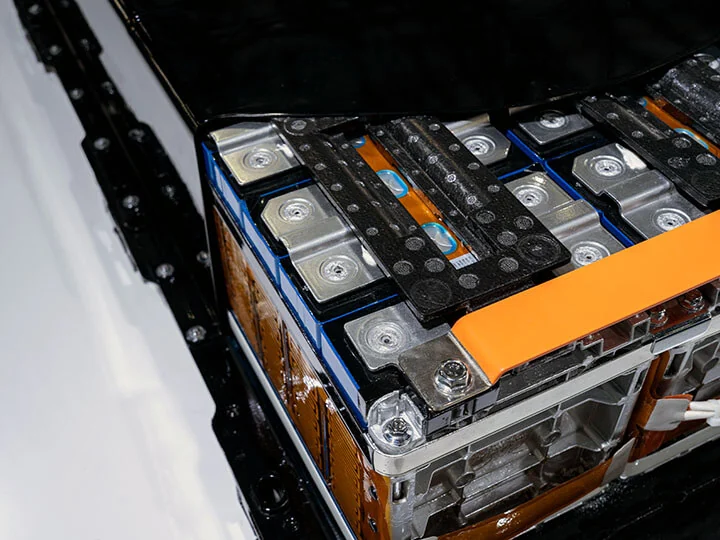
Busbars, Connectors and Plating
We measure plating thickness on busbars and terminals and examine joints for voiding and intermetallic growth with advanced microscopy.
E-Motor Analysis
Stator and Rotor Laminations
Electrical steel laminations are examined for grade, thickness, coating and grain structure through metallurgical analysis.
Magnets
Elemental analysis shows magnet composition and the presence of heavy rare-earth additions, which influence cost and temperature performance.
Windings, Insulation and Housings
We identify winding insulation and varnish polymers, check their thermal stability and analyse cast housings for porosity and alloy identity.
Post-Mortem and Failure Analysis
When cells, packs or motors fail in testing or service, we open and examine them to find the cause. This can include degraded electrodes, corrosion, cracked joints or contamination. See our failure analysis service. Safe handling arrangements for energy-bearing samples must be agreed before shipment, so discuss discharge state and shipping requirements with us first.
What You Receive
- Material identification for each component analysed
- Cell and electrode micrographs with elemental mapping
- Alloy, coating and plating data for pack and motor parts
- Polymer and thermal-material identification
- A comparison summary against your own design
This service is part of our broader automotive benchmarking and teardown testing offering and complements lightweighting material analysis for enclosures and structures.
Frequently Asked Questions
It covers laboratory identification of materials in battery cells, packs and e-motors, including electrode chemistry, enclosure alloys, thermal materials, plating, magnets and laminations, so benchmarking decisions rest on measured data.
Yes. We examine electrode morphology and composition, separator structure and elemental content. Agree sample condition, discharge state and shipping arrangements with us before sending cells.
Yes. Elemental analysis reports the main constituents and minor additions, which helps compare magnet grades and understand temperature capability and cost drivers across motor designs.
Yes. We open failed units, examine materials and joints, and identify mechanisms such as corrosion, cracked connections or degraded insulation, then report the likely root cause.