
Automotive Lightweighting Material Analysis
Automotive Lightweighting Material Analysis & Substitution Testing
Reducing vehicle mass is one of the most effective ways to improve range, efficiency and performance, but every substitution carries risk. A lighter material may corrode differently, fatigue sooner, join poorly or cost more to process. Laboratory data lets engineers decide with evidence. Genuine Testing supports lightweighting programmes by verifying what materials are in use, testing candidate replacements against the original and checking that the new material survives the real environment.
What Is Lightweighting Material Analysis?
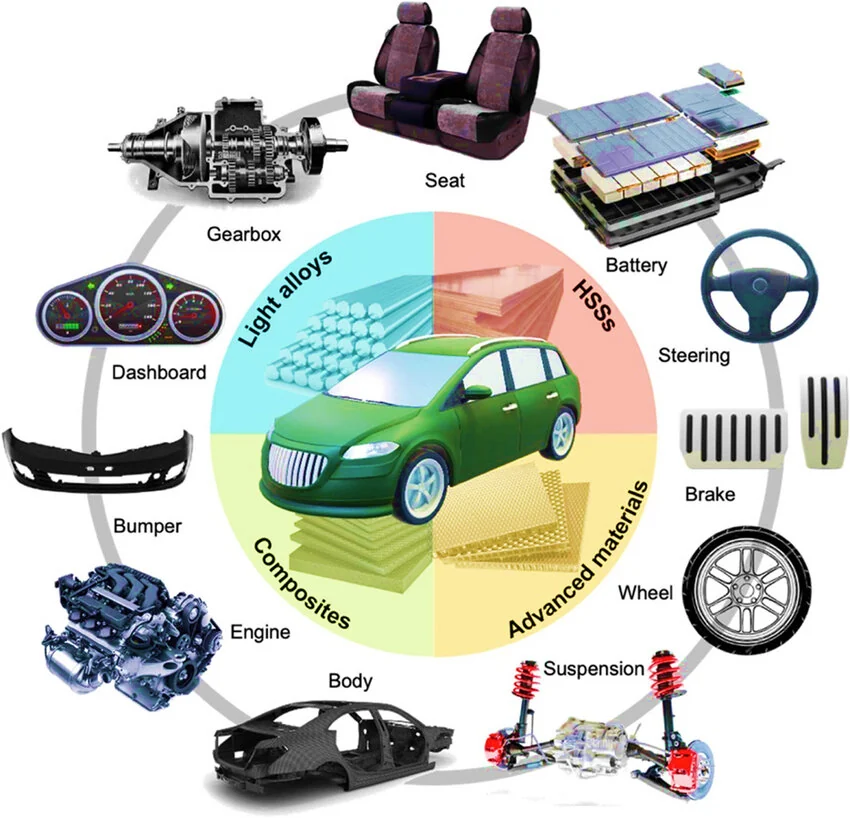
It is the testing and verification that sits behind material substitution decisions: moving from mild to high-strength steel, from steel to aluminium, from metal to polymer or composite, or to thinner gauges. Analysis confirms what a benchmark vehicle actually uses and whether your candidate matches the required performance. Materials We Evaluate
Materials We Evaluate
Advanced High-Strength Steels
We confirm grade through composition, hardness and tensile testing and examine microstructure to understand processing. See metals and alloys testing and mechanical property testing.
Aluminium and Magnesium Alloys
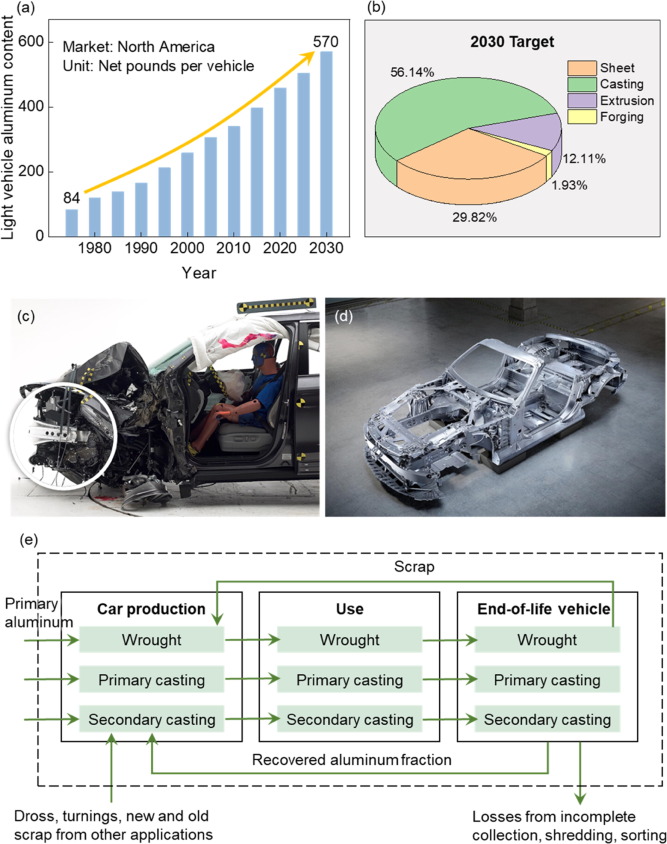
We identify alloy and temper, examine castings and extrusions for porosity, and evaluate corrosion behaviour, including galvanic effects where aluminium meets steel. Related: corrosion testing.
Fibre-Reinforced Composites
Carbon- and glass-fibre composites are tested for strength, stiffness, void content and interlaminar behaviour. Our composite materials evaluation and composites and fibre-reinforced materials pages describe the capabilities.
Engineering Plastics and Recycled Materials
Polymer substitution needs data on strength, heat resistance and ageing. See plastics performance testing and sustainable and recycled materials.
How We Support a Substitution Programme
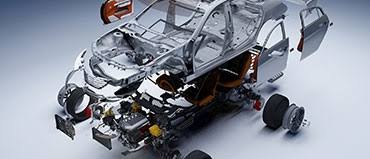
- Benchmark what competitor vehicles use, with our automotive benchmarking and teardown testing or BIW teardown analysis.
- Characterise candidates for composition, microstructure and mechanical properties.
- Compare each candidate with the original under identical test conditions.
- Check durability through corrosion, environmental stress testing and wear work such as wear and abrasion testing.
- Verify supplier material on incoming lots against the approved specification.
Joining and Corrosion: Where Lightweighting Often Goes Wrong
Mixed-material designs create new risks. Dissimilar metals can corrode galvanically, adhesives may not bond to a new surface, and weld settings that work on one grade may fail on another. We examine joints by advanced microscopy and review surface preparation using surface analysis.
What You Receive
- Verified material identity for benchmark and candidate parts
- Side-by-side property comparison tables
- Corrosion and durability results for the new material combination
- Joint cross-sections and defect assessment
- Clear notes on risks to resolve before release
This page supports the wider automotive materials testing offering, and our testing capabilities list the available methods.
Frequently Asked Questions
It is laboratory testing that verifies which materials a vehicle uses and whether a lighter candidate matches the original in strength, durability and corrosion behaviour, so substitutions can be approved with confidence.
We test both materials under identical conditions for strength, hardness, corrosion and fatigue-relevant properties, and report the differences. Design and cost decisions stay with your engineering team, supported by this data.
Yes. We expose joined samples to corrosive conditions and then section them to examine attack at the interface, so risky material combinations are found before release.
Yes. Composition, hardness and microstructure checks confirm a lot against the approved specification and flag deviations that could affect performance.