
Glass Analysis
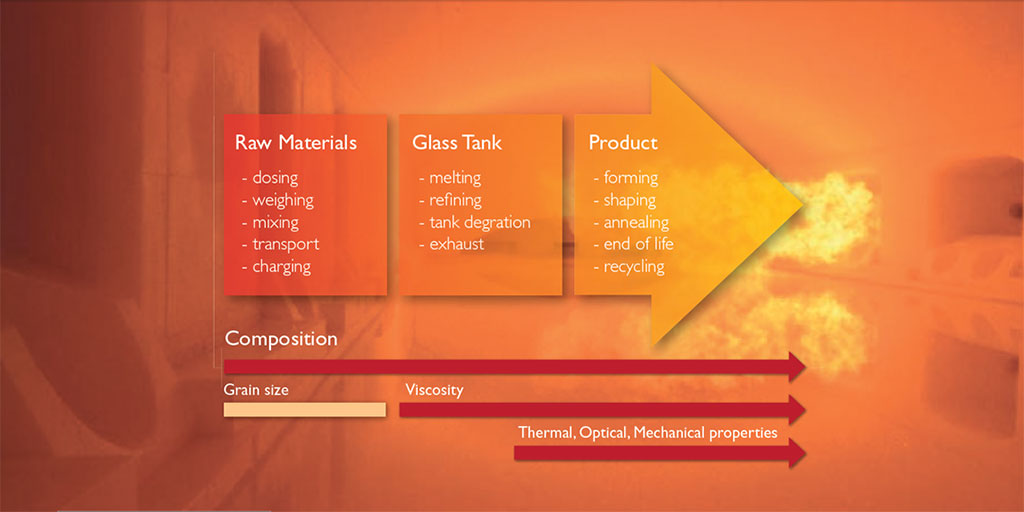
Glass is one of the most extensively used engineering materials across industries due to its transparency, chemical durability, strength potential, and design flexibility. Alongside ceramics and refractories, glass forms a critical group of advanced materials used in pharmaceuticals, construction, electronics, automotive systems, and optical technologies. Although these materials may appear simple in form, their internal structure and performance depend strongly on composition, processing conditions, and service environment.
Comprehensive materials characterization is essential to understand how glass, ceramics, and refractory materials behave under different conditions. Advanced analytical methods allow scientists and engineers to study chemical composition, microstructure, thermal stability, and mechanical performance at multiple scales, ensuring reliability and long-term functionality in demanding applications.
Why Choose Genuine Testing for Glass Analysis?
Comprehensive Expertise
We test all types of glass, including soda-lime, borosilicate, aluminosilicate, leaded glass, and specialty glasses.State-of-the-Art Equipment
Our lab features cutting-edge tools for structural, chemical, and surface analysis.Detailed Insights
We help identify impurities, measure thickness, assess coatings, and evaluate optical or mechanical properties.Reliable & Fast
Timely, accurate analysis supported by experienced professionals and clear reporting.
Our Glass Testing Capabilities
We use a wide range of techniques to evaluate the properties and quality of your glass materials:
Chemical composition analysis (ICP-OES, XRF, EDS)
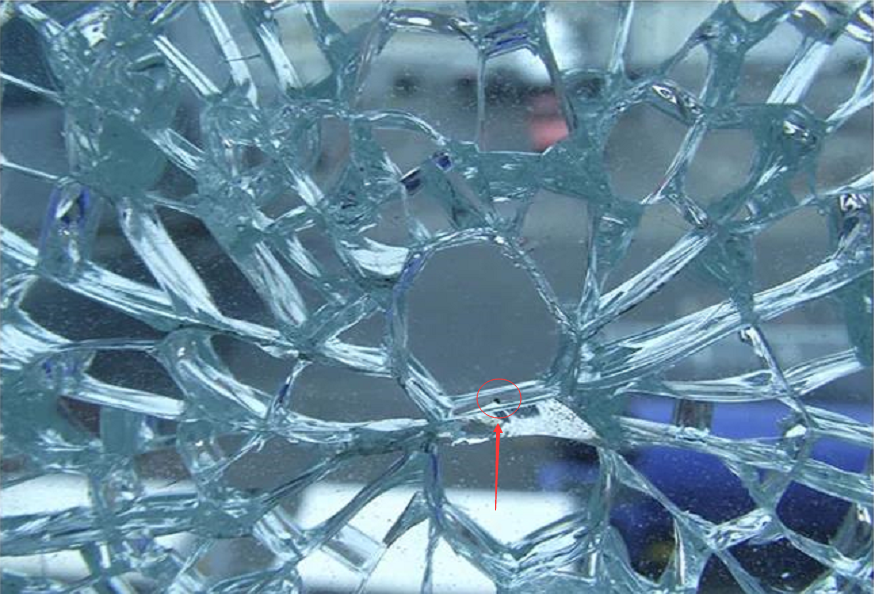
Surface & defect analysis (optical microscopy, SEM)
Coating thickness & uniformity testing
Thermal & mechanical property evaluation
Contaminant and inclusion identification
Optical property testing (transmittance, reflectance, refractive index)
Residual stress & strain measurement
Integrated Testing and Analytical Interpretation
Many technical questions cannot be answered by one analytical method alone. Our laboratory can combine microscopy, spectroscopy, elemental analysis, fracture examination and thermal characterization to build a more complete picture of a sample. For example, a change in mechanical performance may be related to composition, microstructure, surface condition, environmental exposure, or manufacturing history. Using complementary techniques allows scientists to compare observations, confirm suspected causes, and distinguish a true material issue from a processing or handling effect. This integrated approach is particularly valuable when samples are limited, when a product has failed unexpectedly, or when a new formulation must be compared with an established material. Where structural evidence is needed, our Glass Analysis can also be paired with Advanced Microscopy to investigate related material characteristics and Chemical Analysis when the project requires additional evidence about performance, degradation, or root cause.

Importance of Glass Analysis in Modern Industries
Materials such as glass, ceramics, and refractories are widely used in high-performance environments where failure is not an option. Each application requires specific properties such as thermal resistance, mechanical strength, chemical stability, and optical clarity.
Materials characterization plays a key role in identifying composition variations, structural defects, and performance limitations. Even minor changes in raw materials or processing conditions can significantly impact durability, fracture resistance, or thermal behavior. Through detailed analysis, manufacturers and researchers can ensure product consistency, improve safety, and optimize performance across applications.
Chemical Composition Analysis of Glass
The performance of glass, ceramics, and refractory materials is primarily governed by their chemical composition. Glass systems are typically based on silica combined with oxides such as sodium, calcium, aluminum, and magnesium, which modify thermal and mechanical properties. Ceramics and refractories may include complex oxide, carbide, or nitride systems designed for extreme environments.
Advanced techniques such as X-ray fluorescence (XRF), inductively coupled plasma spectroscopy (ICP), and energy dispersive spectroscopy (EDS) are used to determine elemental composition. These methods detect both major and trace elements, helping identify impurities, contamination, or formulation inconsistencies.
Understanding composition is essential for raw material verification, product development, and failure investigation within materials characterization programs.

Structural and Microstructural Characterization
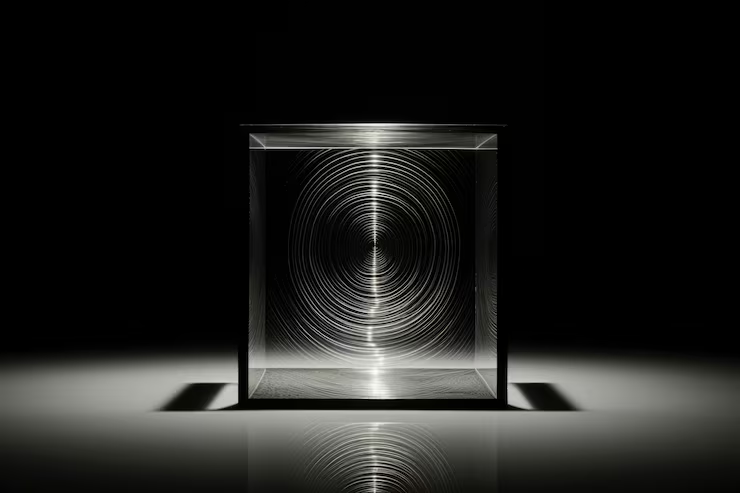
The internal structure of glass is amorphous, lacking long-range atomic order, while ceramics and refractories may exhibit crystalline or partially crystalline structures. These structural differences significantly influence strength, toughness, and thermal resistance.
Microscopy techniques are widely used in materials characterization to study surface and internal features. Optical microscopy helps identify visible defects such as bubbles, cracks, and inclusions. Scanning electron microscopy (SEM) provides high-resolution imaging of fracture surfaces, microvoids, and grain structures in ceramics and refractory materials.
When combined with EDS analysis, SEM enables localized chemical identification of defects or foreign particles. This integrated approach helps determine failure origins, evaluate processing quality, and study microstructural evolution during thermal or mechanical treatment.
SEM Microstructure of Glass Surface
This type of imaging reveals important features such as crack propagation patterns, micro-voids, and contamination particles embedded within the glass matrix. By analyzing these structures, investigators can determine how defects formed during manufacturing or service.
Energy-dispersive X-ray spectroscopy (EDS), often used in conjunction with SEM, allows analysts to perform localized chemical analysis directly on microscopic features. This technique is especially useful for identifying foreign particles or inclusions that may have been introduced during production.
Microstructural characterization also helps scientists evaluate the effects of thermal treatments such as annealing or tempering. These processes alter the internal stress distribution within glass, improving mechanical strength and resistance to thermal shock. Analytical techniques can verify whether these treatments were performed correctly and whether the resulting glass structure meets design requirements.
Thermal Properties and Stability Evaluation
Thermal behavior is a critical factor in materials characterization, especially for glass, ceramics, and refractories used in high-temperature environments. These materials often experience thermal cycling, requiring stability under expansion, contraction, and heat exposure.
Differential scanning calorimetry (DSC) is commonly used to evaluate thermal transitions, including the glass transition temperature in glass systems. Thermal expansion analysis helps determine dimensional stability under varying temperatures, which is essential for preventing stress-induced cracking or structural failure.
Ceramics and refractories are also evaluated for thermal shock resistance and high-temperature stability, ensuring they maintain performance in furnaces, engines, and industrial processing systems.
Support for Product Development, Quality, and Failure Investigation
Testing is most valuable when the results can be translated into an engineering decision. During research and development, laboratory data can help teams compare candidate materials, refine formulations, establish acceptance criteria, and identify potential weaknesses before commercialization. During manufacturing, testing can support incoming inspection, batch-to-batch comparison, supplier qualification, and process troubleshooting. When a problem occurs in the field, a structured analytical program can help determine whether the cause is related to material selection, processing, contamination, environmental exposure, design, or service conditions. The resulting technical evidence can support corrective actions, design changes, warranty investigations, and long-term reliability programs.
Industries and Applications
Our Glass Analysis capabilities can be adapted to the requirements of packaging, pharmaceuticals, electronics, optics, laboratory products and industrial glass manufacturing. Each application may require different sample preparation, conditioning, analytical methods, or reporting criteria. Rather than applying a one-size-fits-all workflow, our technical team can define a testing plan around the material, the suspected failure mechanism, the applicable specification, and the decision the client needs to make. Results can be presented with clear observations, measurements, supporting images or analytical data, and technical interpretation so that engineering and quality teams can act on the findings.
Applications of Glass Analysis Across Industries
Materials characterization supports a wide range of industries relying on glass, ceramics, and refractories:
In pharmaceuticals, glass containers must maintain chemical stability to prevent interaction with stored drugs.
In electronics and optics, glass and ceramic materials are used in displays, lenses, and protective components requiring high clarity and durability.
In automotive and transportation industries, glass and ceramic-based materials provide safety, impact resistance, and thermal stability.
In construction, refractory materials are essential for high-temperature linings, furnaces, and structural insulation systems.
Each application demands precise control of composition, structure, and performance, making materials characterization essential for reliability and compliance.
Partner with Genuine Testing
Glass analysis, along with the study of ceramics and refractories, forms a core part of modern materials characterization. By combining chemical, structural, thermal, and mechanical evaluations, industries can gain a complete understanding of material behavior.
This knowledge supports innovation, improves reliability, and ensures that advanced materials perform effectively in demanding real-world environments.Because material performance is interconnected, Glass Analysis is often strengthened by complementary laboratory services. Where the project involves composition, structure, or formulation questions, A coordinated testing strategy can reduce duplicate work, improve confidence in conclusions, and provide a stronger technical record for product-development and quality decisions. Our goal is to deliver defensible analytical data together with clear scientific interpretation, helping clients understand not only what was measured, but why the result matters to the material or product.