
Biomaterials & Medical-Grade Materials
Advanced Testing for Biomaterials & Medical-Grade Performance
Biomaterials and medical-grade materials are engineered to perform safely and reliably within or in contact with the human body. These materials are widely used in orthopedic implants, cardiovascular systems, dental devices, surgical instruments, prosthetics, and advanced healthcare technologies. Because these products directly affect patient safety and clinical outcomes, they must meet strict mechanical, structural, and durability requirements while complying with demanding regulatory standards. At Genuine Testing, we provide advanced material testing for medical devices designed to validate safety, durability, performance, and long-term reliability. As a specialized materials testing laboratory and Contract Research Organization (CRO), we support medical device manufacturers, healthcare innovators, and research organizations with accurate, regulatory-ready testing data.
Medical-grade materials are exposed to repeated mechanical stress, sterilization procedures, physiological environments, and long-term operational demands. Whether evaluating titanium implant systems, medical polymers, bioactive ceramics, or composite biomaterials, our laboratory ensures that products meet the highest standards of structural integrity and performance. As the medical industry continues to advance through minimally invasive technologies, patient-specific implants, and additive manufacturing, reliable material testing for medical devices has become increasingly critical. Our comprehensive testing programs help reduce development risk, streamline regulatory submissions, and improve long-term product success.Mechanical Performance & Structural Integrity of Implant Materials
Implantable and load-bearing medical devices must maintain structural integrity under continuous physiological stress. Orthopedic implants, spinal fixation systems, dental implants, and joint replacement components are routinely subjected to cyclic loading, compression, torsion, and impact forces throughout their service life. Even small structural defects or material inconsistencies can lead to premature failure and serious clinical consequences.
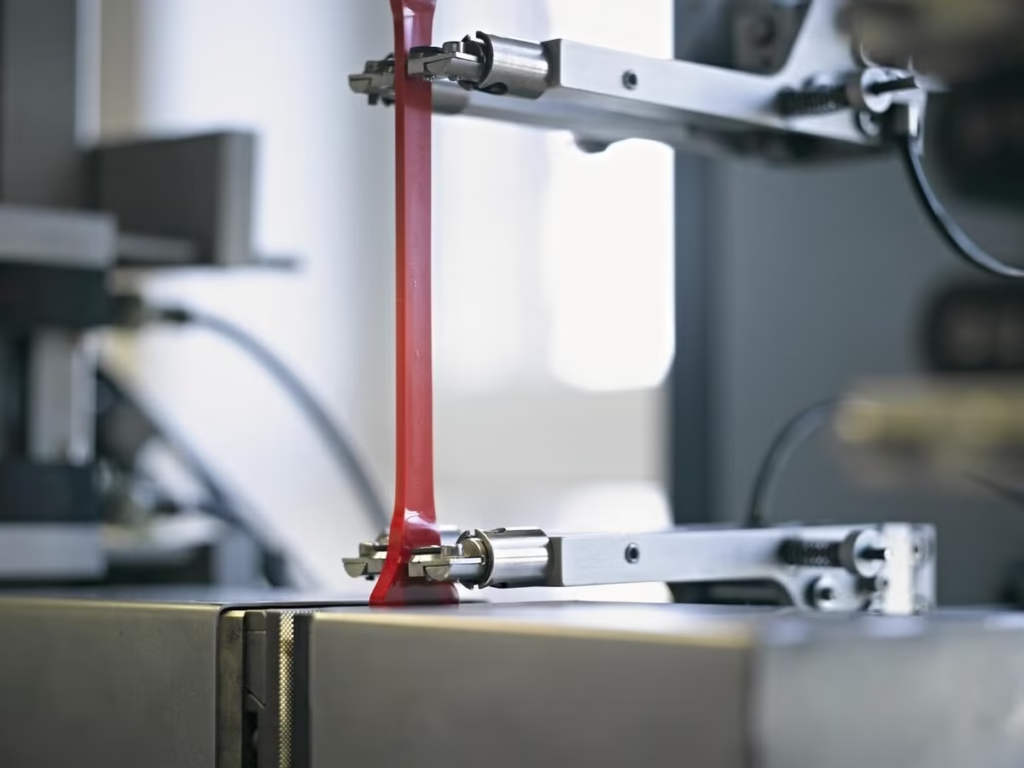
Our laboratory performs comprehensive material testing for medical devices to evaluate tensile strength, fatigue resistance, compression behavior, fracture toughness, and overall structural performance. Fatigue testing is particularly important for orthopedic implant materials such as titanium alloys and cobalt-chromium systems that must survive millions of repetitive loading cycles without degradation. Medical-grade polymers used in catheters, implantable components, and surgical tools require detailed validation of flexibility, resilience, and stress resistance. Through advanced mechanical characterization, we ensure these materials maintain reliability during long-term implantation and repeated use.

Durability, Corrosion & Environmental Resistance
Medical-grade materials must perform reliably in complex biological and sterilization environments. Continuous exposure to body fluids, changing pH levels, temperature fluctuations, and sterilization cycles can significantly affect material properties over time.
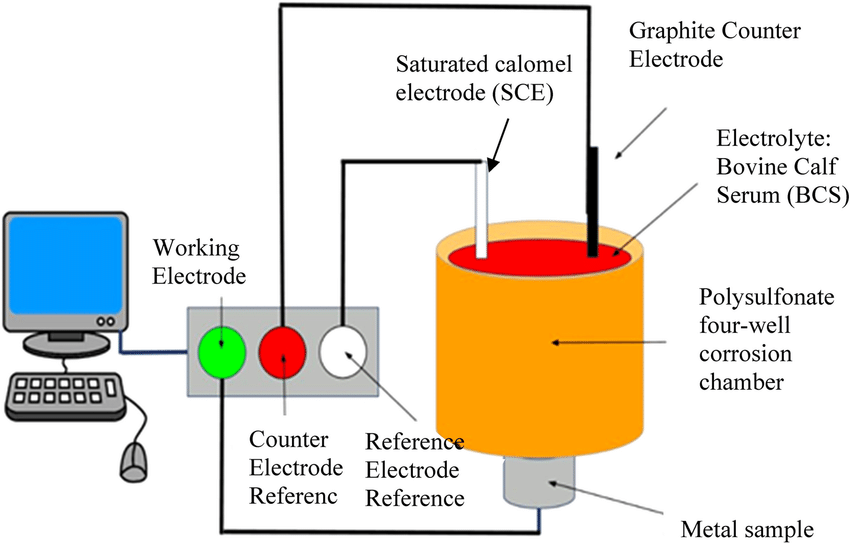
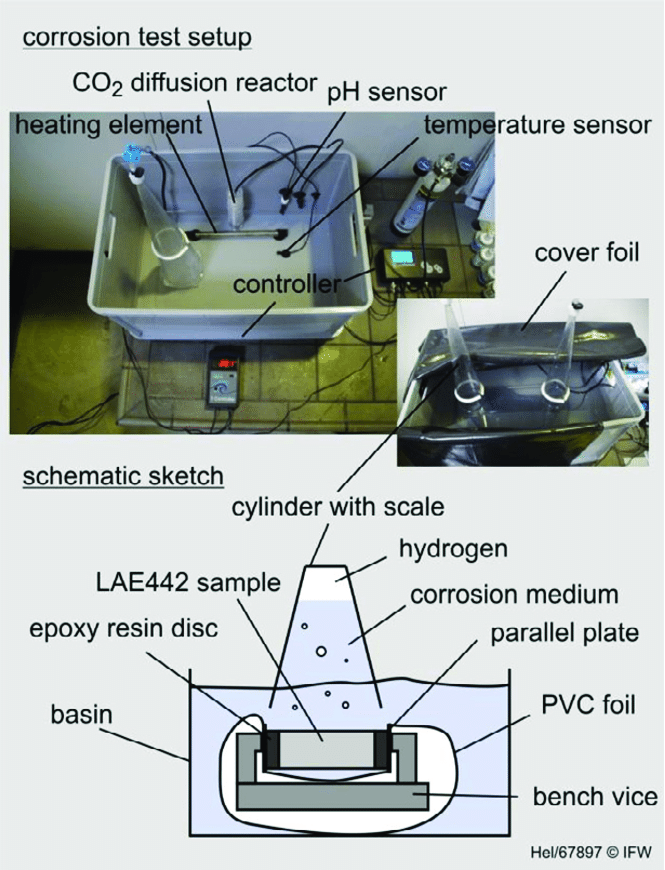
Corrosion resistance testing is essential for metallic implants and surgical devices. Titanium, stainless steel, and other implantable alloys must resist surface degradation, corrosion, and particle release that could compromise safety or mechanical performance. Our material testing for medical devices includes simulated physiological exposure studies to evaluate long-term corrosion behavior and environmental durability. Medical polymers and elastomeric biomaterials are also sensitive to environmental conditions. Moisture, heat, autoclaving, and gamma sterilization can alter structural integrity and dimensional stability. Through controlled environmental simulations, we assess property retention and durability following repeated sterilization cycles.
Surface characterization is another critical aspect of biomaterials evaluation. Surface roughness, coating adhesion, microstructural stability, and material finish directly influence device performance and longevity. By integrating surface analysis with mechanical evaluation, we provide a complete assessment of implant reliability and medical device durability.
As modern medical devices become increasingly compact and precision-engineered, understanding material behavior under combined environmental and mechanical stress is essential. Our testing programs help ensure long-term reliability before products enter clinical applications.
Medical-Grade Polymers, Ceramics & Advanced Biomaterials
The biomaterials industry continues to evolve rapidly with innovations in polymer engineering, bioactive ceramics, composite implants, and high-performance medical materials. Modern healthcare technologies increasingly depend on advanced biomaterials designed for flexibility, durability, and long-term physiological stability.
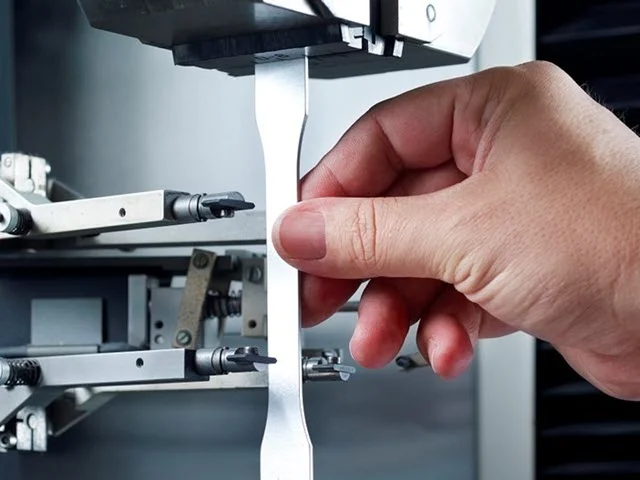
Medical-grade polymer evaluation includes tensile testing, creep analysis, environmental durability assessment, and stress resistance validation. Flexible materials used in tubing, catheters, and minimally invasive devices must retain performance characteristics while remaining safe for patient contact. Bioactive ceramics and glass-based biomaterials used in dental implants and bone graft systems require detailed structural and mechanical analysis. These materials must deliver both mechanical strength and biological compatibility without compromising long-term functionality.
Additive manufacturing has also transformed the development of patient-specific implants and customized surgical devices. However, 3D-printed biomaterials often display unique microstructures and directional properties that require specialized validation. Our material testing for medical devices addresses these complexities to ensure innovative manufacturing techniques do not compromise reliability or safety.
By applying the same scientific rigor to both traditional and emerging biomaterials, we help manufacturers maintain quality assurance while supporting medical innovation.
Chemical safety assessment of medical-grade materials — including identification and quantification of extractable compounds that may migrate into contact with patient tissue or body fluids — is conducted through our Extractables & Leachables testing service, aligned with ISO 10993-18 and USP <665> standards.
Regulatory Compliance & Risk Mitigation
Medical device manufacturers operate within highly regulated industries where material validation is essential for product approval and regulatory acceptance. Comprehensive material testing for medical devices provides the technical evidence required to demonstrate safety, durability, and performance compliance.
Our laboratory follows internationally recognized testing methodologies to ensure data integrity and regulatory readiness. Mechanical evaluation, environmental durability studies, corrosion analysis, and failure investigations contribute to smoother regulatory submissions and reduced time-to-market. Early identification of mechanical weaknesses, corrosion susceptibility, or environmental sensitivity helps manufacturers avoid costly failures, recalls, and performance issues.
Through rigorous testing and validation programs, manufacturers can minimize uncertainty, improve clinical confidence, and strengthen product reliability before commercialization.
Collaborative Support for Medical Innovation
At Genuine Testing, we recognize that biomaterials testing extends beyond regulatory compliance. Accurate evaluation plays a critical role in protecting patient health and supporting technological advancement within the medical industry. Our specialists collaborate closely with R&D teams, quality assurance professionals, and regulatory experts to design customized testing programs aligned with specific device applications.
We provide comprehensive reporting that converts complex technical findings into actionable insights. Whether supporting early-stage development, design validation, production qualification, or post-market investigation, our CRO-level expertise delivers precision, confidentiality, and scientific reliability.
As the healthcare industry continues to evolve toward personalized medicine, smart implants, minimally invasive procedures, and bioengineered medical systems, the demand for advanced material testing for medical devices will continue to grow. Our laboratory remains committed to supporting these advancements through high-precision testing services and dependable technical expertise.
Surface chemistry and topography of medical implants and devices — including osseointegration surfaces, antimicrobial coatings, and hydrophilic surface treatments — are characterized through our Surface Analysis services using XPS, AFM, and profilometry to verify surface modification quality and consistency.

Manufacturing Consistency & Emerging Biomaterials
Manufacturing consistency is another essential factor in medical-grade materials evaluation. Variations in additive manufacturing parameters, heat treatments, processing methods, and surface finishing techniques can significantly influence microstructure, mechanical properties, and overall device performance. Through batch-to-batch validation and comparative analysis, we help manufacturers maintain consistent quality across production cycles. This level of control is particularly critical for implantable devices and precision medical instruments where dimensional stability and structural reliability are non-negotiable.
Emerging technologies such as bioresorbable materials, hybrid composite implants, and smart biomaterials further increase the need for specialized testing expertise. These advanced systems are engineered to interact dynamically with biological environments, making their degradation behavior, mechanical stability, and long-term response especially important. Comprehensive material testing for medical devices supports continued innovation while maintaining strict safety standards and regulatory confidence.
At Genuine Testing, we combine scientific expertise with industry knowledge to deliver data-driven validation that enhances product durability, clinical reliability, and regulatory success.
Partner with Genuine Testing
Biomaterials and medical-grade materials testing plays a vital role in ensuring the safety, durability, and structural integrity of devices that directly impact patient health. From orthopedic implants and dental systems to advanced polymers and 3D-printed medical technologies, rigorous material validation is essential for clinical success and regulatory compliance.
At Genuine Testing, we provide advanced material testing for medical devices through comprehensive mechanical evaluation, corrosion analysis, environmental durability assessment, and failure investigation. Our expertise helps manufacturers reduce risk, accelerate product approvals, and confidently deliver high-performance medical technologies.
In addition to evaluating immediate mechanical strength and environmental resistance, our laboratory focuses on long-term performance under real-world physiological conditions. Many implantable devices remain in the body for extended periods where they experience cyclic loading, micro-movements, and biochemical interactions that may gradually influence material behavior. Advanced fatigue analysis and long-term structural evaluation help manufacturers predict service life, reduce failure risk, and improve overall product reliability throughout the intended lifespan of the device.