
Glass Analysis
Glass is one of the most widely used materials across industries due to its transparency, chemical resistance, durability, and adaptability. From pharmaceutical packaging and consumer electronics to construction materials and specialty optical components, glass plays a critical role in modern technology and infrastructure. Despite its apparent simplicity, glass is a highly complex material whose properties depend heavily on composition, processing conditions, and environmental exposure. Understanding these factors requires advanced analytical techniques capable of revealing structural, chemical, and physical characteristics at multiple scales.
Glass analysis provides the scientific insight necessary to evaluate material composition, identify defects, investigate failures, and support product development. Through specialized laboratory techniques, analysts can determine the elemental makeup of glass, detect contaminants, study structural changes, and assess degradation mechanisms. This detailed understanding enables manufacturers, engineers, and researchers to improve product reliability, ensure regulatory compliance, and troubleshoot performance issues in glass-based products.
Why Choose Genuine Testing for Glass Analysis?
Comprehensive Expertise
We test all types of glass, including soda-lime, borosilicate, aluminosilicate, leaded glass, and specialty glasses.State-of-the-Art Equipment
Our lab features cutting-edge tools for structural, chemical, and surface analysis.Detailed Insights
We help identify impurities, measure thickness, assess coatings, and evaluate optical or mechanical properties.Reliable & Fast
Timely, accurate analysis supported by experienced professionals and clear reporting.
Our Glass Testing Capabilities
We use a wide range of techniques to evaluate the properties and quality of your glass materials:
Chemical composition analysis (ICP-OES, XRF, EDS)
Surface & defect analysis (optical microscopy, SEM)
Coating thickness & uniformity testing
Thermal & mechanical property evaluation
Contaminant and inclusion identification
Optical property testing (transmittance, reflectance, refractive index)
Residual stress & strain measurement
Applications & Industries
Our Glass analysis and Glass testing services support many industries, including:
Architectural & construction glass
Automotive & transportation
Electronics & displays
Optical components & lenses
Pharmaceutical containers & medical devices
Specialty and high-performance glass

Importance of Glass Analysis in Modern Industries
Glass materials appear in a vast range of industrial applications, and each application requires specific performance characteristics. Pharmaceutical packaging glass must exhibit high chemical resistance and minimal extractables. Automotive glass must meet strict impact resistance and optical clarity requirements. Consumer electronics rely on chemically strengthened glass with exceptional durability and scratch resistance. Even small variations in composition or manufacturing conditions can significantly affect these properties.
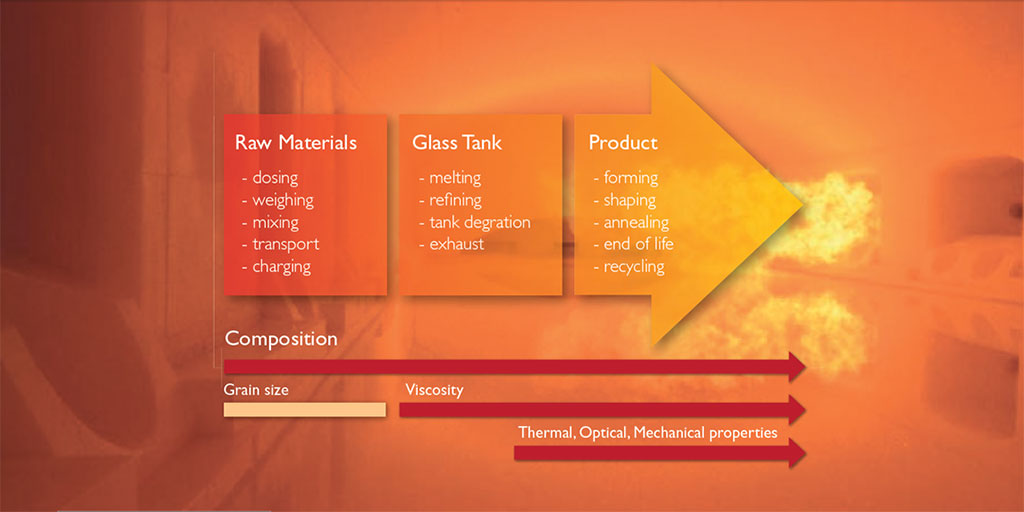
Glass analysis helps manufacturers maintain consistent quality throughout production. During the manufacturing process, factors such as raw material purity, furnace temperature, melting conditions, and cooling rates influence the final glass structure. Analytical testing can detect deviations in composition or structure that might lead to defects, brittleness, or premature failure.
Chemical Composition Analysis of Glass
The performance characteristics of glass are primarily determined by its chemical composition. Most commercial glasses are based on silica (silicon dioxide), combined with other oxides such as sodium oxide, calcium oxide, aluminum oxide, and magnesium oxide. These additives modify properties such as melting temperature, mechanical strength, chemical durability, and thermal expansion.
Analytical laboratories use sophisticated instrumentation to determine the elemental composition of glass materials. Techniques such as X-ray fluorescence spectroscopy (XRF) and inductively coupled plasma spectroscopy (ICP) provide precise quantification of major and trace elements present in the material. These methods can detect even minute concentrations of impurities that may influence glass performance.
Understanding the exact composition of a glass sample is essential for several purposes. Manufacturers often perform compositional verification to confirm that incoming raw materials meet specifications. In product development, researchers analyze different formulations to optimize properties such as transparency, strength, or thermal stability. In failure analysis, compositional testing can reveal contamination, improper formulation, or manufacturing inconsistencies that contributed to a defect.


Structural and Microstructural Characterization
While chemical composition defines the building blocks of glass, its microstructure determines how those components are arranged at the microscopic level. Unlike crystalline materials, glass has an amorphous structure in which atoms are arranged without long-range order. However, even within this seemingly random structure, subtle variations can influence mechanical strength, optical clarity, and resistance to environmental stress.
Microscopy techniques are essential for examining the microstructure of glass materials. Optical microscopy provides a first level of inspection, allowing analysts to observe inclusions, bubbles, scratches, and other visible defects. For more detailed investigation, scanning electron microscopy (SEM) enables high-magnification imaging of fracture surfaces and internal structures.
SEM Microstructure of Glass Surface
This type of imaging reveals important features such as crack propagation patterns, micro-voids, and contamination particles embedded within the glass matrix. By analyzing these structures, investigators can determine how defects formed during manufacturing or service.
Energy-dispersive X-ray spectroscopy (EDS), often used in conjunction with SEM, allows analysts to perform localized chemical analysis directly on microscopic features. This technique is especially useful for identifying foreign particles or inclusions that may have been introduced during production.
Microstructural characterization also helps scientists evaluate the effects of thermal treatments such as annealing or tempering. These processes alter the internal stress distribution within glass, improving mechanical strength and resistance to thermal shock. Analytical techniques can verify whether these treatments were performed correctly and whether the resulting glass structure meets design requirements.
Thermal Properties and Stability Evaluation
Glass materials frequently encounter varying temperatures during manufacturing, storage, and use. Understanding their thermal behavior is therefore essential for ensuring stability and performance. Analytical laboratories use specialized techniques to measure how glass responds to heat and temperature changes.
Differential scanning calorimetry (DSC) is commonly used to study thermal transitions within glass. This method measures the heat flow associated with changes in the material as it is heated or cooled. DSC analysis can identify critical temperatures such as the glass transition temperature, which marks the point where the material begins to soften and change its mechanical properties.
Thermal expansion measurements are another important aspect of glass analysis. Different glass compositions expand at different rates when heated, and mismatched expansion rates can cause stress and cracking when glass components are combined with other materials. Accurate measurement of thermal expansion helps engineers design assemblies that remain stable across a wide range of operating conditions.
Thermal stability testing can also reveal structural changes that occur during prolonged exposure to high temperatures. These studies are particularly relevant for specialty glasses used in electronics, lighting, and high-temperature industrial applications.
Failure Analysis and Root Cause Investigation
Glass components occasionally fail due to mechanical stress, environmental factors, or manufacturing defects. When such failures occur, detailed analysis is required to determine the root cause and prevent similar incidents in the future.
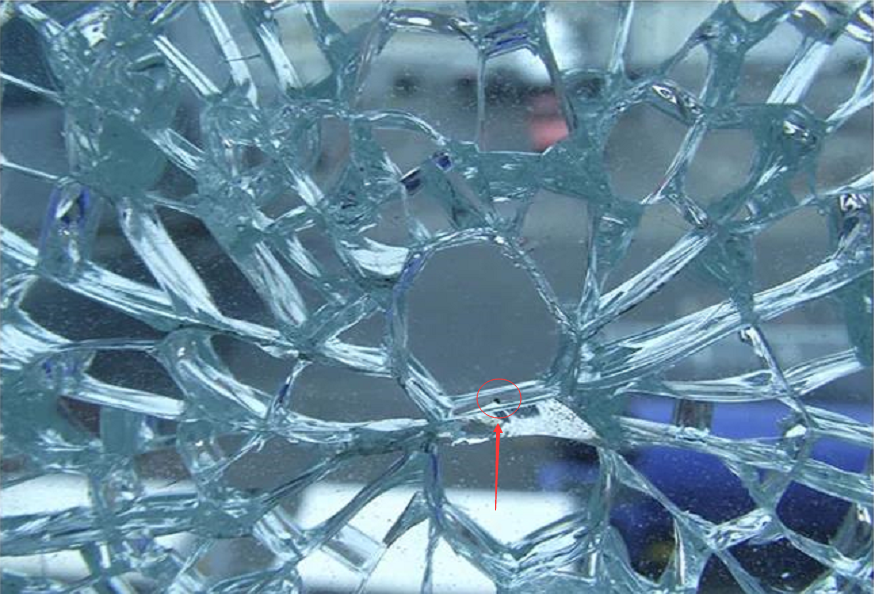
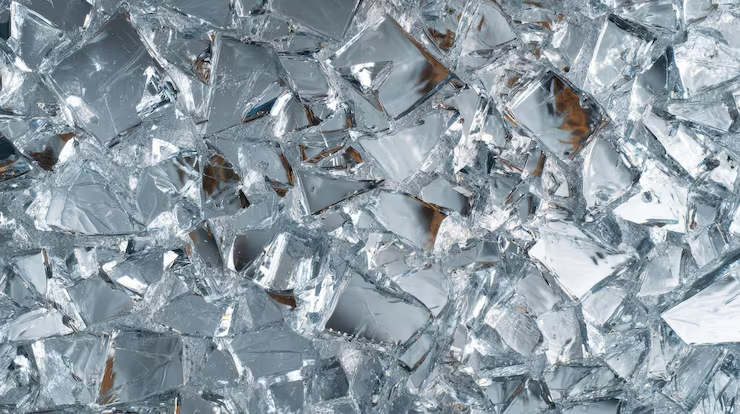
Failure analysis typically begins with careful visual inspection of the fractured component. Glass fracture surfaces contain characteristic patterns that indicate how the crack originated and propagated. Features such as mirror zones, mist regions, and hackle lines can reveal the direction of crack growth and the location of the initial defect.
Applications of Glass Analysis Across Industries
Glass analysis supports a wide variety of industries that rely on glass components for performance, safety, and functionality. In the pharmaceutical sector, analytical studies help ensure that glass containers used for drug storage do not interact with sensitive formulations. Testing can detect potential extractables and evaluate chemical durability under different storage conditions.
The electronics industry relies heavily on specialized glass materials for displays, protective screens, and optical components. Analytical testing ensures that these materials maintain clarity, strength, and resistance to environmental damage throughout their service life.
In the automotive and construction sectors, glass analysis plays a key role in safety evaluations. Laminated and tempered glass must meet strict impact resistance standards, and analytical testing helps verify that these materials perform reliably under real-world conditions. Researchers and product developers also depend on glass analysis when creating new materials with enhanced properties. By studying the relationship between composition, structure, and performance, scientists can design innovative glass formulations tailored to specific applications.