
Nanomaterials
Nanomaterials represent one of the most transformative advancements in modern materials science. By engineering materials at the nanoscale—typically between 1 and 100 nanometers—scientists can unlock unique mechanical, electrical, optical, magnetic, and chemical properties not observed in bulk materials. From advanced coatings and energy storage systems to drug delivery platforms and semiconductor components, nanotechnology is reshaping multiple industries. However, the same characteristics that make nanomaterials powerful—high surface area, quantum effects, and enhanced reactivity—also introduce complexity in characterization, performance validation, and safety assessment. Reliable commercialization requires precise, multi-technique testing to fully understand structure, stability, behavior, and potential environmental or biological impact.
At Genuine Testing, we provide comprehensive nanomaterials testing services designed to support research, development, regulatory approval, and industrial scale-up. As an independent materials testing laboratory and Contract Research Organization (CRO), we partner with innovators, manufacturers, research institutions, and regulatory stakeholders to deliver high-precision nanoscale analysis aligned with international standards. Our integrated testing programs combine physical characterization, chemical analysis, performance evaluation, and safety screening to ensure nanomaterials meet application-specific requirements while maintaining regulatory compliance.
Our Nanomaterials Testing Capabilities
Our state-of-the-art laboratory is equipped to deliver a full suite of analyses for nanomaterials, including:
Particle Size & Distribution Analysis
Measure size, shape, and uniformity of nanoparticles with precision.Structural & Morphological Analysis
Use advanced electron microscopy to examine surface and internal structures at the atomic level.Chemical Composition & Purity
Identify elements, compounds, and impurities using spectroscopy and elemental mapping.Surface Area & Porosity
Characterize the specific surface area and porosity critical to nanomaterial performance.


Materials We Analyze
We have experience with a broad range of nanomaterials, including:
Metal and metal oxide nanoparticles
Carbon-based nanomaterials (e.g., graphene, carbon nanotubes)
Nanocomposites and nanocoatings
Quantum dots and semiconductor nanocrystals
Ceramic and polymer-based nanostructures
Industries We Serve
Our nanomaterials analysis supports innovation across industries such as:
Electronics & Semiconductors
Energy Storage & Conversion
Aerospace & Automotive
Medical Devices & Pharmaceuticals
Advanced Coatings & Composites


Particle Size, Morphology & Structural Characterization
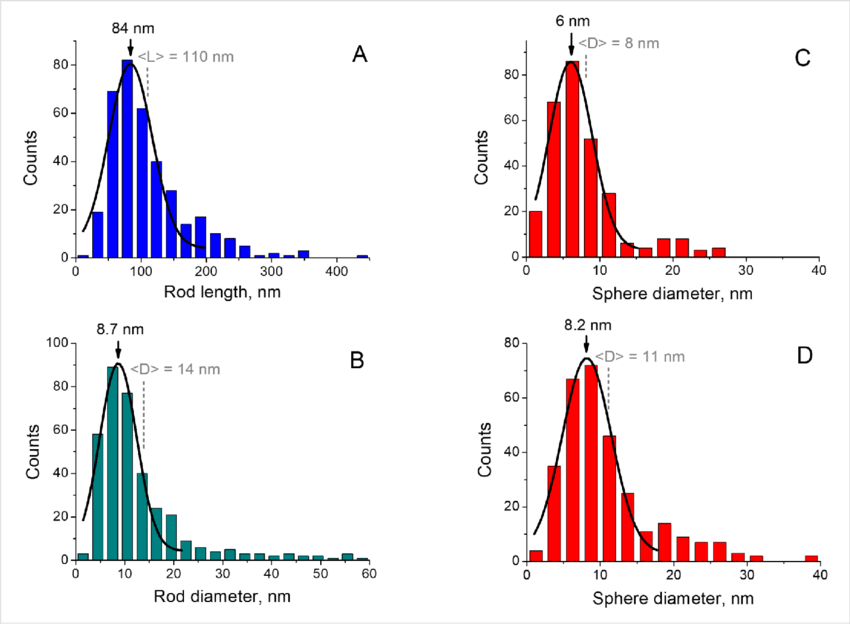
Accurate particle size measurement is fundamental to nanomaterial validation. Size distribution directly influences reactivity, dispersion stability, optical behavior, mechanical reinforcement, and biological interaction. Even slight variations can significantly alter performance.
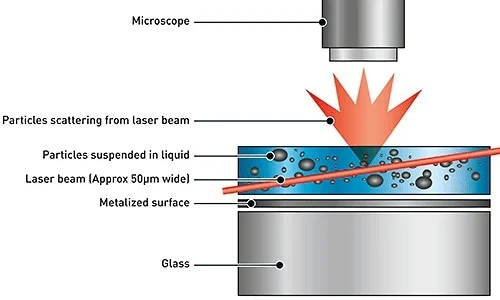
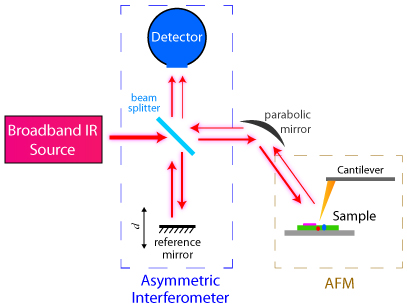
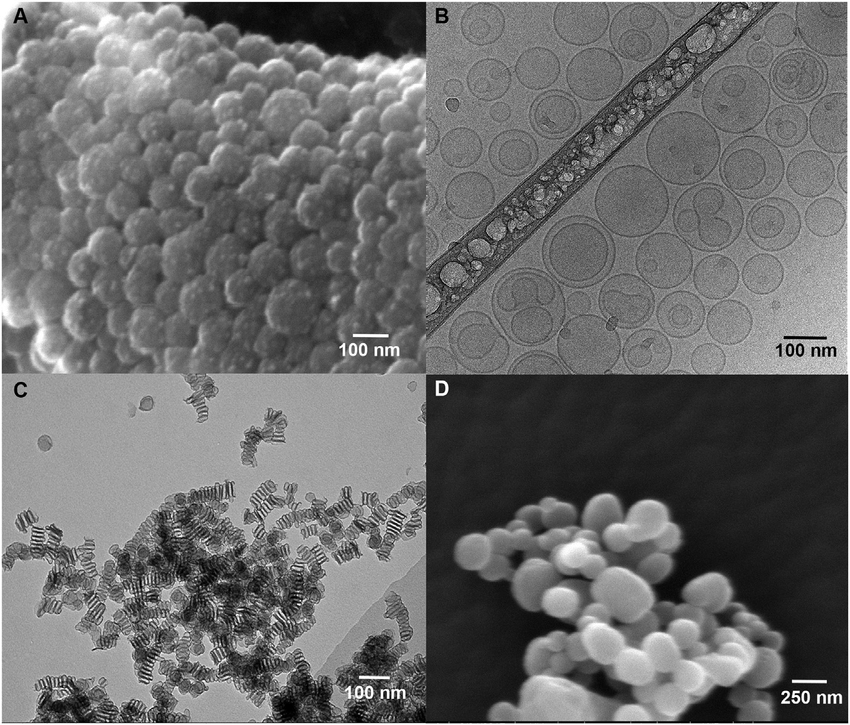
Our laboratory employs multiple complementary techniques to determine primary particle size, agglomeration state, and morphology. Transmission and scanning electron microscopy provide high-resolution imaging to visualize particle shape and surface structure. Dynamic light scattering measures hydrodynamic size in suspension, supporting applications in pharmaceuticals, coatings, and colloidal systems. Atomic force microscopy enables nanoscale surface topology mapping, while image-based analysis quantifies aspect ratios and structural uniformity. These data sets establish foundational material specifications and ensure consistency across production batches.
Surface Area & Surface Chemistry Analysis
Surface properties dominate nanomaterial behavior. High surface-to-volume ratios increase chemical reactivity and influence catalytic performance, adsorption capacity, dispersion stability, and biological interaction.
We conduct surface area measurements using gas adsorption techniques to quantify total and specific surface area. Surface chemistry analysis identifies functional groups, coatings, and chemical modifications that define material compatibility and reactivity. Spectroscopic techniques provide insight into bonding environments and surface oxidation states.
Zeta potential measurements evaluate surface charge and colloidal stability in suspension. This parameter is critical for predicting aggregation behavior, shelf-life stability, and performance in aqueous or biological environments. Comprehensive surface characterization supports optimized functionalization strategies, improved dispersion control, and predictable material behavior in end-use applications.

Chemical Composition & Purity Assessment
Precise chemical composition analysis ensures nanomaterials meet purity requirements and perform as intended. Impurities, residual catalysts, or unintended phase formation can significantly alter physical properties and introduce safety concerns.
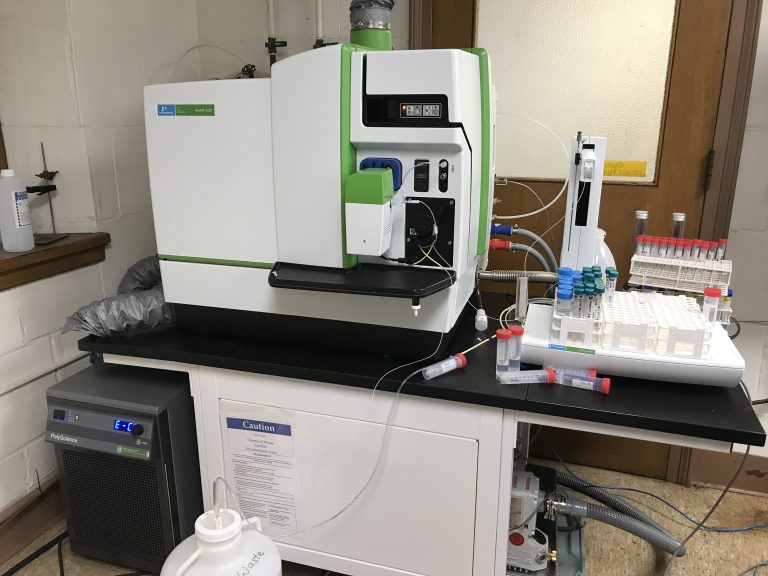
Our laboratory performs elemental analysis, trace impurity detection, and phase identification to confirm material composition. Inductively coupled plasma techniques quantify metallic content at ultra-low concentrations. X-ray diffraction identifies crystalline phases and verifies structural integrity.
For carbon-based nanomaterials, we assess graphitic structure, defect density, and residual metallic catalysts. For metal oxide nanoparticles, we confirm oxidation state and stoichiometry. Thorough compositional verification strengthens quality control, supports regulatory documentation, and ensures reproducibility in large-scale manufacturing.
Mechanical & Functional Performance Testing
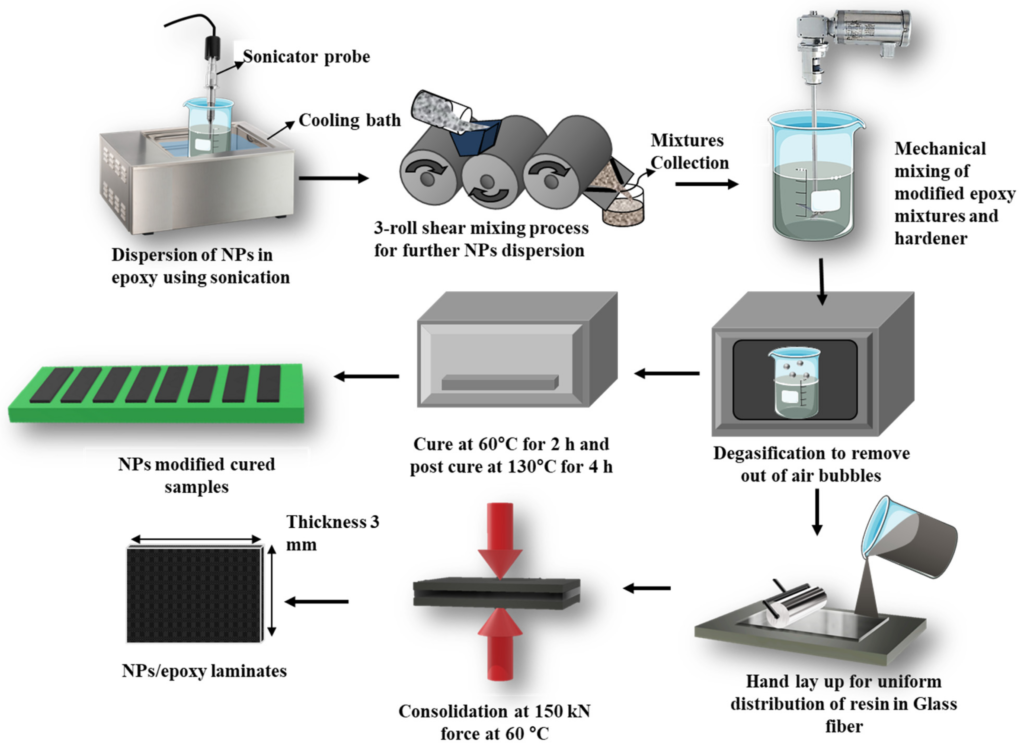
Nanomaterials are frequently incorporated into composites, coatings, electronics, and advanced structural systems to enhance performance. Evaluating functional contributions at both nanoscale and macroscale levels is essential.
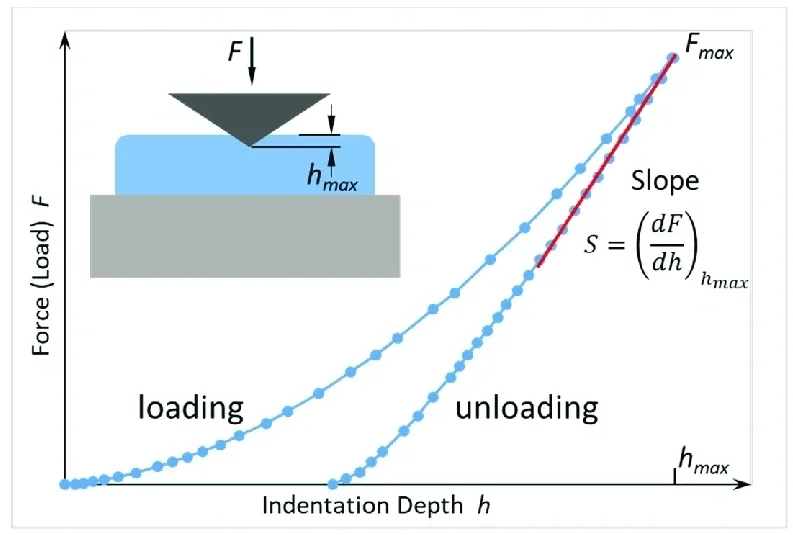
Nanoindentation testing measures hardness and elastic modulus at microscopic scales. For nanocomposites, mechanical testing evaluates reinforcement efficiency and interfacial bonding strength. Electrical conductivity and dielectric property testing support applications in sensors, energy storage, and printed electronics.
Thermal conductivity analysis assesses heat transfer performance, particularly important for battery systems, electronic packaging, and advanced insulation materials. By linking nanoscale structure with bulk performance, we help manufacturers optimize formulations and validate functional advantages.
Stability, Dispersion & Environmental Interaction
Nanomaterials often exist in suspension or are embedded within matrices. Stability and dispersion quality directly influence effectiveness and safety. Agglomeration can reduce performance, alter optical properties, and impact biological interaction.
We perform dispersion analysis to evaluate aggregation tendencies under various environmental conditions, including pH changes, ionic strength variation, and temperature shifts. Accelerated aging studies simulate long-term storage and environmental exposure.
Environmental chamber testing assesses material behavior under humidity, UV radiation, and thermal cycling. These evaluations help predict service life and maintain consistent performance across product lifecycles.
Toxicological Screening & Safety Assessment
Due to their small size and high reactivity, nanomaterials require careful safety evaluation. Biological interaction, inhalation potential, dermal exposure, and environmental persistence must be assessed prior to commercialization.
Our safety assessment services include in vitro cytotoxicity screening, oxidative stress analysis, and cellular interaction studies. We evaluate particle uptake behavior and dose-response relationships to support risk assessment strategies.
For occupational and environmental safety considerations, we analyze airborne particle characteristics and potential exposure risks. Comprehensive safety data supports regulatory submissions and responsible innovation practices.
Regulatory Compliance & Documentation Support
Nanomaterials are subject to evolving regulatory frameworks across global markets. Compliance requirements may include detailed characterization, toxicity screening, environmental impact analysis, and manufacturing traceability documentation.
Our laboratory provides structured data packages aligned with international standards and regulatory guidelines. Independent third-party validation strengthens credibility during certification processes, investor evaluations, and commercial partnerships.
Early integration of regulatory testing minimizes approval delays and ensures smoother market entry for innovative nanotechnology products.
Failure Analysis & Root Cause Investigation
Performance inconsistencies in nanomaterials may arise from aggregation, contamination, structural defects, or improper surface functionalization. Identifying these issues requires high-resolution analytical techniques and multidisciplinary expertise.
Our failure analysis approach integrates structural imaging, chemical characterization, mechanical testing, and environmental simulation to determine root causes of performance degradation. We evaluate dispersion quality, interfacial bonding, phase transitions, and environmental influences.
Clear, data-driven reporting supports formulation refinement, process optimization, and improved reliability.
Enabling Responsible Nanotechnology Innovation
Nanomaterials continue to expand possibilities in energy storage, electronics, biomedical engineering, advanced coatings, aerospace systems, and sustainable materials development. As innovation accelerates, comprehensive validation ensures performance, safety, and regulatory readiness.
At Genuine Testing, we collaborate closely with research institutions, technology startups, and global manufacturers to design customized nanomaterials testing programs aligned with specific applications. Our multidisciplinary laboratory capabilities provide complete insight from atomic-scale structure to full-system performance. Through precise characterization, rigorous safety evaluation, and independent performance validation, Genuine Testing empowers organizations to advance nanotechnology with confidence, ensuring reliable, compliant, and high-performance materials for next-generation applications.