
The Future of Materials Validation: Advanced Fiber Reinforced Composite Testing, Reliability Testing Services, and Coefficient of Friction Testing at Genuine Testing
In today’s fast-evolving industrial landscape, materials are no longer judged solely by strength or durability. They are evaluated on performance under stress, environmental impact, lifecycle efficiency, and compliance with stringent global standards. Industries such as aerospace, automotive, renewable energy, construction, healthcare, and advanced manufacturing are demanding smarter materials—and even smarter testing methodologies.
At the forefront of this evolution is Genuine Testing, a trusted Contract Research Organization and Mentor For Hire partner for companies seeking clarity, precision, and innovation in material science. Through cutting-edge fiber reinforced composite testing, advanced reliability testing services, and state-of-the-art coefficient of friction testing, Genuine Testing is redefining how industries validate performance and mitigate risk.
Fiber Reinforced Composite Testing: Powering the Next Generation of Lightweight Innovation
Fiber reinforced composites (FRCs) have revolutionized product design. From aircraft fuselages and wind turbine blades to automotive chassis and medical devices, composites offer unmatched strength-to-weight ratios, corrosion resistance, and design flexibility. However, their complexity demands highly specialized testing.
Latest Trends in Fiber Reinforced Composite Testing
Multi-Scale Mechanical Analysis
Modern composite testing goes beyond simple tensile and compressive strength measurements. Today’s advanced laboratories perform multi-scale characterization, analyzing materials from the microscopic fiber-matrix interface to full structural assemblies. High-resolution microscopy and digital image correlation systems allow engineers to observe crack initiation, delamination, and fiber pull-out in real time.Non-Destructive Evaluation (NDE) Technologies
Industries are increasingly relying on ultrasonic phased array testing, X-ray computed tomography (CT scanning), and acoustic emission monitoring to detect internal defects without compromising structural integrity. These technologies are critical for aerospace and automotive components, where failure is not an option.Environmental Simulation Chambers
Composites are often exposed to harsh conditions—extreme temperatures, UV radiation, moisture, and chemical exposure. Advanced environmental chambers simulate real-world operating environments, enabling accurate prediction of long-term performance.AI-Driven Data Interpretation
Artificial intelligence and machine learning are transforming how composite data is analyzed. Instead of manually reviewing stress-strain curves, predictive algorithms identify patterns, forecast failure points, and optimize material design faster than ever before.
At Genuine Testing, Fiber reinforced composite testing is conducted using state-of-the-art instrumentation and globally recognized standards. Their experienced scientists evaluate interlaminar shear strength, flexural performance, impact resistance, fatigue life, and thermal stability—providing actionable insights that reduce product development cycles and improve safety margins.
As a Mentor For Hire in advanced material research, Genuine Testing collaborates closely with client engineering teams, helping refine formulations, select optimal fiber architectures, and validate performance before full-scale production.
Reliability Testing Services: Engineering Confidence into Every Product
Reliability is not a feature—it is a necessity. Whether it is a battery module in an electric vehicle, a structural component in a bridge, or a medical implant, products must consistently perform over time.
Emerging Technologies in Reliability Testing
Accelerated Life Testing (ALT)
Modern Reliability testing services leverage accelerated stress techniques to simulate years of use in weeks or months. By applying increased loads, thermal cycling, humidity, and vibration, engineers can identify weak points early in development.Predictive Modeling and Digital Twins
Digital twin technology allows real-time simulation of product behavior under dynamic conditions. Combined with physical testing data, digital twins enhance accuracy and shorten validation timelines.Integrated Battery Materials Analysis
With the rapid growth of electric mobility and renewable energy storage, battery reliability testing has become a cornerstone of modern R&D. Advanced electrochemical impedance spectroscopy, thermal runaway analysis, and charge-discharge cycling tests are essential for ensuring long-term battery stability and safety.Failure Mode and Effects Analysis (FMEA) Integration
Reliability testing is now integrated with comprehensive risk assessment models. Advanced statistical tools evaluate probability distributions, enabling engineers to quantify failure rates and enhance product durability.
Genuine Testing’s reliability testing services are designed to give manufacturers measurable confidence. Their laboratory integrates environmental stress screening, vibration testing, corrosion resistance analysis, and fatigue testing under one roof. By aligning testing protocols with international quality standards, they ensure compliance across aerospace, automotive, construction, and energy sectors.
What sets Genuine Testing apart is its collaborative methodology. As a Mentor For Hire, the organization doesn’t simply deliver test results—it interprets data, advises on design improvements, and helps implement corrective strategies. This consultative approach empowers clients to make informed, evidence-based decisions.
Coefficient of Friction Testing: Optimizing Performance Through Precision Measurement
In industries where movement, wear, and contact surfaces matter, the coefficient of friction (COF) plays a critical role. From brake pads and tire materials to packaging films and medical devices, friction determines safety, efficiency, and user experience.
Advancements in Coefficient of Friction Testing
High-Precision Tribometers
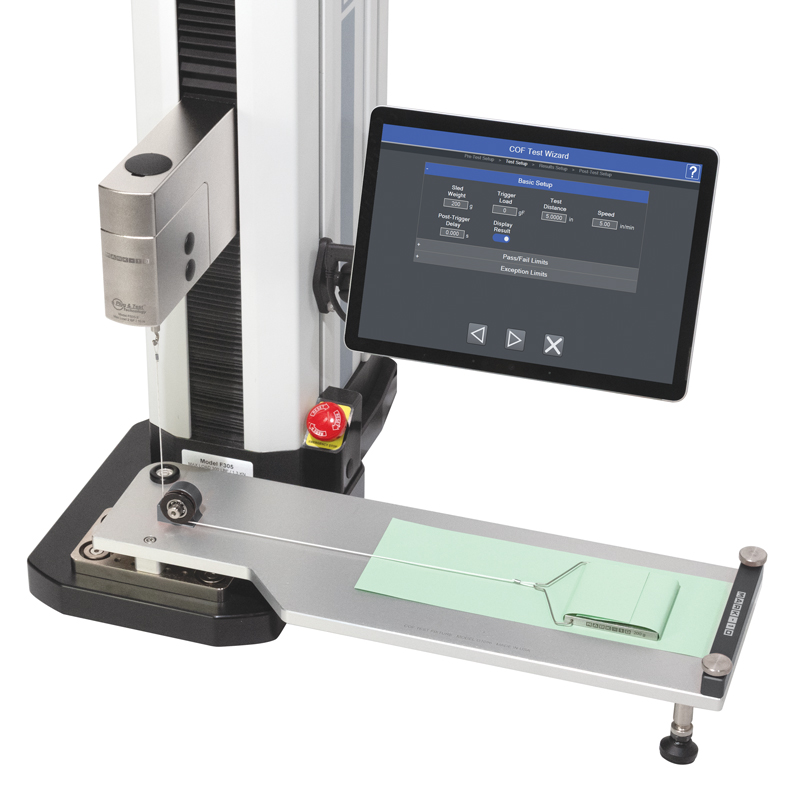
Modern tribometers measure static and dynamic friction with exceptional sensitivity. These instruments simulate real-world contact conditions, including load variation, temperature fluctuation, and lubrication states.Nano-Scale Surface Characterization
With the rise of advanced coatings and micro-engineered surfaces, friction testing has extended to the nano-scale. Atomic force microscopy (AFM) enables researchers to analyze surface roughness and adhesion properties at the molecular level.Real-Time Wear Analysis
Integrated sensors now monitor wear progression during friction testing. This allows engineers to correlate friction coefficients with material degradation over time.Sustainable Material Evaluation
As industries shift toward eco-friendly materials, coefficient of friction testing is being used to assess biodegradable polymers and sustainable composites. Ensuring these alternatives maintain performance standards is critical for widespread adoption.
At Genuine Testing, Coefficient of friction testing is performed with rigorous quality controls and calibrated instrumentation. Their team evaluates both static and kinetic friction under customized conditions tailored to the client’s application. Whether optimizing packaging films for smooth processing or validating braking materials for automotive safety, the lab delivers reliable and reproducible results.
Through advanced surface analysis and contaminant identification capabilities, Genuine Testing also investigates root causes of unexpected friction behavior—ensuring products meet performance expectations before reaching the market.
Integration of Advanced Microscopy and Chemical Analysis
One of the most significant trends in modern material testing is integration. Fiber reinforced composite testing, reliability testing services, and coefficient of friction testing are no longer isolated procedures. Instead, they are supported by complementary technologies such as:
Scanning electron microscopy for fracture analysis
Energy-dispersive X-ray spectroscopy for chemical composition
Environmental impact analysis for sustainability compliance
Contaminant detection systems for quality assurance
Genuine Testing’s comprehensive infrastructure allows seamless coordination between departments. This holistic approach ensures every variable—mechanical, chemical, environmental—is accounted for during analysis.
Driving Innovation Through Collaboration
Innovation thrives on collaboration. Companies developing next-generation materials often require more than standardized testing—they need strategic research guidance.
As a Contract Research Organization and Mentor For Hire, Genuine Testing bridges the gap between theoretical science and commercial application. From initial research design and methodology planning to final data interpretation, their team supports clients at every stage.
The modern R&D ecosystem demands speed without sacrificing accuracy. Genuine Testing accelerates time-to-market by:
Customizing test methodologies
Leveraging automated data acquisition systems
Applying advanced statistical modeling
Maintaining strict confidentiality and regulatory compliance
Their client-focused approach ensures flexibility, transparency, and tailored solutions for projects of any scale.
Sustainability and Smart Laboratories: The Future of Testing
Another major trend shaping the industry is sustainability. Laboratories are adopting energy-efficient systems, digital documentation processes, and waste-reduction protocols. Smart laboratory technologies—featuring IoT-connected equipment and cloud-based data management—enable real-time monitoring and remote access to results.
Genuine Testing embraces these advancements, ensuring operational efficiency while reducing environmental impact. Their data-driven processes provide clients with traceable, audit-ready documentation aligned with global regulatory frameworks.
Why Advanced Testing Matters More Than Ever
The consequences of material failure can be severe—financial losses, safety hazards, regulatory penalties, and reputational damage. Advanced fiber reinforced composite testing, reliability testing services, and coefficient of friction testing mitigate these risks by validating performance before deployment.
In a world where innovation cycles are shorter and competition is fiercer, manufacturers must rely on trusted partners who combine technological sophistication with scientific integrity.
Genuine Testing embodies this philosophy. With decades of expertise, cutting-edge instrumentation, and a collaborative mindset, the organization stands as a reliable partner for industries seeking accuracy, compliance, and innovation.
Conclusion: Precision Backed by Science, Guided by Experience
The future of materials engineering lies in intelligent testing—where data informs design, technology enhances precision, and collaboration drives breakthroughs. Fiber reinforced composite testing ensures structural excellence. Reliability testing services build long-term confidence. Coefficient of friction testing fine-tunes performance and safety.
At Genuine Testing, these services converge within a state-of-the-art laboratory guided by experienced scientists and a client-first philosophy. As a Mentor For Hire in scientific research and material validation, the company empowers industries to innovate boldly while maintaining the highest standards of quality and compliance.
In an era defined by rapid technological advancement and growing regulatory demands, choosing the right testing partner is not just important—it is strategic. Genuine Testing delivers the precision, innovation, and integrity needed to turn complex material challenges into measurable success.