
FTIR vs XRF vs ICP-MS: A Complete Guide to Choosing the Right Chemical Analysis Method for Accurate Material Testing and Research
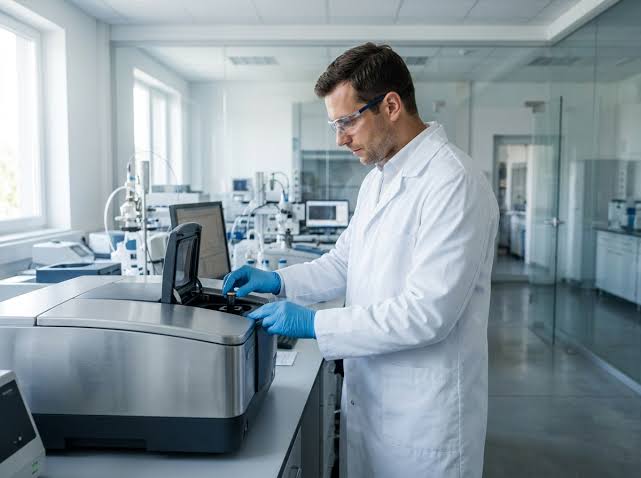
In today’s highly regulated industries, precision is everything. Whether you’re developing innovative materials, verifying raw material quality, investigating product failures, or meeting international compliance standards, selecting the right analytical technique is essential for making confident decisions.
Among the most trusted laboratory techniques available today are FTIR testing services, XRF analysis laboratory testing, and ICP-MS testing. Each method provides unique insights into material composition, but choosing the wrong one can lead to unnecessary costs, incomplete data, or delayed product development.
At Genuine Testing, we help businesses across aerospace, automotive, healthcare, construction, energy, and advanced manufacturing identify the most effective testing strategy based on their specific objectives. Here’s everything you need to know about these three powerful chemical analysis methods.
Why Chemical Analysis Matters
Every material tells a story. Understanding its chemical composition helps manufacturers improve product performance, maintain safety standards, investigate contamination, and comply with strict industry regulations.
Reliable laboratory testing supports:
- Product development
- Material verification
- Quality assurance
- Regulatory compliance
- Failure investigations
- Research and development
- Environmental monitoring
The key is selecting the analytical technique that delivers the most meaningful information for your application.
What Are FTIR Testing Services?
Fourier Transform Infrared Spectroscopy (FTIR) is one of the most widely used techniques for identifying organic compounds, polymers, plastics, rubbers, coatings, adhesives, and contaminants.
Professional FTIR testing services analyze how molecules absorb infrared light, producing a unique molecular fingerprint that helps scientists identify materials quickly and accurately.
FTIR is ideal for:
- Polymer identification
- Plastic verification
- Rubber analysis
- Coating characterization
- Organic contaminant detection
- Pharmaceutical materials
- Chemical formulation comparison
Advantages of FTIR Testing
- Fast and non-destructive analysis
- Minimal sample preparation
- Excellent for identifying unknown materials
- Cost-effective routine testing
- Reliable qualitative analysis
Limitations
While FTIR excels at identifying molecular structures, it is less effective for detecting trace elements or precise elemental concentrations.
What Does an XRF Analysis Laboratory Do?
An XRF analysis laboratory uses X-ray Fluorescence spectroscopy to determine the elemental composition of materials without damaging the sample.
When high-energy X-rays strike a material, atoms emit characteristic fluorescent X-rays. These emissions reveal which elements are present and their approximate concentrations.
XRF is especially valuable for industries that require rapid elemental analysis.
Common XRF Applications
- Metal alloy identification
- Mining exploration
- Soil analysis
- Construction materials
- Electronic components
- Environmental screening
- RoHS compliance testing
- Cement and ceramics analysis
Advantages of XRF Analysis
- Non-destructive testing
- Rapid results
- Little or no sample preparation
- Excellent for medium-to-heavy elements
- Suitable for large or irregular samples
Limitations
Although XRF performs exceptionally well for elemental analysis, it is less sensitive when detecting extremely low concentrations or light elements such as lithium.
Understanding ICP-MS Testing
For laboratories requiring ultra-sensitive elemental detection, ICP-MS testing (Inductively Coupled Plasma Mass Spectrometry) is considered the gold standard.
This technique ionizes samples using high-temperature plasma before measuring individual ions with a mass spectrometer. The result is highly accurate detection of trace and ultra-trace elements at parts-per-billion (ppb) or even parts-per-trillion (ppt) levels.
ICP-MS Testing is Ideal For
- Trace metal analysis
- Pharmaceutical quality control
- Water testing
- Food safety analysis
- Battery materials
- Environmental monitoring
- Medical device testing
- Research laboratories
Advantages of ICP-MS Testing
- Extremely high sensitivity
- Detects multiple elements simultaneously
- Outstanding accuracy
- Wide dynamic range
- Ideal for regulatory compliance
Limitations
ICP-MS typically requires more extensive sample preparation and specialized laboratory expertise compared to FTIR or XRF.
FTIR vs XRF vs ICP-MS: Which Method Should You Choose?
Choosing the right analytical technique depends entirely on your testing objectives.
Testing Method | Best For | Primary Analysis | Sensitivity | Sample Damage |
FTIR Testing Services | Polymers, plastics, organics | Molecular composition | Moderate | Non-destructive |
XRF Analysis Laboratory | Metals, minerals, alloys | Elemental composition | High | Non-destructive |
ICP-MS Testing | Trace metals and contaminants | Ultra-trace elemental analysis | Extremely High | Requires sample digestion |
If your goal is identifying unknown polymers or organic materials, FTIR is usually the preferred solution.
If you need rapid elemental verification of metals or construction materials, an XRF analysis laboratory provides efficient and reliable results.
If regulatory compliance requires detecting contaminants at extremely low concentrations, ICP-MS testing offers unmatched precision.
Industries That Benefit from Advanced Chemical Analysis
Modern industries rely heavily on accurate analytical testing throughout product development and manufacturing.
These techniques are widely used in:
- Aerospace engineering
- Automotive manufacturing
- Medical device development
- Pharmaceutical research
- Battery innovation
- Environmental science
- Energy production
- Construction materials
- Consumer products
- Academic research
Working with an experienced contract research organization ensures that the most appropriate testing method is selected for every project.
Why Partner with Genuine Testing?
Selecting advanced laboratory equipment is only part of the equation. Equally important is working with scientists who understand how to interpret complex analytical data and translate it into practical solutions.
At Genuine Testing, we combine decades of laboratory experience with cutting-edge instrumentation to provide reliable material characterization and chemical analysis services. Our team collaborates closely with clients from project planning through final reporting, delivering transparent communication, scientifically validated methods, and actionable insights.
Whether you need routine quality testing, contamination investigations, battery materials analysis, research support, or regulatory compliance, our comprehensive testing capabilities are designed to help your organization move forward with confidence.
Final Thoughts
No single analytical technique is universally better than another. Instead, the best choice depends on the type of material, the information required, and the level of sensitivity your project demands.
FTIR testing services are ideal for identifying organic compounds and polymers. An XRF analysis laboratory offers fast, non-destructive elemental analysis for metals and industrial materials. ICP-MS testing delivers unmatched sensitivity for trace elemental detection and regulatory compliance.
By partnering with an experienced contract research organization like Genuine Testing, you gain access to expert guidance, advanced laboratory technologies, and dependable scientific results that support innovation, quality, and long-term success.
Whether you’re developing new materials, improving existing products, or ensuring compliance with industry standards, choosing the right chemical analysis method is the first step toward confident, data-driven decision-making.