
Material Testing for Medical Devices: What Manufacturers Need to Know About Safety, Performance, and Compliance
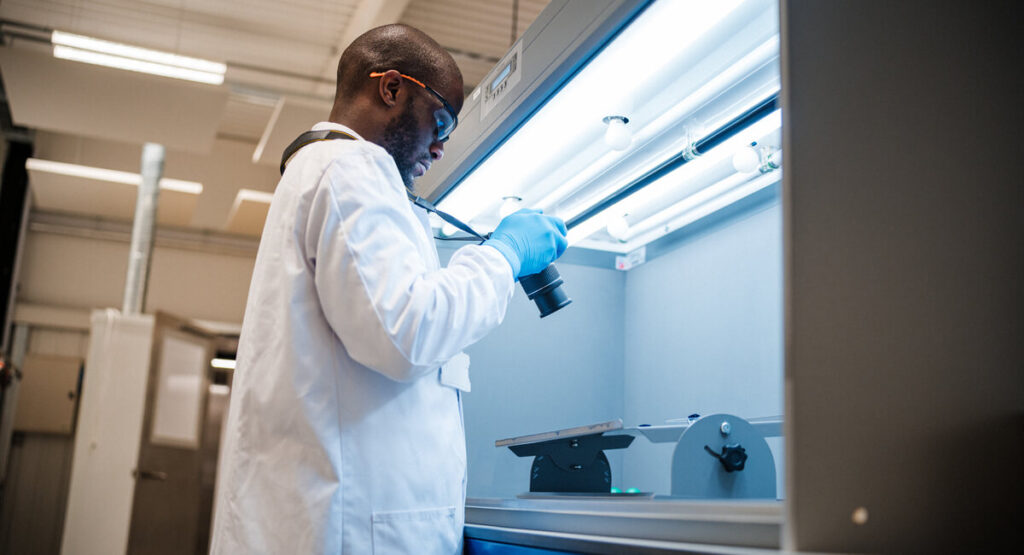
The medical device industry is built on one fundamental principle: patient safety comes first. Whether it’s a surgical implant, diagnostic equipment, wearable health monitor, or drug delivery system, every component must perform flawlessly under demanding conditions. Even the smallest material defect can compromise product quality, lead to regulatory challenges, or put patient health at risk.
This is why material testing for medical devices has become one of the most critical stages of product development. Manufacturers must ensure that every material not only meets engineering specifications but also complies with stringent international medical regulations.
By combining advanced laboratory techniques, biomedical analysis, and in vitro compatibility testing, manufacturers gain the confidence needed to bring innovative medical products to market while maintaining the highest standards of quality and safety.
Why Material Testing Matters in Medical Device Manufacturing
Medical devices are exposed to unique biological and environmental conditions that ordinary industrial products never encounter. They must withstand sterilization processes, repeated use, body fluids, temperature changes, and mechanical stress without degrading or causing harmful biological reactions.
Material testing for medical devices helps manufacturers:
- Verify material strength and durability
- Detect impurities or contaminants
- Evaluate long-term performance
- Ensure regulatory compliance
- Minimize product failures
- Reduce costly recalls
- Improve patient safety
Comprehensive testing provides manufacturers with valuable insights that support better design decisions while reducing development risks and accelerating commercialization.
Understanding Biomedical Analysis
While traditional material testing focuses on physical and chemical properties, Biomedical analysis goes a step further by evaluating how materials interact with biological systems.
Biomedical analysis investigates critical characteristics such as:
- Material composition
- Surface chemistry
- Biological response
- Chemical stability
- Potential toxicity
- Degradation behavior
- Cellular interactions
These studies help determine whether a material is suitable for direct or indirect contact with human tissue, blood, or bodily fluids.
Advanced laboratory instrumentation allows researchers to identify microscopic defects, contaminants, and chemical changes that may not be visible through conventional testing methods.
The Importance of In Vitro Compatibility Testing
Before medical devices reach clinical trials or patient use, manufacturers must demonstrate that their materials are biologically safe.
This is where In vitro compatibility testing plays an essential role.
Rather than immediately testing materials in living organisms, scientists evaluate them under carefully controlled laboratory conditions using cells and biological models.
These studies help determine whether materials:
- Cause cell damage
- Trigger inflammatory responses
- Release harmful chemicals
- Affect cell growth
- Produce toxic by-products
- Maintain stability over time
Because in vitro compatibility testing provides valuable biological data early in development, manufacturers can identify potential risks before moving to more advanced evaluation stages.
This not only improves safety but also saves significant time and development costs.
Key Material Tests for Medical Devices
Medical device manufacturers rely on a combination of analytical techniques to evaluate product performance and safety.
Mechanical Testing
Mechanical testing measures how materials respond to stress, compression, bending, fatigue, and repeated loading.
These evaluations ensure that implants, surgical instruments, and wearable devices remain structurally reliable throughout their intended lifespan.
Chemical Analysis
Chemical characterization identifies the composition of raw materials while detecting impurities, additives, residual solvents, and degradation products.
Accurate chemical analysis helps ensure consistency between manufacturing batches.
Microscopy
Advanced microscopy provides high-resolution images of material surfaces and internal structures.
Scientists use these techniques to detect:
- Surface defects
- Microcracks
- Contamination
- Coating integrity
- Structural inconsistencies
Microscopic evaluation often reveals issues that standard visual inspections cannot identify.
Contaminant Identification
Unexpected contaminants can enter materials during manufacturing, transportation, or storage.
Specialized laboratory testing identifies trace contaminants before they affect product performance or patient safety.
Environmental Testing
Medical devices may be exposed to humidity, heat, radiation, sterilization procedures, and transportation conditions.
Environmental testing verifies that materials continue to perform under real-world operating environments.
Regulatory Compliance Requires Reliable Testing
Global regulatory agencies require extensive documentation proving that medical devices are safe and effective.
Comprehensive material testing for medical devices supports compliance with internationally recognized quality standards by providing scientifically validated data throughout the product lifecycle.
Accurate laboratory documentation assists manufacturers with:
- Regulatory submissions
- Risk assessments
- Quality management systems
- Product validation
- Manufacturing consistency
- Post-market surveillance
Working with an experienced Contract Research Organization (CRO) helps manufacturers navigate these complex regulatory expectations while ensuring testing meets current industry standards.
The Benefits of Partnering with an Experienced Testing Laboratory
Medical device development requires more than laboratory equipment—it requires scientific expertise.
An experienced research partner provides:
Advanced Technology
Modern laboratories utilize sophisticated instrumentation capable of detecting microscopic defects, chemical changes, and biological interactions with exceptional accuracy.
Scientific Expertise
Experienced scientists understand both material science and biomedical applications, enabling more meaningful interpretation of test results.
Customized Testing Strategies
Every medical device has unique performance requirements.
A trusted laboratory develops customized testing protocols tailored to each project’s objectives rather than relying on generic testing packages.
Faster Development
Reliable testing reduces delays caused by failed validations, unexpected material issues, or incomplete regulatory documentation.
Improved Product Confidence
Comprehensive testing gives manufacturers greater confidence that their products will perform safely and consistently throughout their lifecycle.
Innovation Begins with Better Material Insights
Medical technology continues to evolve rapidly, introducing smarter implants, advanced biomaterials, wearable sensors, and minimally invasive devices.
As innovation accelerates, manufacturers need deeper scientific insights into how materials behave under increasingly complex conditions.
Combining material testing for medical devices, advanced biomedical analysis, and comprehensive in vitro compatibility evaluations provides the knowledge necessary to develop products that are both innovative and dependable.
These scientific evaluations transform raw materials into trusted healthcare solutions capable of improving patient outcomes worldwide.
Final Thoughts
The success of any medical device depends on the quality of the materials used to manufacture it. Comprehensive material testing for medical devices ensures those materials meet demanding standards for performance, durability, and patient safety.
Through detailed biomedical analysis, manufacturers gain valuable insights into biological interactions, while in vitro compatibility testing helps identify potential risks early in development. Together, these evaluations support regulatory compliance, reduce development uncertainty, and strengthen product reliability.
Partnering with an experienced laboratory and Contract Research Organization provides manufacturers with the expertise, advanced technology, and scientific precision needed to confidently bring innovative medical devices from concept to commercialization. In an industry where quality cannot be compromised, rigorous material testing remains one of the most valuable investments any medical device manufacturer can make.