
How Advanced Materials Testing Reveals Hidden Risks and Prevents Product Failures Before They Reach the Market
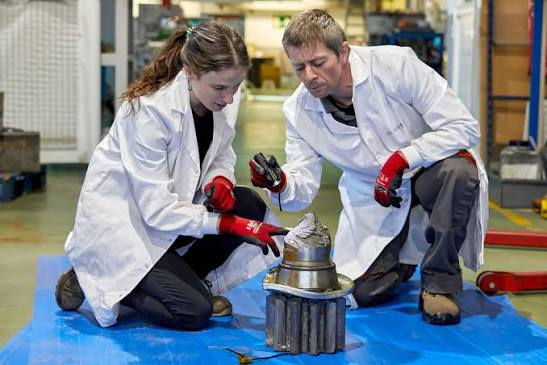
A product may look perfect when it leaves a manufacturing facility, but appearance alone cannot reveal how a material will perform months or years later. A component can gradually weaken under repeated loading, a polymer can deteriorate after exposure to chemicals or temperature changes, or a metal can develop microscopic defects that eventually become a major fracture.
When these problems reach customers, the consequences can extend far beyond replacing a defective component. Product failures can result in:
- Expensive recalls and warranty claims
- Production delays and material waste
- Regulatory and compliance challenges
- Safety risks for employees and consumers
- Damage to brand reputation
- Lost customer confidence
- Costly redesign and redevelopment
Testing materials before products reach the market gives organizations an opportunity to discover weaknesses while they are still manageable.
Understanding the Root Cause Through Failure Analysis Materials
When a component fails, simply identifying the visible damage is not enough. Manufacturers need to understand why the failure occurred and whether similar problems could happen elsewhere.
Failure Analysis Materials testing provides a scientific approach to investigating material failures. Instead of treating a broken component as an isolated incident, laboratory specialists examine its composition, structure, physical characteristics, environmental exposure, and history of use.
The investigation may involve microscopic examination, chemical analysis, surface evaluation, and other specialized techniques. These methods can help identify issues such as:
- Cracks and fracture patterns
- Material contamination
- Corrosion and oxidation
- Manufacturing defects
- Unexpected chemical changes
- Fatigue-related damage
- Inclusions or impurities
- Improper material selection
- Degradation caused by environmental exposure
Understanding the failure mechanism allows engineers and manufacturers to take corrective action rather than simply replacing the failed part.
This is particularly valuable in industries where reliability is critical, including aerospace, automotive, construction, energy, healthcare, and advanced manufacturing.
Putting Materials Under Pressure With Mechanical Testing
Materials must perform under the forces they encounter during actual operation. A material that performs well under controlled conditions may behave very differently when subjected to tension, compression, repeated loading, impact, or other mechanical stresses.
That is where professional Mechanical testing services become essential.
Mechanical testing helps determine how a material responds when forces are applied. Depending on the project and material, testing can provide valuable information about strength, deformation, durability, and other performance characteristics.
The results can help engineers answer important questions:
How much force can the material withstand?
How does it deform before failure?
Will repeated loading weaken the component?
Does the material meet the required performance specifications?
Is the selected material suitable for its intended application?
These answers can influence everything from material selection and product design to manufacturing processes and quality-control programs.
For manufacturers developing new products, mechanical testing can also help compare materials and determine which formulation or construction provides the best balance between performance, durability, and cost.
Simulating Real-World Conditions With Environmental Stress Testing
Products rarely operate in perfectly controlled laboratory environments. They may experience heat, cold, humidity, chemicals, moisture, atmospheric conditions, or combinations of these factors throughout their service life.
Environmental stress testing helps manufacturers understand how these conditions can affect material performance.
A material that performs exceptionally well in a dry laboratory may behave differently after prolonged exposure to moisture or temperature fluctuations. Similarly, a component used in an industrial environment may encounter chemicals that gradually alter its surface or internal structure.
Environmental testing can help uncover potential degradation before products are released into the field.
This type of evaluation is particularly important for products expected to operate in demanding environments. By exposing materials or components to controlled environmental conditions, researchers can investigate changes in performance and identify weaknesses that might otherwise remain hidden.
The objective isn’t simply to make a material survive a laboratory test. It is to generate meaningful information that helps predict how the material may behave during actual use.
Combining Testing Methods Creates a Clearer Picture
One testing method rarely tells the entire story.
For example, a component may fail mechanically because its material properties changed after environmental exposure. In another case, microscopic contamination may create a weak point that eventually develops into a fracture under mechanical loading.
Combining Failure Analysis Materials, Mechanical testing services, and Environmental stress testing can therefore provide a more complete understanding of product performance.
A coordinated testing strategy can help connect the dots:
Material composition → Structure → Environmental exposure → Mechanical behavior → Failure mechanism
This broader perspective can help engineers move beyond identifying what happened and determine how to prevent the same problem from happening again.
Genuine Testing: Turning Laboratory Data Into Better Decisions
At Genuine Testing, material testing is approached as more than simply producing laboratory results. The goal is to provide reliable scientific information that helps clients solve practical problems.
The laboratory combines advanced technology with experienced scientific professionals to support projects involving metals, polymers, composites, battery materials, contaminants, and other complex material systems.
Its testing capabilities include advanced microscopy, chemical and environmental analysis, battery materials analysis, contaminant identification, and comprehensive laboratory research.
This multidisciplinary capability is valuable when a project requires more than one analytical technique. Instead of viewing a material problem from a single angle, researchers can investigate its composition, structure, environmental behavior, and performance to develop a more informed understanding.
From Sample to Solution
A strong materials testing program begins by understanding the problem.
At Genuine Testing, projects follow a structured approach that starts with identifying the client’s objectives and scientific requirements. The appropriate methodology and testing protocols are then selected before laboratory execution begins under controlled conditions.
This process helps ensure that testing is purposeful rather than simply generating large volumes of disconnected data.
The general approach includes:
1. Understanding the Testing Objective
Scientific advisors work with clients to understand the material, application, suspected failure, or research question.
2. Developing the Testing Strategy
The appropriate techniques, instruments, methodologies, and protocols are selected according to the project’s objectives and requirements.
3. Conducting Laboratory Analysis
Samples are examined using advanced laboratory equipment and carefully controlled procedures designed to produce accurate and reproducible results.
4. Interpreting the Results
Laboratory data is transformed into meaningful findings that can help clients make decisions about product design, materials, manufacturing, quality, and performance.
Testing Today Can Prevent Problems Tomorrow
Material failures are expensive because they are often discovered too late. Once a product has entered the market, correcting a material-related problem can require redesigns, recalls, replacement programs, or extensive investigations.
Testing provides an opportunity to move that discovery process earlier.
By investing in Failure Analysis Materials, Mechanical testing services, and Environmental stress testing, organizations can investigate material behavior, uncover hidden vulnerabilities, validate performance, and improve product reliability before problems reach customers.
For businesses developing new materials or products, the value of testing extends beyond compliance. It can provide the scientific evidence needed to improve designs, select better materials, reduce uncertainty, and accelerate development.
Make Material Performance a Competitive Advantage
In modern manufacturing and product development, reliability is not an optional feature. Customers expect products to perform consistently, regulators expect organizations to meet applicable requirements, and manufacturers need confidence that their materials will withstand real-world demands.
Advanced laboratory testing provides that confidence.
With scientific expertise, modern instrumentation, rigorous methodologies, and a client-focused approach, Genuine Testing helps organizations transform complex material questions into actionable scientific insights.
Whether the objective is investigating an unexpected failure, validating material performance, understanding environmental degradation, or supporting a new research project, the right testing strategy can reveal problems before they become products failures.
The smartest place to discover a material weakness is in a controlled laboratory—not in the hands of your customer.