
From Material Selection to Market Confidence: Plastics Performance Testing, Plastics and Polymers, and the Role of a Polymer Testing Laboratory
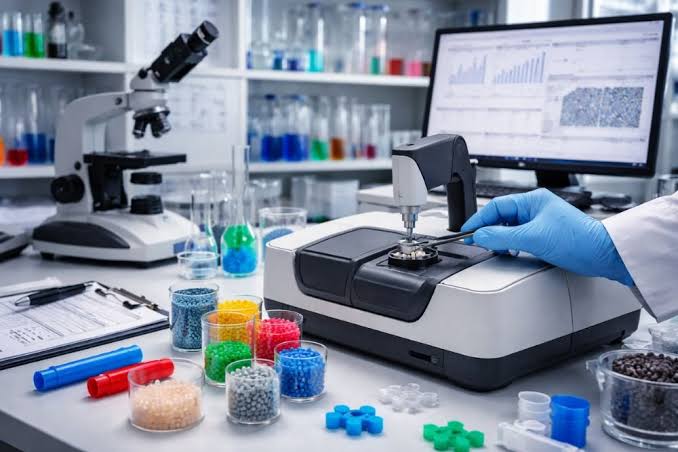
Modern product development demands materials that deliver more than basic functionality. A plastic component may need to remain strong under repeated loading, resist chemicals, tolerate temperature fluctuations, maintain dimensional stability, or perform reliably for years in challenging environments.
A material that appears suitable during initial development may behave very differently under real-world conditions. Small differences in formulation, processing, additives, reinforcement, or environmental exposure can significantly affect performance.
This makes scientific evaluation essential.
Plastics performance testing provides manufacturers, engineers, researchers, and product developers with objective information about how a plastic or polymer behaves under defined conditions. Rather than relying solely on assumptions or manufacturer specifications, organizations can use laboratory-generated data to guide material selection and product development.
Understanding Plastics and Polymers Through Scientific Testing
Plastics and polymers are highly versatile materials with properties that can be engineered for specific applications. Thermoplastics, thermosetting polymers, elastomers, composites, and specialty polymer systems can each exhibit different mechanical, thermal, chemical, and physical characteristics.
For example, one polymer may provide excellent impact resistance while another offers superior chemical resistance. A reinforced polymer may deliver greater strength, while a flexible elastomer may be better suited to sealing or vibration-control applications.
Understanding these differences requires appropriate testing.
A qualified polymer testing laboratory can evaluate material characteristics and help determine whether a particular polymer meets the performance expectations of an application. Testing can also help identify differences between batches, investigate unexpected failures, validate new formulations, and support quality-control programs.
What Is Plastics Performance Testing?
Plastics performance testing involves evaluating the physical, mechanical, chemical, thermal, and environmental behavior of plastic materials and polymer-based products.
Depending on the project objectives, testing may examine:
- Strength and mechanical performance
- Durability and resistance to repeated stress
- Chemical resistance
- Environmental exposure
- Thermal behavior
- Dimensional stability
- Material composition
- Surface characteristics
- Failure mechanisms
- Aging and degradation
- Compatibility with other materials
The appropriate testing program depends on the material, application, expected service conditions, and regulatory or industry requirements.
At Genuine Testing, testing programs can be tailored to address specific scientific and product-development objectives rather than relying on a one-size-fits-all approach.
The Role of a Polymer Testing Laboratory in Product Development
A Polymer testing laboratory does much more than produce test results. The right laboratory becomes an extension of a product development or engineering team.
Testing can support a project at several stages.
1. Material Selection
During early development, engineers may need to compare several polymer candidates. Laboratory testing can provide measurable information that helps identify the material most appropriate for the intended application.
2. Product Development
Testing can help determine whether a material formulation delivers the necessary performance. Developers can use laboratory findings to refine materials, improve designs, and identify potential weaknesses before large-scale production.
3. Failure Investigation
When a plastic component cracks, deforms, discolors, becomes brittle, or otherwise fails, testing can help investigate the underlying cause. Scientific analysis can provide valuable evidence about whether the issue relates to material composition, environmental exposure, processing, mechanical stress, or another factor.
4. Quality Assurance
Manufacturers need consistency from one production batch to another. Polymer testing can help verify material properties and identify unexpected variations that could affect product performance.
5. Research and Innovation
Advanced testing supports the development of new polymer formulations, composites, coatings, and specialty materials. Reliable laboratory data helps researchers move from experimental concepts toward practical applications.
Key Testing Areas for Plastics and Polymers
Different applications require different testing strategies. A comprehensive evaluation may combine several analytical techniques.
Mechanical Performance
Mechanical testing helps determine how a plastic responds to applied forces. Strength, durability, deformation, and other performance characteristics can provide important information about whether a material is suitable for a demanding application.
Chemical Resistance
Plastics may come into contact with solvents, oils, cleaning agents, fuels, pharmaceuticals, or other chemicals. Chemical analysis and compatibility testing can help determine how exposure affects the material.
Environmental Performance
Temperature, humidity, UV exposure, moisture, and other environmental conditions can influence polymer performance. Evaluating these factors can help manufacturers understand potential degradation and long-term behavior.
Microscopy and Failure Analysis
Advanced microscopy can reveal surface defects, structural characteristics, fractures, inclusions, and other details that may not be visible through conventional inspection.
Composition and Contaminant Identification
Understanding what a material contains can be critical when investigating unexpected performance. Analytical testing can help identify components, contaminants, or unusual material characteristics.
Why Advanced Testing Leads to Better Decisions
Laboratory testing converts uncertainty into measurable evidence.
For manufacturers, this can mean making better material choices before committing to expensive production processes. For researchers, it can provide the data necessary to validate a hypothesis. For engineers, testing can help determine whether a material is capable of meeting application-specific requirements.
The value of testing extends beyond a single number on a laboratory report. Properly designed testing can reveal relationships between material composition, processing, environmental exposure, and product performance.
This is why choosing an experienced testing partner matters.
Genuine Testing: Your Partner in Materials Research and Analysis
Genuine Testing combines scientific expertise, advanced laboratory capabilities, and a client-focused approach to material evaluation. As a trusted Contract Research Organization, the company supports organizations that require dependable testing, research, and analytical solutions.
Its capabilities extend across material characterization, plastics performance testing, advanced microscopy, chemical and environmental analysis, contaminant identification, battery materials analysis, and other specialized scientific services.
The team works collaboratively with clients to understand their objectives, develop appropriate methodologies, execute laboratory procedures, and interpret the resulting data.
This approach helps ensure that testing is not simply performed—it is connected to the larger scientific and business objective.
From Laboratory Data to Real-World Performance
The most useful testing program is one that answers meaningful questions.
Can this polymer withstand the conditions it will encounter?
Does a new formulation provide the expected improvement?
Why did a component fail?
Are two materials genuinely equivalent?
Could environmental exposure affect long-term performance?
Does the material meet the requirements necessary for its intended application?
A well-designed testing strategy can help answer these questions with reliable scientific evidence.
For industries working with plastics and polymers, that evidence can support safer products, improved designs, stronger quality programs, and more informed development decisions.
Choose Confidence Before Your Product Reaches the Market
In competitive industries, material performance can directly influence product reliability, customer satisfaction, regulatory readiness, and long-term success. Guesswork is rarely enough when plastic components are expected to perform under demanding conditions.
Plastics performance testing provides the scientific foundation needed to understand material behavior. A capable polymer testing laboratory can take that evaluation further by combining analytical expertise, advanced instrumentation, research methodology, and experienced scientific interpretation.
Genuine Testing helps organizations move from questions to answers, from laboratory samples to meaningful insights, and from material uncertainty to greater confidence.
When the performance of plastics and polymers matters, reliable testing is not simply a development step—it is an investment in better products, stronger decisions, and measurable performance.