
How Materials Characterization, Specialized Sample Prep, and Materials Testing CRO Services Deliver Reliable Results
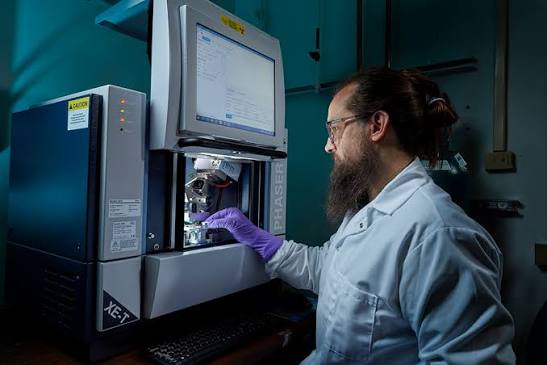
Modern products often rely on increasingly complex materials, including polymers, metals, composites, elastomers, battery materials, and advanced formulations. A small difference in composition, structure, contamination, or processing can influence how a material performs in real-world conditions.
That is why effective testing begins long before an instrument produces a result.
A reliable laboratory process should establish what needs to be investigated, prepare the sample appropriately, select suitable analytical techniques, perform testing under controlled conditions, interpret the resulting data, and communicate the findings clearly.
At Genuine Testing, this process brings together scientific expertise, advanced instrumentation, rigorous methodologies, and a client-focused approach to help convert complex scientific questions into practical answers.
Step 1: Sample Receipt and Project Understanding
Every successful testing project begins with understanding the sample and the objective behind the investigation.
When a material arrives at the laboratory, scientists need to understand its identity, intended application, history, condition, and the questions the client wants answered. Whether the goal is failure analysis, product development, contamination investigation, quality verification, or regulatory support, the testing strategy should be aligned with the project objective.
This initial stage helps establish an appropriate testing pathway and prevents unnecessary analysis.
For a Materials testing CRO, understanding the client’s scientific and commercial goals is particularly important because contract research projects often require customized methodologies rather than a one-size-fits-all testing package.
Step 2: Specialized Sample Prep for Reliable Analysis
One of the most important—and sometimes overlooked—parts of laboratory testing is sample preparation.
Even sophisticated analytical equipment cannot compensate for an improperly prepared specimen. Depending on the material and testing objective, preparation may involve cutting, sectioning, polishing, extraction, cleaning, mounting, grinding, or other specialized procedures.
Specialized Sample Prep is especially important for complex materials and advanced microscopy or chemical analysis. The preparation technique must preserve the characteristics being investigated while producing a sample suitable for the selected analytical method.
For example, microscopy may require a carefully prepared surface to reveal structural features, while chemical analysis may require preparation that prevents contamination or unwanted interference.
A carefully designed preparation process improves the reliability and relevance of the resulting data.
Step 3: Selecting the Right Materials Characterization Techniques
There is no single test that can answer every materials-related question.
Materials Characterization involves examining a material’s physical, chemical, structural, mechanical, or morphological properties using appropriate analytical techniques. The exact approach depends on the material and the scientific question.
Genuine Testing offers capabilities that can support investigations such as:
- Advanced microscopy for high-resolution material examination
- Chemical and environmental analysis
- Battery materials analysis
- Contaminant identification
- Composition and materials identification
- Mechanical property evaluation
- Composite materials evaluation
- Extractables and leachables investigations
- Chemical compatibility studies
- Specialized sample preparation
Selecting complementary techniques can provide a more complete understanding of a material rather than relying on one isolated measurement.
Step 4: Controlled Laboratory Execution
After the methodology is established and samples are prepared, laboratory testing can begin.
At this stage, precision and consistency are essential. Scientists follow defined procedures, use appropriate instrumentation, maintain quality controls, and document relevant observations throughout the process.
For industries such as aerospace, automotive, construction, energy, healthcare, and manufacturing, reliable laboratory data can support important decisions involving product performance, safety, quality, and development.
A professional Materials testing CRO can also provide the infrastructure and scientific expertise needed when an organization does not have the necessary internal equipment, personnel, or specialized capabilities.
Step 5: Data Analysis and Scientific Interpretation
Laboratory testing produces data—but data alone is not necessarily an answer.
The next stage involves analyzing results, identifying meaningful patterns, comparing observations, and interpreting findings within the context of the original project objective.
For example, an investigation into an unexpected product failure may require scientists to connect microscopy observations with chemical composition or mechanical characteristics. Similarly, a contamination investigation may require identifying an unknown substance and determining its potential relationship to the material or manufacturing process.
Genuine Testing emphasizes data-driven interpretation so clients can move beyond numbers and obtain practical scientific insight.
Step 6: From Findings to Actionable Recommendations
The ultimate purpose of testing is to support better decisions.
Depending on the project, laboratory findings may help a company investigate a failure, improve a formulation, evaluate a supplier material, understand product degradation, identify contaminants, optimize performance, or support research and development.
This is where the value of a collaborative contract research partner becomes especially important. Instead of simply providing test results, a capable laboratory can help clients understand what those results mean and how they relate to their objectives.
Step 7: Comprehensive Final Reporting
The final report brings the testing journey together.
A useful report should clearly communicate the testing methodology, relevant observations, analytical results, interpretation, and conclusions. Clear reporting allows technical teams, quality professionals, engineers, researchers, and decision-makers to understand the outcome of the investigation.
For regulated or technically demanding industries, well-organized documentation can also become an important part of quality, compliance, research, and product-development activities.
Why Choose Genuine Testing as Your Materials Testing CRO?
Choosing the right laboratory partner can have a significant impact on the quality and usefulness of a testing project.
Genuine Testing combines advanced laboratory capabilities with scientific expertise and a collaborative approach. Its services are designed to support clients from research and methodology planning through laboratory execution, data interpretation, and reporting.
Key advantages include:
- Proven scientific expertise backed by extensive hands-on experience
- Comprehensive laboratory capabilities for diverse materials and research needs
- Advanced instrumentation for detailed scientific analysis
- Customized testing strategies aligned with specific project objectives
- Specialized Sample Prep for complex analytical requirements
- Confidentiality and compliance throughout the research process
- Actionable reporting that helps clients make informed decisions
Whether you are investigating an unknown material, evaluating product performance, researching a failure, identifying contamination, or developing a new product, the right testing strategy can provide the evidence needed to move forward confidently.
Turning Complex Material Questions into Clear Scientific Answers
Materials testing is more than placing a sample into an instrument and recording a measurement. It is a complete scientific process that requires careful planning, appropriate Specialized Sample Prep, advanced Materials Characterization, controlled laboratory execution, and expert interpretation.
As an experienced Materials testing CRO, Genuine Testing helps bridge the gap between complex laboratory investigations and real-world decision-making. From sample receipt to final report, its integrated approach is designed around precision, innovation, and integrity.
When reliable scientific insight matters, the right laboratory partner can help turn a challenging material question into a clear path toward better products, stronger performance, and informed innovation.