
What is Tribology and Why Does It Matter?
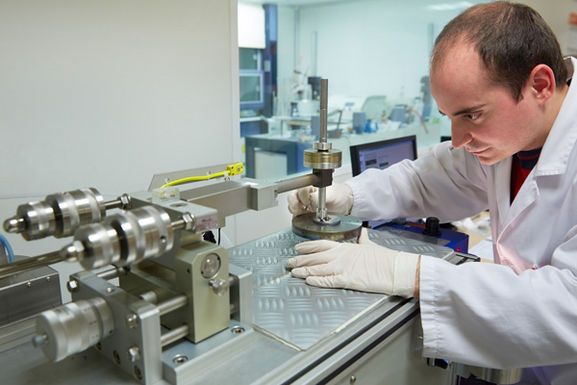
Tribology is the scientific study of how surfaces interact when they move against each other. This includes three key elements: friction, wear, and lubrication. Although the term may sound highly specialized, tribology is present in almost every mechanical system around us—from car engines and industrial machines to medical implants and even smartphones.
Whenever two surfaces slide, roll, or rub together, tribology determines how efficiently that system performs. Poor tribological performance can lead to energy loss, overheating, premature wear, or complete system failure. On the other hand, optimized tribology enhances efficiency, reduces maintenance costs, and significantly improves product lifespan.
In modern engineering and manufacturing, tribology is not optional—it is essential.
Why Tribology Matters in Modern Industries
In industries such as automotive, aerospace, energy, healthcare, and manufacturing, material performance is everything. A single failure due to friction or wear can lead to costly downtime or even safety risks.
Tribology helps answer critical engineering questions such as:
- How long will a material last under repeated movement?
- How much energy is lost due to surface resistance?
- Which lubricant or coating provides the best protection?
- How do different materials behave under real-world stress conditions?
By addressing these questions early in the development phase, companies can design safer, more durable, and more efficient products.
This is where advanced tribology testing services become essential.
Tribology Testing Services: Turning Science into Performance
At a modern materials testing laboratory, tribology is studied using specialized equipment and controlled testing environments. These Tribology testing services help simulate real-world conditions so that materials can be evaluated before they are used in actual applications.
Typical tribology tests include:
- Sliding wear tests
- Abrasive wear tests
- Lubrication performance analysis
- Surface interaction studies under varying loads and speeds
Each test provides valuable data that helps engineers understand how materials will behave over time. This allows for smarter material selection, improved coatings, and better mechanical design.
For companies focused on innovation and reliability, tribology testing is a powerful development tool rather than just a validation step.
Coefficient of Friction Testing: Measuring Resistance with Precision
One of the most important parameters in tribology is the Coefficient of friction testing. This measures how much resistance occurs when one surface moves over another.
A high coefficient of friction may be beneficial in applications like braking systems or grip surfaces. However, in mechanical systems like bearings or gears, lower friction is usually preferred to minimize energy loss and wear.
Coefficient of friction testing helps engineers:
- Select compatible material pairings
- Optimize lubrication systems
- Reduce energy consumption
- Improve mechanical efficiency
At Genuine Testing, advanced instrumentation ensures that coefficient of friction data is measured with high precision under controlled conditions, simulating real operational environments as closely as possible.
Wear and Friction Evaluation: Predicting Material Lifespan
While friction describes resistance during movement, Wear and friction evaluation focuses on material degradation over time. Wear occurs when material is gradually removed or deformed due to repeated mechanical action.
This type of evaluation is critical for understanding:
- Surface durability
- Material fatigue under stress
- Long-term performance reliability
- Maintenance and replacement cycles
Wear testing can simulate months or even years of usage in a short period. This allows manufacturers to identify weak points in a material or design before it reaches the market.
For industries like aerospace and automotive, where safety and durability are non-negotiable, wear and friction evaluation is a cornerstone of quality assurance.
Real-World Applications of Tribology
Tribology is not confined to laboratories—it directly impacts everyday life. Some practical applications include:
- Automotive Industry: Engine components, brakes, tires, and transmissions rely heavily on optimized friction control.
- Medical Devices: Artificial joints and implants must minimize wear to ensure long-term patient safety.
- Aerospace Engineering: Aircraft components must withstand extreme friction and temperature conditions.
- Industrial Machinery: Reduced wear leads to lower maintenance costs and higher productivity.
- Energy Sector: Wind turbines and power systems depend on long-lasting mechanical efficiency.
In all these fields, tribology testing ensures that materials perform reliably under real-world conditions.
The Role of Advanced Laboratories in Tribology Research
Modern laboratories play a crucial role in advancing tribology science. With state-of-the-art equipment and expert analysis, they transform raw data into actionable insights.
A well-equipped lab offering tribology testing services can help companies:
- Improve product design before production
- Reduce development costs
- Ensure compliance with international standards
- Enhance material innovation and performance
By combining scientific expertise with advanced testing technology, laboratories bridge the gap between research and real-world application.
Conclusion
Tribology is far more than a scientific concept—it is a critical factor that determines how materials and machines perform in the real world. Through precise coefficient of friction testing and detailed wear and friction evaluation, engineers can design systems that are safer, more efficient, and longer lasting.
As industries continue to demand higher performance and reliability, tribology testing services will remain a key driver of innovation and product excellence.
Understanding how surfaces interact is not just about reducing friction—it is about building a better, more efficient future.