
Advanced Materials for Medical Devices: Why Material
Testing Is Critical for Safety and Performance
Medical technology is advancing rapidly, with new materials enabling the development of safer, lighter, more durable, and more sophisticated medical devices. From orthopedic implants and surgical instruments to drug delivery systems, diagnostic equipment, and wearable technologies, material selection plays a critical role in the performance and safety of medical products. Modern medical devices increasingly rely on advanced metals, polymers, ceramics, composites, coatings, and specialty materials. These materials must perform reliably in demanding environments while meeting stringent quality and regulatory requirements. A material that performs well in a conventional industrial application may behave very differently when exposed to bodily fluids, sterilization processes, temperature changes, mechanical loading, or prolonged contact with biological environments. For this reason, comprehensive material testing has become an essential part of medical device research, development, validation, and quality control. Laboratory testing provides manufacturers and researchers with scientific data about material composition, mechanical properties, chemical stability, surface characteristics, and other critical attributes.
Why Material Selection Matters in Medical Device Development
Material selection is one of the earliest and most important decisions in medical device development. Engineers must consider how a material will perform throughout the intended lifetime of a device and under the specific conditions in which it will be used.
An implant, for example, may experience repeated mechanical loading and prolonged exposure to bodily fluids. A surgical instrument may need to withstand repeated sterilization cycles without losing its structural integrity. A medical packaging material may need to protect its contents from moisture, oxygen, contamination, and environmental exposure.
These applications require materials with carefully controlled properties. Laboratory characterization helps manufacturers compare candidate materials and determine whether they are suitable for their intended use.
Biomaterials & Medical-Grade Materials testing can support the evaluation of materials used in medical and healthcare applications, providing valuable information during research, development, and product qualification.


Common Materials Used in Medical Devices
Medical devices can contain a wide range of materials, each selected for specific performance requirements. Stainless steels, titanium alloys, cobalt-chromium alloys, and other metals are widely used where strength and durability are important. Polymers are increasingly important because they can offer flexibility, low weight, chemical resistance, and design versatility. Specialty polymers may be used in catheters, tubing, implants, housings, seals, and drug delivery components.
Ceramics can provide excellent wear resistance, chemical stability, and biocompatibility for certain applications. Advanced composites can combine multiple material properties to achieve specific mechanical or functional characteristics. Coatings are also increasingly used to modify surface properties. A coating may improve corrosion resistance, wear resistance, adhesion, or other performance characteristics without changing the properties of the underlying material.
Advanced Characterization for Medical-Grade Polymers
Medical-grade polymers are increasingly used because they can provide a combination of flexibility, low density, chemical resistance, and manufacturing versatility. However, polymer performance depends heavily on formulation, additives, processing conditions, molecular structure, and environmental exposure. Advanced characterization techniques can help identify polymer composition, additives, fillers, degradation products, and structural changes.
Thermal analysis can provide information about transitions and stability, while spectroscopy can help identify chemical composition. Microscopy can reveal surface morphology, defects, inclusions, and other structural characteristics. This information supports material selection, supplier qualification, troubleshooting, and quality-control programs.

Evaluating Medical Device Failures
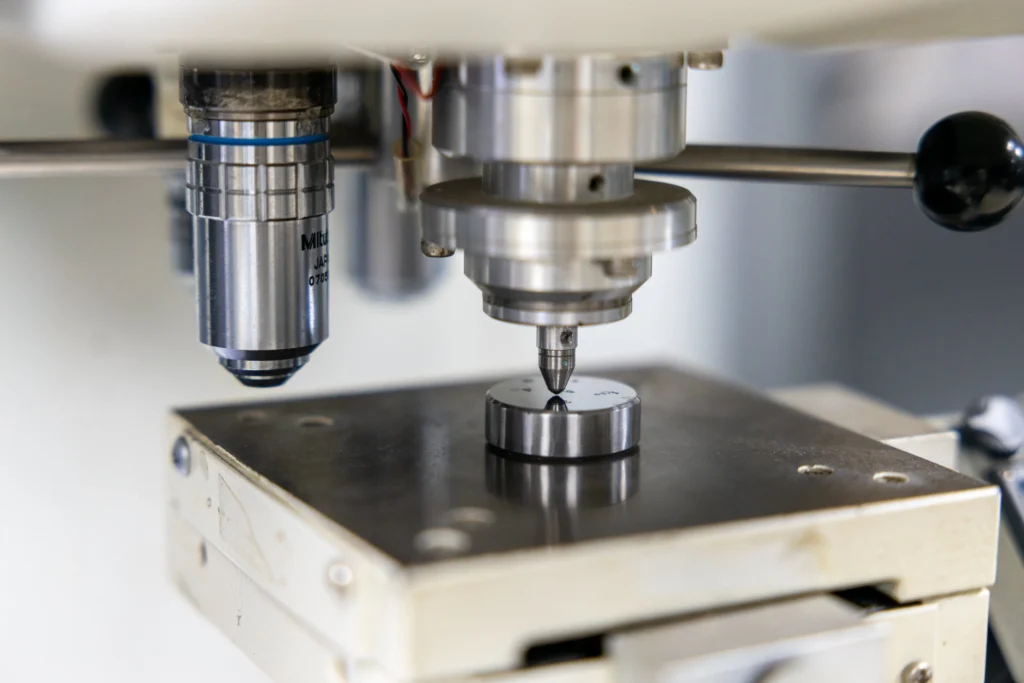
Even highly engineered medical devices can experience unexpected failures. A component may crack, deform, corrode, discolor, delaminate, or otherwise fail to perform as expected. Understanding the root cause is essential because simply replacing the failed component may not address the underlying problem.
Failure Analysis – Materials can help investigate failed components by examining their physical condition, material composition, microstructure, surface characteristics, and operating history.
A detailed failure investigation can help determine whether the issue originated from material selection, manufacturing defects, contamination, environmental exposure, excessive loading, improper processing, or another mechanism.
Material Testing and Regulatory Requirements
Medical device manufacturers operate in a highly regulated environment. Demonstrating that materials meet appropriate specifications and performance requirements is an important part of product development and quality assurance.
Laboratory testing can generate objective scientific data that supports technical documentation, validation programs, supplier qualification, product development, and regulatory activities.
The specific testing requirements depend on the device, materials, intended use, market, and applicable regulatory framework. Manufacturers should therefore establish testing programs based on the requirements relevant to their particular products.

The Growing Role of Advanced Biomaterials
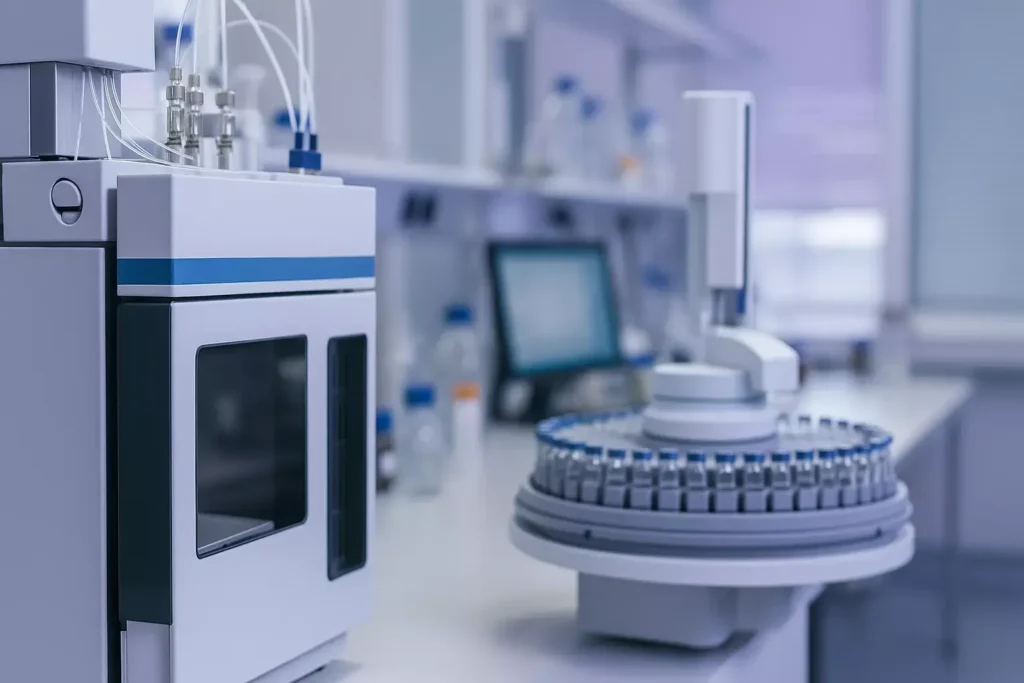
Research into biomaterials continues to expand as scientists seek new ways to improve medical treatments and device performance. Researchers are developing advanced polymers, bioactive materials, coatings, ceramics, composites, and other material systems for applications ranging from implants to tissue engineering and controlled drug delivery.
These materials often have complex structures and functions that require specialized analytical techniques. Characterization helps researchers understand how material composition and structure influence performance.
As medical technology becomes more personalized, material testing will also play an important role in developing customized and patient-specific devices.
Sustainable Materials in Healthcare
Sustainability is becoming increasingly relevant to medical product development. Healthcare organizations and manufacturers are exploring ways to reduce material waste, improve packaging efficiency, and develop more sustainable manufacturing processes.
However, sustainability cannot come at the expense of safety or performance. Alternative materials must be thoroughly evaluated before being introduced into critical medical applications.
Material testing can help compare conventional and alternative materials and determine whether changes in formulation or manufacturing processes affect product quality.


Why Independent Laboratory Testing Adds Value
Independent laboratories can provide manufacturers and researchers with specialized analytical capabilities that may not be available internally. External testing can provide objective data for material selection, product development, supplier qualification, failure investigations, and quality-control programs.
A Contract Research Organization can also support medical technology companies developing new materials or devices by designing customized research and testing programs around specific project objectives.
This collaborative approach allows organizations to access scientific expertise and advanced instrumentation while focusing internal resources on product development and innovation.