
Next-Generation Glass Analysis, In Vitro Compatibility & Materials Characterization: Advancing Scientific Innovation with Genuine Testing
Scientific innovation is accelerating at an unprecedented pace, and industries across the globe are searching for reliable testing partners capable of delivering accurate material intelligence. Whether developing biomedical devices, advanced polymers, specialty coatings, pharmaceutical packaging, battery systems, or high-performance composites, companies now depend heavily on advanced laboratory testing to ensure safety, compliance, and durability.
As modern manufacturing becomes increasingly sophisticated, the importance of Glass Analysis, In Vitro Compatibility, and Materials Characterization continues to grow. These services are no longer optional quality checks; they have become strategic tools for product development, regulatory approval, risk reduction, and long-term performance optimization.
Genuine Testing has emerged as a trusted leader in advanced material testing and contract research services by delivering precision-driven scientific solutions tailored to the evolving needs of modern industries. With cutting-edge laboratory infrastructure, experienced scientists, and a commitment to innovation, the company supports organizations through every stage of research, testing, and commercialization.
The Rising Importance of Advanced Glass Analysis
Glass materials are used extensively in industries ranging from pharmaceuticals and electronics to construction, automotive manufacturing, and renewable energy systems. However, modern applications require much more than simple structural integrity. Today’s glass materials must meet strict standards for chemical resistance, thermal stability, contamination control, and long-term reliability.
Advanced Glass Analysis has become increasingly important because even microscopic defects or trace contaminants can significantly impact product performance and safety. Pharmaceutical packaging, for example, requires specialized glass compositions that prevent leaching and maintain chemical stability over extended periods. In the electronics industry, precision-engineered glass components must withstand thermal stress while maintaining optical clarity and structural consistency.
One of the latest trends in Glass Analysis is the use of high-resolution microscopy combined with spectroscopy technologies. These advanced analytical methods enable scientists to identify structural defects, contamination patterns, surface degradation, and compositional inconsistencies at microscopic and even molecular levels.
Another emerging trend involves automated imaging systems powered by artificial intelligence and machine learning algorithms. These systems accelerate defect detection while improving testing accuracy and reproducibility. AI-driven analysis also helps laboratories process larger datasets more efficiently, enabling faster turnaround times for clients operating in fast-paced development environments.
Genuine Testing integrates advanced analytical methodologies and state-of-the-art laboratory equipment to provide highly detailed glass material evaluations. Their expertise allows clients to identify hidden performance risks, improve material selection strategies, and ensure compliance with international quality standards.
In Vitro Compatibility Testing Driving Biomedical Innovation
The healthcare and biomedical sectors are undergoing remarkable transformation due to rapid advancements in biotechnology, regenerative medicine, implantable devices, and pharmaceutical development. As a result, In Vitro Compatibility testing has become one of the most critical aspects of product validation and regulatory approval.
Modern medical products must demonstrate compatibility with biological systems before they can proceed to clinical use. In Vitro Compatibility testing evaluates how materials interact with cells, tissues, and biological environments under controlled laboratory conditions. These studies help researchers identify potential toxicity, inflammatory responses, degradation risks, and other biological interactions that could impact patient safety.
One of the biggest technological trends shaping this field is the development of 3D cell culture models and organ-on-chip technologies. Unlike traditional testing methods, these advanced systems more accurately replicate human physiological environments, allowing scientists to generate more predictive and clinically relevant data.
Another major innovation involves high-content screening platforms that combine automated microscopy, image analysis, and bioinformatics. These technologies allow laboratories to analyze complex biological responses with greater speed and precision while reducing variability in testing outcomes.
The growing adoption of nanomaterials and bioengineered materials in medical products has also increased the need for highly specialized compatibility testing. Advanced biomaterials often behave differently at cellular and molecular levels, requiring sophisticated analytical approaches and customized testing methodologies.
Genuine Testing supports biomedical innovators through comprehensive in vitro compatibility assessments designed to meet modern regulatory expectations and scientific standards. Their collaborative research approach helps clients accelerate development timelines while maintaining strict quality and safety requirements.
Materials Characterization Transforming Modern Product Development
Materials Characterization has become one of the most valuable tools in advanced manufacturing and scientific research. As products become more complex and performance expectations rise, manufacturers need detailed insights into the structural, chemical, thermal, and mechanical properties of their materials.
Today’s Materials Characterization services extend far beyond traditional testing. Advanced laboratories now use integrated analytical platforms capable of generating multidimensional material profiles. These profiles provide essential information for product optimization, failure analysis, quality control, and innovation.
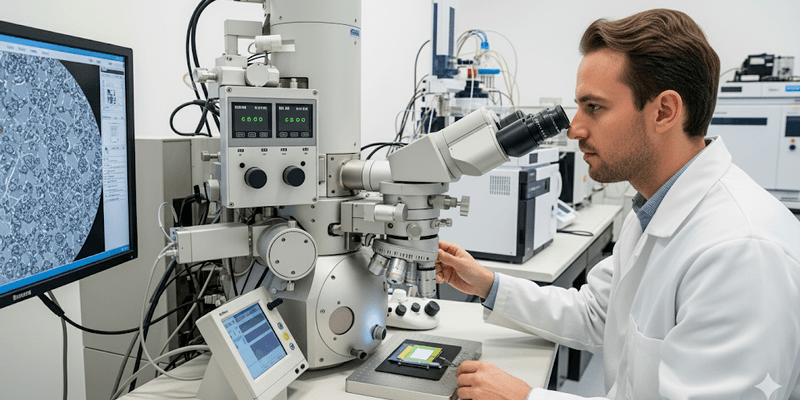
One of the most significant trends in Materials Characterization is the increasing use of electron microscopy technologies. Scanning Electron Microscopy (SEM) and Transmission Electron Microscopy (TEM) allow researchers to visualize material structures at nanoscale resolution, enabling highly detailed analysis of fractures, coatings, grain structures, and surface interactions.
Spectroscopic methods such as FTIR, Raman spectroscopy, and X-ray diffraction are also transforming material analysis by providing precise chemical and structural identification. These techniques help researchers understand material composition, crystallinity, molecular interactions, and degradation pathways.
Another rapidly growing trend is the integration of digital data analytics into materials research. Laboratories are increasingly using predictive modeling, simulation tools, and machine learning to analyze testing data and forecast material behavior under various operating conditions. These technologies improve product development efficiency while reducing costly trial-and-error experimentation.
Battery materials analysis has also become a critical area within Materials Characterization due to the rapid growth of electric vehicles and renewable energy storage technologies. Scientists now require advanced analytical capabilities to study electrode performance, thermal stability, contamination pathways, and degradation mechanisms in next-generation battery systems.
Genuine Testing leverages advanced instrumentation and scientific expertise to deliver comprehensive Materials Characterization solutions that help industries improve product reliability, enhance safety, and accelerate innovation.
The Role of Contract Research Organizations in Modern Science
As scientific research becomes more specialized and technically demanding, many organizations are turning to Contract Research Organizations (CROs) for expert support. CROs provide access to advanced laboratory capabilities, experienced scientists, and customized research services without the need for companies to build expensive in-house infrastructure.
Modern CRO partnerships are evolving beyond routine testing services. Today’s leading research organizations act as strategic innovation partners by helping clients solve complex scientific challenges, improve regulatory readiness, and accelerate commercialization.
One of the biggest trends in contract research is the increasing emphasis on interdisciplinary collaboration. Scientific projects now frequently involve multiple domains such as chemistry, materials science, biology, engineering, and data analytics. CROs with broad technical expertise are uniquely positioned to manage these integrated research requirements.
Digital transformation is also reshaping the CRO landscape. Advanced laboratory automation, cloud-based data management systems, and AI-powered analytics are enabling faster workflows, improved traceability, and enhanced research accuracy.
Genuine Testing exemplifies this modern CRO model by offering collaborative, science-driven solutions tailored to each client’s objectives. Their commitment to precision, transparency, and innovation helps businesses navigate increasingly complex scientific and regulatory environments with confidence.
Advanced Testing Technologies Shaping the Future
The future of material testing and scientific research is being driven by several transformative technologies that are reshaping laboratory operations and analytical capabilities.
Automation and robotics are significantly improving testing consistency while reducing human error. Automated sample preparation systems, robotic handling platforms, and smart analytical instruments are streamlining workflows and increasing laboratory efficiency.
Artificial intelligence is another major force influencing the future of materials research. AI-powered systems can analyze massive datasets, identify hidden correlations, and generate predictive insights that would be difficult to detect using traditional methods alone.
Sustainability is also becoming a central focus across industries. Companies increasingly require environmental analysis, contaminant identification, and eco-friendly material assessments to support sustainable manufacturing practices and regulatory compliance.
High-throughput testing technologies are enabling researchers to evaluate larger numbers of material formulations in shorter timeframes, accelerating innovation cycles and reducing development costs.
Genuine Testing continues to embrace these emerging technologies to provide clients with future-ready laboratory solutions capable of supporting rapidly evolving industry demands.
Driving Innovation Through Scientific Precision
In today’s highly competitive marketplace, scientific precision is directly linked to product success. Businesses can no longer rely solely on conventional testing methods if they want to remain competitive in industries driven by innovation, compliance, and performance excellence.
Advanced services such as Glass Analysis, In Vitro Compatibility, and Materials Characterization provide the critical insights needed to develop safer, stronger, and more reliable products. By combining advanced instrumentation, experienced scientific teams, and customized research strategies, Genuine Testing helps organizations transform complex scientific challenges into practical solutions.
As industries continue to evolve, the demand for reliable contract research and advanced material testing will only increase. Companies that invest in high-quality scientific partnerships today will be better positioned to accelerate innovation, improve product quality, and succeed in the rapidly advancing technologies of tomorrow.