3D Printed Materials Testing: Ensuring Quality, Performance, and Reliability in Additive Manufacturing
Additive manufacturing, commonly known as 3D printing, has transformed the way companies design, prototype, and manufacture products. From aerospace components and automotive parts to medical devices, electronics, and industrial equipment, 3D printing enables manufacturers to create complex geometries that can be difficult or impossible to produce using traditional manufacturing methods. As the technology moves from prototyping toward large-scale production, understanding the performance and reliability of 3D printed materials has become increasingly important. Unlike conventional manufacturing processes, additive manufacturing builds components layer by layer. This unique production method can create differences in density, microstructure, surface condition, bonding, and mechanical performance throughout a printed component. Material selection, printing parameters, build orientation, temperature, post-processing, and environmental conditions can all influence the final properties of a 3D printed product.
Why Testing 3D Printed Materials Is Important
The performance of a 3D printed component depends on much more than the material listed in its specifications. Two components produced from the same polymer, metal, or composite material can demonstrate different properties depending on how they were printed.
Printing speed, layer thickness, nozzle temperature, laser power, build orientation, infill density, cooling conditions, and post-processing can all influence the final component. Small variations in these parameters may result in porosity, incomplete layer bonding, internal defects, residual stresses, or dimensional inconsistencies.
Laboratory testing helps identify these differences before they become costly production problems. Manufacturers can use analytical results to optimize printing parameters and establish more consistent production processes.
Testing is particularly important when 3D printed components are intended for safety-critical applications. Aerospace, automotive, healthcare, energy, and industrial manufacturers need confidence that printed components will perform reliably throughout their expected service life.
Characterizing the Structure of 3D Printed Materials
Material characterization is a fundamental part of additive manufacturing research because the printing process can significantly influence a material’s internal structure.
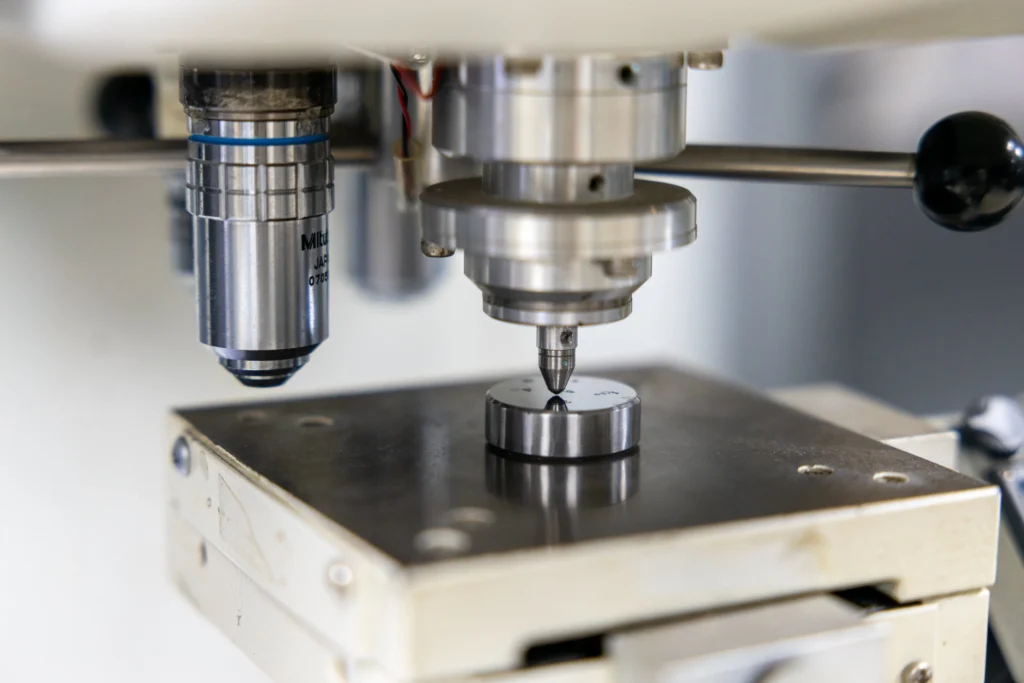
Advanced microscopy can reveal layer interfaces, voids, cracks, inclusions, surface defects, and other microscopic features that may not be visible through conventional inspection. Chemical and elemental analysis can identify variations in composition or unexpected contaminants that may affect performance.
Through Materials Characterization, manufacturers and researchers can obtain detailed information about the structure and properties of 3D printed materials. This information can be used to compare different printing conditions, investigate unexpected performance differences, and improve material formulations.
Characterization is also valuable when evaluating new feedstocks, recycled materials, specialty polymers, metal powders, composite materials, and other advanced materials developed specifically for additive manufacturing.
Mechanical Testing for 3D Printed Components
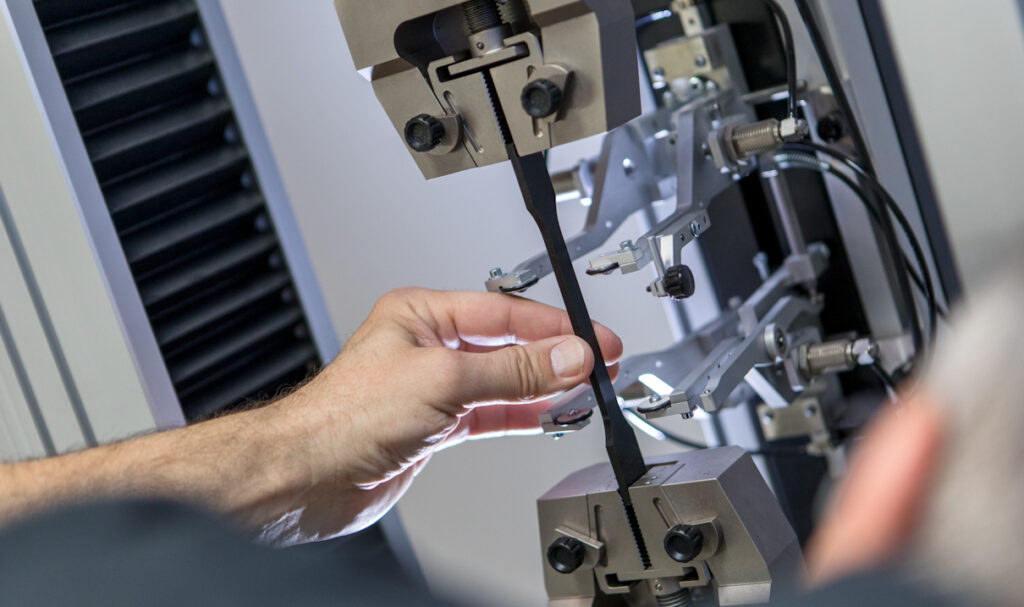
Mechanical performance is one of the most important considerations when qualifying a 3D printed material. Printed components may experience tensile loads, compression, bending, impact, vibration, fatigue, and repeated mechanical stresses during their service life.
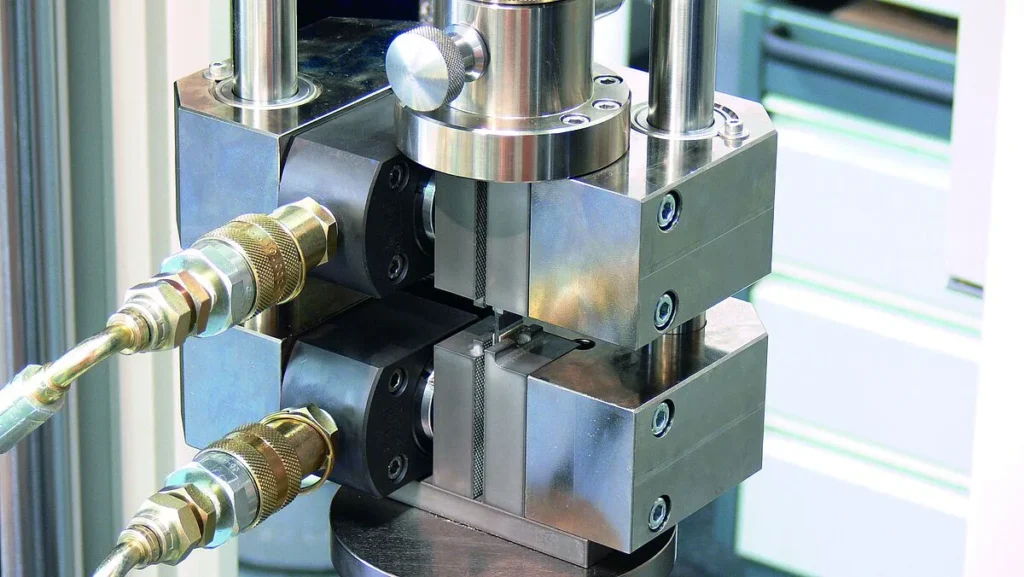
Mechanical testing helps determine whether a printed component can withstand the conditions expected in its final application. Tensile strength, elongation, hardness, flexural behavior, impact resistance, and other properties can be evaluated according to the requirements of the project and applicable testing standards.
Because additive manufacturing can create anisotropic behavior, testing different build orientations can provide particularly valuable information. A component printed vertically may not exhibit the same mechanical properties as one printed horizontally or at a different angle.
This makes Mechanical Property Testing an important part of additive manufacturing qualification and product development. The resulting data helps engineers understand how printing parameters influence strength and durability.

Identifying Defects and Manufacturing Variations
One of the major challenges associated with additive manufacturing is the possibility of internal and surface defects. Porosity, delamination, incomplete fusion, cracking, warping, and poor layer adhesion can compromise the performance of a finished component.
Some defects are easily visible, while others may require advanced analytical techniques to identify. Microscopy and other laboratory methods can reveal defects at microscopic scales and help determine how they developed during the printing process.
Identifying the origin of a defect is particularly important for manufacturers because simply detecting the problem does not necessarily prevent it from occurring again. Understanding whether the defect resulted from material quality, machine settings, environmental conditions, or post-processing allows engineers to implement effective corrective actions.
Metal Additive Manufacturing and Material Quality
Metal 3D printing has become increasingly important in aerospace, automotive, medical, energy, and advanced manufacturing applications. Technologies such as powder bed fusion and directed energy deposition allow manufacturers to produce complex metal components with reduced material waste and greater design flexibility.
However, metal additive manufacturing requires strict control of material quality. Powder characteristics, particle size distribution, chemical composition, oxidation, moisture, and contamination can influence the final properties of printed components.
Laboratory analysis can help manufacturers evaluate incoming metal powders and investigate variations between production batches. Characterizing both feedstock and finished components creates a stronger quality-control system and helps manufacturers maintain consistency during production.
Polymer and Composite 3D Printing
Polymers remain among the most widely used materials in additive manufacturing. Thermoplastics, high-performance polymers, elastomers, and polymer composites are used for prototypes, tooling, consumer products, medical applications, and industrial components.
The properties of printed polymers can be influenced by thermal history, moisture, cooling rates, additives, and layer adhesion. Testing can help determine whether a polymer retains its expected mechanical and chemical properties after processing.
Composite 3D printing introduces additional complexity because reinforcement materials such as carbon fibers, glass fibers, or other additives can significantly influence strength, stiffness, thermal performance, and dimensional stability.
Characterizing these materials allows manufacturers to optimize formulations and printing parameters for specific applications.
The Role of Post-Processing in Additive Manufacturing
3D printed components often undergo post-processing after they leave the printer. Heat treatment, annealing, machining, polishing, coating, chemical treatment, and other processes may be used to improve dimensional accuracy, surface finish, mechanical performance, or functional properties.
However, post-processing can also change the material structure and performance. Heat treatment, for example, may alter microstructure and residual stresses, while surface treatments can influence chemical resistance, wear behavior, and adhesion.
Testing before and after post-processing provides valuable information about how these processes affect the final product. Manufacturers can use this data to establish optimized post-processing procedures and improve production consistency.