
What Is Contaminant Identification Testing and Why Does It Matter? Exploring Chemical Analysis and Advanced Microscopy for Reliable Material Testing
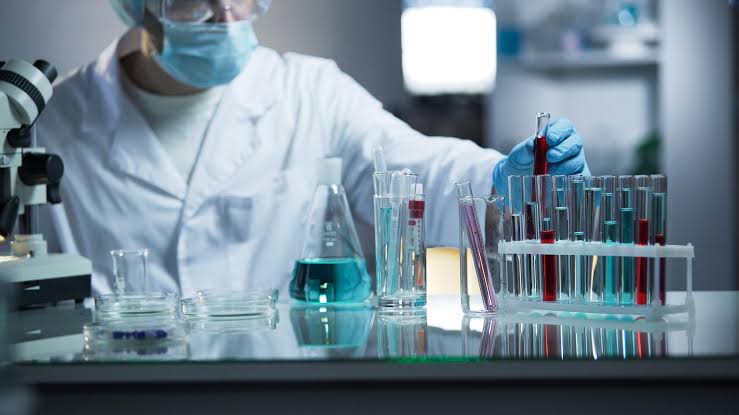
Materials used in aerospace, automotive, construction, energy, healthcare, and other demanding industries are expected to meet strict performance and quality requirements. Even a small amount of an unexpected substance can sometimes influence material properties, manufacturing processes, product performance, or safety.
This is where Contaminant Identification becomes an important part of material testing and scientific research. The process involves detecting and characterizing foreign substances, residues, particles, deposits, or unexpected compounds found within or on a material.
Rather than simply identifying that a material contains an unwanted substance, laboratory investigation can help determine its composition and provide valuable information about its potential origin and impact. This information can support failure investigations, quality control programs, product development, manufacturing improvements, and regulatory requirements.
What Is Contaminant Identification?
Contaminant Identification is the scientific process of detecting, analyzing, and characterizing substances that are not expected to be present in a material, component, product, or sample.
Contamination can occur at many stages. It may originate from raw materials, manufacturing equipment, processing environments, packaging, storage, transportation, cleaning procedures, or accidental exposure. Depending on the industry and material involved, contaminants may include particles, residues, foreign materials, chemical compounds, metals, fibers, oils, or other unwanted substances.
Identifying these materials accurately requires more than visual inspection. A contaminant that appears as a small particle may contain several chemical components or have a structure that provides important clues about its source.
Advanced laboratory testing helps transform an unknown sample into meaningful scientific information.
The Role of Chemical Analysis in Material Investigation
Chemical Analysis plays a central role in understanding the composition of materials and contaminants. It can help determine which elements, compounds, or chemical constituents are present in a sample.
For example, when an unexpected residue appears on a component, chemical analysis can provide insight into whether it is associated with a manufacturing process, environmental exposure, material degradation, cleaning agent, lubricant, or another source.
Chemical analysis can support:
- Material composition assessment
- Unknown substance identification
- Contamination investigations
- Failure analysis
- Product quality investigations
- Environmental sample evaluation
- Research and development
- Manufacturing process investigations
The value of chemical analysis extends beyond obtaining a test result. Proper interpretation can help scientists connect laboratory findings with the practical problem being investigated.
How Advanced Microscopy Reveals Hidden Material Details
Not every contamination issue can be understood through chemical composition alone. Physical appearance, morphology, particle size, surface characteristics, and microscopic structure can provide additional information.
This is where Advanced Microscopy becomes particularly valuable.
Advanced microscopy enables high-resolution examination of materials and particles that may be difficult or impossible to characterize through conventional visual inspection. Microscopic imaging can reveal surface features, particle morphology, defects, inclusions, fractures, deposits, and other characteristics that may contribute to an investigation.
When microscopy is combined with other analytical techniques, researchers can develop a more complete understanding of an unknown material.
For instance, an investigation may begin with microscopic examination to understand the physical characteristics of a particle. Chemical analysis can then help determine its composition. Together, these findings may provide stronger evidence about how the contamination occurred and what corrective action may be appropriate.
Why Combine Contaminant Identification, Chemical Analysis, and Advanced Microscopy?
Each analytical technique provides a different perspective.
Contaminant Identification focuses on determining what unexpected substance is present.
Chemical Analysis helps characterize its chemical composition.
Advanced Microscopy provides detailed information about physical structure, morphology, and appearance.
When these capabilities are integrated, laboratories can approach complex material investigations from multiple scientific angles.
This combined approach can be particularly useful when investigating:
- Unexpected particles or residues
- Product defects
- Material degradation
- Manufacturing contamination
- Surface deposits
- Foreign material
- Unknown inclusions
- Component failures
- Environmental exposure
- Quality-control concerns
The result is a more detailed evidence base for scientific decision-making.
Applications Across Multiple Industries
Material contamination and composition issues can arise across a wide range of industries. The specific testing requirements may differ, but the need for reliable scientific information remains consistent.
Aerospace
Aerospace materials and components must perform under demanding conditions. Identification of unexpected particles, residues, or material defects can support quality investigations and failure analysis.
Automotive
Manufacturing and component performance can be affected by unexpected materials or residues. Laboratory analysis can help investigate contamination and support product-quality programs.
Construction
Construction materials require consistent composition and performance. Testing can help identify unexpected substances, material anomalies, and potential sources of defects.
Energy and Battery Materials
Energy-related materials can require detailed chemical and microscopic characterization. Testing can provide information about composition, contamination, degradation, and material performance.
Healthcare
Healthcare-related materials and components may require careful examination to identify unwanted substances and understand material characteristics.
From Unknown Sample to Actionable Insight
A successful laboratory investigation involves more than placing a sample under an instrument. The scientific process begins by understanding the client’s question and defining the objective of the investigation.
At Genuine Testing, the process can begin with a detailed discussion of the material, suspected issue, sample history, and desired outcome. Scientists can then determine appropriate testing methods and develop a methodology suited to the specific investigation.
The sample may undergo microscopy, chemical analysis, contaminant identification, or complementary analytical techniques depending on the scientific requirements.
Following laboratory execution, the resulting data is interpreted to provide meaningful findings. This approach helps transform complex laboratory information into insights that can support research, quality improvement, product development, and troubleshooting.
Why Reliable Material Testing Matters
Inaccurate or incomplete material information can create uncertainty throughout the product lifecycle. A missed contaminant may contribute to recurring quality problems, while an incorrectly identified substance can send an investigation in the wrong direction.
Reliable testing helps organizations make decisions based on evidence rather than assumptions.
For research teams, laboratory analysis can support product development. For manufacturers, it can help investigate unexpected quality issues. For engineers, it can provide information needed to understand material behavior. For quality teams, it can contribute to root-cause investigations and process improvement.
The right analytical strategy therefore becomes an important part of turning a complex material problem into a clearly understood scientific question.
Partner With Genuine Testing for Advanced Material Investigation
Genuine Testing combines laboratory expertise, advanced instrumentation, and scientific research capabilities to support organizations across diverse industries. Its material testing capabilities include Contaminant Identification, Chemical Analysis, and Advanced Microscopy, helping clients investigate materials with precision and develop actionable scientific insights.
From unknown particles and chemical residues to complex material questions, a structured analytical approach can provide the information needed to move a project forward.
When the composition or condition of a material raises questions, sophisticated laboratory testing can help provide the answers. With the right combination of analytical methods and scientific expertise, even complex material investigations can become clearer, more measurable, and more actionable.
Contact Genuine Testing to discuss your material testing and scientific research requirements.