
Chemical Compatibility Testing — How to Know if Your Material Will Survive Its Environment, Reveal Hidden Extractables & Leachables, and Prevent Failure Before It Happens
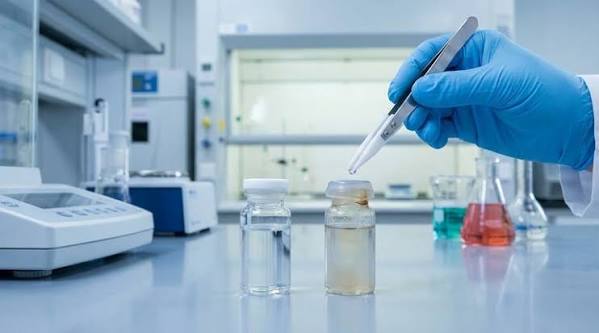
A material may look strong, stable, and suitable for an application during initial inspection. Yet its performance can change dramatically when it encounters chemicals, heat, pressure, solvents, bodily fluids, cleaning agents, environmental contaminants, or other operating conditions.
This is why selecting a material based only on its basic physical properties may not provide the complete picture.
Manufacturers and product developers need to understand how materials interact with their intended environments. Will a polymer swell when exposed to a solvent? Could a coating degrade after repeated chemical contact? Might a component release unwanted substances into a product or surrounding environment? If a material fails unexpectedly, what caused the failure?
These questions are at the center of Chemical Compatibility, Extractables & Leachables, and Failure Analysis Materials testing.
Genuine Testing provides laboratory testing and scientific research services designed to help organizations investigate these challenges with reliable data and expert analysis.
Chemical Compatibility Testing: Understanding Material Behavior in Real Conditions
Chemical Compatibility Testing evaluates how a material responds when exposed to specific chemicals or environmental conditions.
Compatibility is especially important when materials come into contact with:
- Solvents and cleaning agents
- Acids and bases
- Oils and fuels
- Process chemicals
- Water and moisture
- Disinfectants
- Pharmaceutical or healthcare substances
- Industrial chemicals
- High or low temperatures
- Other materials within a product system
Chemical exposure can produce visible effects such as discoloration, cracking, swelling, softening, or surface damage. However, some changes may occur at a microscopic or chemical level before obvious physical deterioration becomes visible.
Laboratory analysis can help identify these changes and determine whether a material is appropriate for its intended application.
For manufacturers, this information can support material selection, product development, quality investigations, and efforts to improve long-term reliability.
Extractables & Leachables: Finding What May Leave a Material Behind
Materials used in demanding applications can contain chemical components that may migrate or be released under particular conditions. This makes Extractables & Leachables (E&L) analysis an important part of material and product evaluation, particularly for applications where chemical migration can affect product quality or safety.
Extractables are substances that can be released from a material under controlled laboratory extraction conditions. Leachables are substances that migrate from a material into a product or surrounding environment during actual or simulated use.
Understanding these substances can provide valuable information about material composition and potential interactions.
E&L investigations may involve techniques designed to identify and characterize organic compounds, inorganic substances, contaminants, additives, degradation products, or other chemical species.
This information can help organizations investigate questions such as:
- What chemical substances could potentially migrate from a material?
- Are unexpected compounds present?
- Could processing or storage conditions influence chemical release?
- Is a material suitable for a particular application?
- Could material interactions contribute to product contamination?
- What substances should be investigated further?
By examining these factors scientifically, organizations can make better-informed decisions about materials and product systems.
Failure Analysis Materials Testing: Turning a Failure Into Useful Evidence
When a component fails, replacing it is only part of the solution. The more important question is often why it failed in the first place.
Failure Analysis Materials testing investigates the physical, chemical, structural, and environmental factors that may have contributed to material or component failure.
Failures can occur because of many different mechanisms, including:
- Chemical degradation
- Corrosion
- Fatigue
- Fracture
- Contamination
- Thermal damage
- Manufacturing defects
- Environmental exposure
- Material incompatibility
- Improper material selection
- Mechanical or processing stresses
A thorough failure investigation can combine microscopy, chemical analysis, material characterization, and other laboratory techniques to examine evidence from the failed component.
Advanced microscopy, for example, can reveal surface damage, cracks, inclusions, particles, unusual structures, or other features that may not be visible during routine inspection.
Chemical and environmental analysis can provide additional information about composition, contaminants, and possible exposure-related changes.
Connecting Chemical Exposure With Material Failure
One of the most valuable aspects of laboratory investigation is understanding how different factors interact.
A component may not fail simply because it experienced mechanical stress. Chemical exposure may have weakened its surface. Temperature may have accelerated degradation. A cleaning solution may have altered a polymer. Contaminants may have initiated corrosion or affected material properties.
This is where Chemical Compatibility Testing and Failure Analysis Materials investigations can complement one another.
Instead of treating material failure as an isolated event, laboratory testing can help establish a clearer relationship between the material, its environment, and the observed failure mechanism.
The resulting data can support decisions involving material selection, design modifications, manufacturing processes, maintenance procedures, and product improvements.
Why Extractables & Leachables Matter During Material Selection
Material selection should consider more than strength, flexibility, hardness, or appearance.
For products exposed to sensitive environments, chemical composition and potential migration behavior may also be critical.
An apparently suitable material could introduce unexpected chemical substances into its surrounding environment under certain conditions. E&L testing can help characterize these possibilities and provide information that supports material evaluation.
This can be particularly relevant for organizations working with complex products, specialized components, packaging systems, healthcare applications, laboratory equipment, and other environments where chemical interactions require careful investigation.
Advanced Laboratory Testing for Better Material Decisions
At Genuine Testing, scientific investigation is built around accurate data, advanced instrumentation, and a client-focused approach.
The laboratory provides a broad range of capabilities, including:
Advanced Microscopy
High-resolution microscopy can provide detailed views of material surfaces, structures, defects, particles, and damage features.
Chemical & Environmental Analysis
Chemical and environmental analysis can help characterize material composition, identify contaminants, and investigate changes associated with environmental exposure.
Contaminant Identification
Identifying unexpected contaminants can be an important step when investigating product quality issues, material degradation, or unexplained failures.
Battery Materials Analysis
Specialized analysis of battery materials can support research, performance evaluation, and investigation of material-related challenges.
Comprehensive Laboratory Testing
From standard evaluations to complex investigations, laboratory testing can generate reproducible data designed around specific project objectives.
From Sample to Solution: A Scientific Approach to Material Challenges
Effective material investigation begins with understanding the question behind the test.
At Genuine Testing, the process starts by working with clients to understand their objectives, samples, operating conditions, and scientific requirements. Appropriate methodologies and laboratory techniques can then be selected based on the specific investigation.
The sample moves through controlled laboratory procedures using advanced equipment and quality-focused practices. The resulting data is analyzed and interpreted to provide meaningful findings rather than simply a collection of test results.
This approach can help organizations move from “What happened?” to “Why did it happen, and what can we do next?”
Make Material Testing Part of the Product Development Strategy
Material problems discovered late in development can create expensive delays, redesigns, recalls, or quality concerns. Early laboratory evaluation can provide valuable insight before a material or product reaches critical stages of production.
Chemical Compatibility Testing can help evaluate environmental interactions. Extractables & Leachables analysis can investigate potential chemical migration. Failure Analysis Materials testing can help determine the causes behind unexpected performance problems.
Together, these capabilities provide a stronger scientific foundation for material selection, product development, troubleshooting, quality investigations, and research.
Discover What Your Materials Are Really Telling You
Materials have a story that is not always visible to the naked eye. Chemical exposure, contaminants, structural changes, and environmental conditions can leave measurable evidence.
With the right laboratory investigation, that evidence can become actionable information.
Genuine Testing combines scientific expertise, advanced laboratory capabilities, and a commitment to Precision, Innovation, and Integrity to help organizations investigate material behavior, understand failures, identify chemical concerns, and support smarter product decisions.
Whether you are evaluating a new material, investigating an unexpected failure, assessing chemical compatibility, or studying Extractables & Leachables, the right testing strategy can turn uncertainty into scientifically supported insight.