
Advanced Laboratory Research — How Custom Synthesis, Polymer Chemistry, and Surface Analysis Support Material Innovation
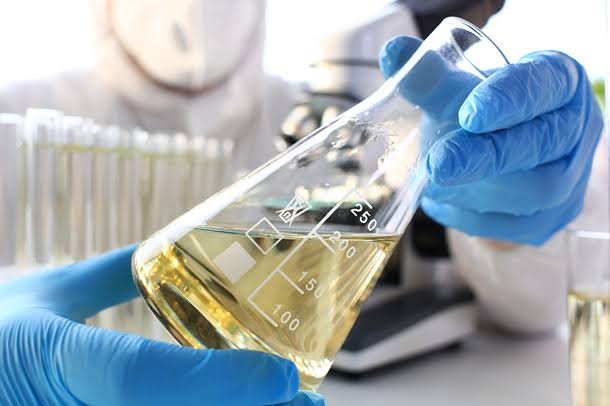
Modern industries increasingly depend on materials engineered for specific performance requirements. Aerospace components must withstand demanding environments, automotive materials need durability and consistency, medical products require carefully controlled properties, and energy technologies depend on increasingly sophisticated material systems.
These requirements often create scientific questions that standard testing alone cannot answer.
What happens when a formulation is modified? How does a polymer respond to heat, chemicals, or mechanical stress? Why does a coating fail prematurely? What causes contamination on a critical surface? How can researchers obtain a reliable reference compound for analytical validation?
Specialized laboratory research can help answer these questions.
At Genuine Testing, advanced laboratory capabilities combine scientific expertise, modern instrumentation, and carefully designed methodologies to help organizations investigate materials and develop practical solutions. Services spanning material testing, chemical analysis, research methodology, and advanced characterization can support projects from early research through product development and commercialization.
Custom Synthesis for Specialized Research Requirements
Not every research project can rely on commercially available compounds. Researchers may require a specific chemical structure, reference material, intermediate, or specialized compound that is difficult to source through conventional suppliers.
This is where Custom Synthesis becomes valuable.
Custom synthesis involves developing compounds according to defined research requirements rather than selecting from a standard catalog. Depending on the project, researchers may need materials for analytical standards, method development, formulation research, comparative studies, contaminant investigations, or product development.
An independent laboratory can work with project-specific requirements to develop an appropriate synthesis strategy. This may involve understanding the desired chemical characteristics, determining suitable methodologies, evaluating the resulting material, and applying analytical techniques to confirm its identity and quality.
The value extends beyond simply producing a compound. A well-planned custom synthesis project can provide researchers with greater control over the materials used during experimentation and analysis.
For organizations working with specialized formulations or emerging technologies, this flexibility can be particularly important when commercially available materials do not meet specific research objectives.
Understanding Materials Through Polymer Chemistry
Polymers are found throughout modern products and technologies, including packaging, coatings, medical devices, automotive components, construction materials, electronics, adhesives, and advanced composites.
Their performance is closely connected to their chemical structure and molecular characteristics. Even relatively small changes in polymer composition, molecular architecture, additives, or processing conditions can influence properties such as flexibility, strength, thermal stability, chemical resistance, and durability.
Polymer Chemistry provides the scientific foundation for understanding these relationships.
Laboratory research in polymer chemistry can help organizations investigate polymer composition, behavior, interactions, degradation, and performance. Researchers can use analytical testing to understand why a material behaves differently from expectations and identify factors that may influence its performance.
For product developers, this information can support formulation optimization and material selection. For manufacturers, it can help investigate unexpected material behavior or product failures. For researchers, it can provide valuable evidence for developing new polymer systems and improving existing materials.
A deeper understanding of polymer chemistry can therefore connect molecular-level characteristics with real-world material performance.
Surface Analysis Reveals What Material Testing May Miss
A material can appear perfectly acceptable while its surface tells a very different story.
Surface properties can influence adhesion, corrosion, contamination, coating performance, wettability, friction, chemical interactions, and overall product durability. Because many material interactions occur at or near the surface, examining this region can provide important information that bulk testing may not reveal.
Surface Analysis is used to investigate the physical and chemical characteristics of material surfaces and identify changes that could affect performance.
For example, surface analysis may help researchers investigate contamination, coating irregularities, degradation, unexpected residues, or differences between successful and failed samples. It can also contribute to research involving polymers, composites, metals, coatings, and other advanced materials.
When combined with microscopy and chemical characterization, surface analysis can provide a more complete picture of what is happening within a material system.
Combining Testing and Research for Better Material Insights
One of the challenges in scientific research is that no single analytical technique can answer every question.
A material investigation may begin with visual or microscopic examination before moving into chemical analysis, contaminant identification, polymer characterization, or specialized testing. Connecting these techniques creates a broader understanding of the sample and helps researchers interpret individual results within the larger context of the project.
Genuine Testing provides a comprehensive laboratory environment where scientific questions can be approached through structured research and analytical testing.
Its capabilities include:
- Advanced microscopy for detailed material examination
- Chemical and environmental analysis
- Battery materials analysis
- Contaminant identification
- Material characterization and testing
- Research design and methodology
- Data analysis and interpretation
- Specialized laboratory research
This multidisciplinary approach can be especially useful when projects involve complex materials or require multiple forms of evidence before a conclusion can be reached.
Supporting Innovation Across Multiple Industries
The need for specialized material research extends across numerous industries.
In aerospace, material characterization can contribute to investigations involving advanced alloys, composites, coatings, and performance requirements.
In automotive applications, polymer chemistry and material analysis can support research into components, coatings, adhesives, and durable material systems.
In construction, testing can help evaluate material composition, environmental effects, durability, and performance.
In energy, advanced analysis is increasingly important for batteries, energy-storage materials, and other emerging technologies.
In healthcare, careful material characterization can support research involving polymers, medical materials, contaminants, and product development.
Across these sectors, laboratory data can provide the evidence required to make informed technical decisions.
A Structured Path From Sample to Solution
Effective laboratory research requires more than sophisticated equipment. It requires a clearly defined process.
At Genuine Testing, projects can begin with an understanding of the client’s scientific objectives and the questions that need to be answered. Researchers can then develop an appropriate methodology, select relevant analytical techniques, conduct laboratory testing under controlled conditions, and interpret the resulting data.
This sample-to-solution approach helps ensure that testing remains connected to the original research objective.
The process can include:
Understanding the Research Objective: Identifying the scientific question, material challenge, or performance requirement.
Developing the Methodology: Selecting suitable techniques, instruments, protocols, and testing parameters.
Laboratory Execution: Performing the required analyses using appropriate equipment and quality controls.
Data Interpretation: Translating complex analytical results into meaningful scientific findings.
Research Recommendations: Using the findings to support further development, investigation, or optimization.
Advancing Material Science With Specialized Laboratory Expertise
Material innovation rarely follows a simple path. Researchers may need to synthesize a specialized compound, investigate polymer behavior, identify an unknown contaminant, or examine subtle changes occurring on a material surface.
Custom Synthesis, Polymer Chemistry, and Surface Analysis provide complementary capabilities for addressing these challenges. Together with advanced microscopy, chemical analysis, material testing, and scientific research expertise, they can help organizations gain a deeper understanding of complex material systems.
Genuine Testing brings together laboratory infrastructure, experienced scientific professionals, and a research-focused approach to support organizations seeking reliable, actionable material insights.
When scientific questions become complex, the right laboratory partner can help transform samples and data into knowledge that supports better research, stronger materials, and informed product development decisions.