
Engineering Confidence for Long-Term Performance: How Creep, Mechanical Property, and Reliability Testing Support Material Decisions
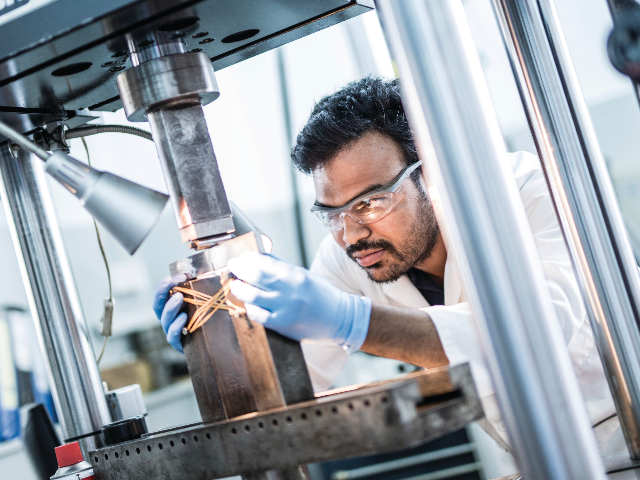
A material’s initial strength is only one part of its performance story. Components used in aerospace, automotive, construction, energy, healthcare, and other demanding industries may experience continuous stress, temperature fluctuations, vibration, chemical exposure, moisture, or repeated loading throughout their service life.
These conditions can gradually change material properties. A component that passes a standard strength test may still experience deformation or degradation after prolonged use. For engineers and manufacturers, identifying these changes before they become product failures is essential.
This is where advanced laboratory testing becomes valuable. By examining how materials behave under controlled and demanding conditions, organizations can gain data that supports material selection, product development, quality assurance, safety assessments, and regulatory requirements.
Understanding Creep Testing Services
Creep testing services are designed to evaluate the gradual deformation of a material when it remains under a constant load or stress, particularly when elevated temperatures are involved. Unlike sudden mechanical failure, creep can develop slowly, making it especially important for components expected to operate continuously for extended periods.
Creep behavior is highly relevant to applications involving sustained mechanical loads and elevated operating temperatures. Engineers can use creep testing data to understand deformation rates, estimate service performance, compare materials, and support component design.
A well-designed creep testing program can help answer important questions:
- How will a material behave under prolonged stress?
- How does temperature affect deformation?
- Which material is better suited for long-duration service?
- When might excessive deformation become a concern?
- How can material performance be improved for a specific application?
By generating dependable test data, laboratories can help engineering teams make informed decisions before materials reach demanding field conditions.
Mechanical Property Testing for Better Material Decisions
While creep behavior provides valuable information about long-term deformation, engineers also need a broader understanding of a material’s mechanical characteristics. Mechanical property testing evaluates how materials respond to different forces and loading conditions.
Depending on the material and application, testing may examine characteristics such as tensile strength, elongation, hardness, compression behavior, flexural performance, fracture characteristics, or other relevant mechanical properties.
This information can support several stages of product development. During material selection, test results help engineers compare candidate materials. During product development, testing can help validate design assumptions. During quality control, mechanical testing can help confirm consistency between material batches or production processes.
Mechanical property testing is particularly valuable when material performance directly affects product safety, durability, and functionality. Reliable laboratory data gives development teams a stronger technical foundation for making decisions.
Reliability Testing Services for Real-World Confidence
Laboratory performance at the beginning of a product’s life does not always tell the complete story. Products may face repeated loads, environmental exposure, temperature changes, contamination, vibration, or other demanding conditions during actual operation.
Reliability testing services help organizations investigate how materials, components, and products perform over time and under specified conditions. These evaluations can reveal weaknesses that may not be visible through a single conventional test.
Reliability-focused testing can contribute to:
- Product durability assessments
- Failure investigation
- Design validation
- Material qualification
- Quality assurance
- Performance comparisons
- Risk reduction
- Product development decisions
When reliability data is combined with mechanical and material characterization, engineers gain a more complete understanding of how a product may perform throughout its expected service life.
Connecting Laboratory Data With Real Engineering Challenges
The greatest value of material testing comes from connecting laboratory results to practical engineering objectives. Testing should not simply generate numbers; it should provide information that helps answer meaningful questions.
At Genuine Testing, scientific expertise and advanced laboratory capabilities support projects involving metals, polymers, composites, battery materials, contaminants, chemical analysis, microscopy, and other material investigations. The team works with clients to understand project requirements and develop appropriate testing methodologies.
The process begins by understanding the client’s objectives and selecting suitable techniques and protocols. Laboratory procedures are then performed under controlled conditions with attention to quality, accuracy, and reproducibility. The resulting data can be analyzed and interpreted to provide useful insights for research, development, quality, and engineering teams.
A Stronger Approach to Material Performance Evaluation
Modern product development demands more than basic pass-or-fail testing. Engineers need dependable evidence that materials can perform under the conditions they are expected to encounter.
Combining creep testing services, mechanical property testing, and reliability testing services creates a more complete approach to understanding material behavior. Together, these testing capabilities can help identify performance characteristics, investigate potential weaknesses, compare material options, and support decisions throughout the product lifecycle.
For organizations developing products or components for demanding environments, choosing an experienced testing partner can make a significant difference. With advanced instrumentation, experienced scientists, rigorous methodologies, and a collaborative approach, Genuine Testing helps transform complex scientific questions into meaningful, actionable results.
When material performance matters, dependable testing provides the evidence needed to move forward with greater technical confidence. From initial research and material selection through validation and performance evaluation, the right laboratory partner can help turn testing data into better engineering decisions and more reliable products.